
Archive for March 2024
Customs Clearance For Hazardous Goods

When it comes to navigating the complexities of international trade, one critical aspect is customs clearance for hazardous goods. Ensuring the safe and compliant transportation of hazardous materials across borders is of utmost importance. From dangerous chemicals to flammable substances, the meticulous handling and documentation of these goods is a prerequisite for global businesses. In this article, we will explore the key considerations and processes involved in customs clearance for hazardous goods, shedding light on the essential steps to expedite the movement of these sensitive materials while prioritizing safety and regulatory compliance.

Understanding Hazardous Goods
Definition of hazardous goods
Hazardous goods, also known as dangerous goods, are substances or articles that pose a significant risk to health, safety, property, or the environment. These goods are classified based on their specific characteristics, such as flammability, toxicity, corrosiveness, or explosiveness. Common examples of hazardous goods include chemicals, gases, explosives, radioactive materials, and infectious substances.
Types of hazardous goods
Hazardous goods can be categorized into several classes based on their specific hazards. The United Nations (UN) has established a classification system known as the UN Globally Harmonized System of Classification and Labeling of Chemicals (GHS), which is widely adopted internationally. The main classes of hazardous goods include:
-
Class 1: Explosives – Substances and articles that can cause explosions or release gases, such as fireworks or ammunition.
-
Class 2: Gases – Compressed, liquefied, or dissolved gases that can be flammable, toxic, or corrosive, such as propane or chlorine.
-
Class 3: Flammable Liquids – Substances that can easily ignite and burn, such as gasoline or acetone.
-
Class 4: Flammable Solids – Substances that can ignite spontaneously or when exposed to heat, such as matches or certain powders.
-
Class 5: Oxidizing Substances and Organic Peroxides – Substances that can cause or enhance combustion, such as hydrogen peroxide or certain fertilizers.
-
Class 6: Toxic and Infectious Substances – Substances that are poisonous or capable of causing serious health effects, such as pesticides or infectious materials.
-
Class 7: Radioactive Materials – Substances that emit radiation, such as uranium or plutonium.
-
Class 8: Corrosive Substances – Substances that can corrode or dissolve other materials, such as sulfuric acid or caustic soda.
-
Class 9: Miscellaneous Dangerous Goods – Substances that do not fit into the other classes but still pose significant risks, such as lithium batteries or environmentally hazardous substances.
Understanding the classification and specific hazards of hazardous goods is crucial for customs clearance and ensuring safety during transportation and storage.
Importance of Customs Clearance for Hazardous Goods
Ensuring safety and compliance
Customs clearance plays a vital role in ensuring the safe handling, transportation, and storage of hazardous goods. The customs clearance process involves verifying that the goods comply with all relevant regulations and requirements, including proper packaging, labeling, and documentation. By conducting thorough inspections and assessments, customs authorities can prevent the entry of non-compliant or unsafe goods, thus reducing the risk of accidents, spills, or other hazardous incidents.
Preventing environmental damage
Proper customs clearance procedures are essential for preventing environmental damage caused by hazardous goods. By strictly enforcing regulations on the import and export of these goods, customs authorities can identify and mitigate potential risks to the environment. This includes ensuring that hazardous substances are handled, stored, and disposed of in a safe and environmentally responsible manner. Customs clearance also facilitates the enforcement of international agreements and protocols, such as the Basel Convention on the Control of Transboundary Movements of Hazardous Wastes and their Disposal, which aims to prevent the transfer of hazardous wastes from developed to developing countries.
Legal Framework for Customs Clearance
International regulations and conventions
Customs clearance for hazardous goods is governed by a wide range of international regulations and conventions. The International Maritime Organization (IMO), International Civil Aviation Organization (ICAO), and International Air Transport Association (IATA) have established specific regulations and guidelines for the transportation of dangerous goods by sea, air, and road. These include the IMO’s International Maritime Dangerous Goods Code (IMDG Code), ICAO’s Technical Instructions for the Safe Transport of Dangerous Goods by Air, and IATA’s Dangerous Goods Regulations.
In addition to these industry-specific regulations, there are also international conventions that provide a legal framework for customs clearance of hazardous goods. The United Nations Convention on the Law of the Sea (UNCLOS) addresses the transportation of dangerous goods by sea, while the Customs Convention on the International Transport of Goods under Cover of TIR Carnets (TIR Convention) regulates the international road transport of goods, including hazardous substances.
National laws and regulations
In addition to international regulations, customs clearance for hazardous goods must also comply with national laws and regulations. Each country has its own legal framework governing the import, export, and transportation of dangerous goods. These laws may include specific requirements for labeling, packaging, documentation, and safety standards.
It is essential for importers, exporters, and logistics providers to familiarize themselves with the customs regulations of the countries they operate in or trade with. Failure to comply with national laws and regulations can result in delays, penalties, or even the refusal of entry for hazardous goods.
Required Documentation
Hazardous material declaration
One of the key documents required for customs clearance of hazardous goods is the hazardous material declaration. This document provides detailed information about the nature, quantity, and classification of the hazardous substances being imported or exported. It includes essential details such as the UN number, proper shipping name, hazard class, and packing group. The hazardous material declaration helps customs authorities to assess the potential risks associated with the goods and ensure compliance with relevant regulations.
Safety data sheets
Safety data sheets (SDS), also known as material safety data sheets (MSDS), are another critical document for customs clearance of hazardous goods. An SDS provides comprehensive information about the hazards, handling instructions, and safety precautions related to a specific substance or product. It includes details on the composition of the substance, first aid measures, fire-fighting measures, and environmental considerations. Customs authorities rely on SDSs to evaluate the risks associated with the hazardous goods and determine appropriate handling and storage measures.
Packaging and labeling requirements
Proper packaging and labeling of hazardous goods are crucial for customs clearance and safe transportation. Hazardous substances must be packaged in suitable containers that are resistant to leaks, breakage, or damage. The packaging must meet specific performance standards, such as those outlined in the UN Recommendations on the Transport of Dangerous Goods. Additionally, hazardous goods must be properly labeled with internationally recognized hazard symbols, UN numbers, and other relevant information. These labels help customs officials and transport personnel quickly identify the nature of the goods and take appropriate precautions.
Preparation for Customs Clearance
Determining the appropriate classification and code
Before initiating the customs clearance process for hazardous goods, it is essential to determine the appropriate classification and code for the goods. This involves identifying the specific hazards associated with the goods and assigning the correct UN number, proper shipping name, hazard class, and packing group. The classification and code help customs authorities assess the potential risks and apply the relevant regulations during the clearance process.
Completing the necessary paperwork
Customs clearance for hazardous goods requires the completion of various paperwork and documentation. This includes the hazardous material declaration, safety data sheets, packing lists, commercial invoices, and any additional certificates or permits required by the importing or exporting countries. It is important to ensure that all the documentation is accurate, complete, and in compliance with the relevant regulations. Any discrepancies or missing information can lead to delays or rejection of the goods at the border.
Arranging for inspections and certifications
Depending on the nature of the hazardous goods and the destination country’s requirements, additional inspections or certifications may be necessary for customs clearance. This may involve arranging for the testing of samples, securing certificates of analysis or conformity, or obtaining permits from relevant authorities. These inspections and certifications help to verify the safety and compliance of the goods and ensure that they meet the specified standards.
Customs Clearance Process
Submission of documents
The customs clearance process for hazardous goods typically begins with the submission of all required documents to the customs authorities. This includes the hazardous material declaration, safety data sheets, packing lists, commercial invoices, and any additional documentation specified by the customs regulations. The documents are carefully reviewed by customs officials to assess the compliance of the goods and identify any potential risks or discrepancies.
Examination and assessment
Upon receipt of the documents, customs officials conduct a thorough examination and assessment of the hazardous goods. This may involve physical inspections, laboratory testing, or other verification procedures to ensure that the goods match the information provided in the documentation. The assessment also includes evaluating the classification, packaging, labeling, and overall compliance with relevant regulations.
Payment of duties and taxes
Once the examination and assessment are complete, the next step in the customs clearance process is the payment of duties and taxes. Customs authorities determine the applicable duties, taxes, or other fees based on the classification, value, and quantity of the hazardous goods. Importers or their agents are responsible for settling these charges before the goods can be released.
Release of goods
After all the necessary requirements have been fulfilled, customs authorities issue a release notification, allowing for the goods to be cleared and released. This notification may include specific instructions for the transport, storage, or handling of the hazardous goods. It is essential to comply with these instructions to ensure the safe delivery and onward transportation of the goods.
Customs Clearance Challenges
Delays and potential penalties
Customs clearance for hazardous goods can be subject to various challenges that can result in delays or potential penalties. Non-compliance with customs regulations, inaccuracies in documentation, or failure to meet safety or packaging standards can lead to extended clearance times or the refusal of entry. These delays can have significant financial implications, as importers or exporters may incur additional storage costs, miss delivery deadlines, or face contractual penalties.
Lack of expertise and knowledge
Navigating the complex and ever-evolving regulations for customs clearance of hazardous goods requires specialized expertise and knowledge. Many businesses, especially small and medium-sized enterprises (SMEs), may lack the resources or understanding to effectively manage the customs clearance process. This can result in challenges in correctly classifying and preparing the necessary documentation, increasing the risk of non-compliance and potential complications.
Complexity of regulations
The regulations governing customs clearance for hazardous goods are complex and can vary between countries. Each country may have its own set of laws, requirements, and procedures, making compliance challenging for businesses involved in international trade. Staying up to date with the latest regulations and ensuring compliance with multiple sets of rules can be daunting, especially for companies that operate in multiple jurisdictions or frequently trade in hazardous goods.
Role of Customs Brokers
Benefits of using a customs broker
Customs brokers play a crucial role in facilitating the customs clearance process for hazardous goods. Engaging the services of a customs broker offers several benefits for importers and exporters, including:
-
Expertise and knowledge: Customs brokers are well-versed in the regulations and procedures related to customs clearance for hazardous goods. They have the necessary expertise and knowledge to navigate complex customs requirements, ensuring compliance and minimizing potential delays or penalties.
-
Efficiency and time-saving: Customs brokers handle the preparation and submission of the required documentation, streamlining the customs clearance process. By leveraging their experience and resources, they can expedite the clearance process, reducing the time and effort required by businesses.
-
Risk mitigation: Customs brokers help mitigate the risks associated with customs clearance for hazardous goods. Their thorough understanding of regulations, classification requirements, and documentation ensures that goods are accurately declared, minimizing the risk of non-compliance and potential penalties.
Services provided by customs brokers
Customs brokers offer a range of services to assist businesses in customs clearance for hazardous goods. These services may include:
-
Classification and documentation: Customs brokers help classify hazardous goods accurately and prepare the necessary documentation, including the hazardous material declaration, safety data sheets, packing lists, and invoices. They ensure compliance with relevant regulations and facilitate the smooth processing of customs clearance.
-
Liaising with authorities: Customs brokers act as intermediaries between businesses and customs authorities. They communicate and coordinate with the relevant government agencies to ensure all requirements are met, and any questions or concerns are promptly addressed.
-
Customs clearance management: Customs brokers manage the entire customs clearance process on behalf of businesses. They ensure that all necessary paperwork is submitted, track the progress of the clearance, and provide updates to their clients. They handle any issues or discrepancies that may arise during the clearance process.
-
Risk assessment and compliance: Customs brokers assess the risks associated with hazardous goods and provide advice on compliance measures. They help importers and exporters understand and meet the necessary safety regulations, packaging requirements, and labeling standards.
Risk Management for Hazardous Goods
Implementing safety measures
Managing the risks associated with hazardous goods requires implementing proper safety measures throughout the supply chain. This includes selecting appropriate packaging materials, ensuring proper handling procedures, and providing adequate training to personnel involved in the transportation and storage of hazardous goods. By implementing robust safety measures, businesses can minimize the potential for accidents, spills, or other hazardous incidents.
Insurance coverage for hazardous goods
Insurance coverage is an important risk management tool for businesses involved in the transportation and storage of hazardous goods. It provides financial protection against potential losses or damages that may arise from accidents, spills, or other unforeseen events. Businesses should carefully evaluate their insurance needs and ensure that they have appropriate coverage for the specific risks associated with their hazardous goods operations.
Emergency response planning
Developing and implementing an emergency response plan is crucial for managing the risks associated with hazardous goods. This plan should outline the procedures and protocols to be followed in the event of an accident, spill, or other hazardous incidents. It should include contact information for emergency responders, instructions for controlling and containing the hazardous materials, and procedures for notifying relevant authorities. Regular training and drills should be conducted to ensure that personnel are familiar with the emergency response plan and can effectively respond to hazardous incidents.
Case Studies
Successful customs clearance of hazardous goods
In a recent case, a chemical manufacturer successfully cleared a shipment of hazardous chemicals for export. The company engaged the services of a customs broker who meticulously prepared the necessary documentation, including the hazardous material declaration and safety data sheets. The customs broker worked closely with the manufacturer to ensure accurate classification and compliance with regulations. The shipment was cleared within the expected timeframe, and the goods reached their destination without any issues or penalties.
Incidents and consequences of non-compliance
In another case, a logistics company failed to properly declare and package a shipment of hazardous goods for import. The goods were incorrectly classified, and the packaging did not meet the required standards. As a result, the customs authorities refused entry for the goods, and the company incurred significant costs for re-exporting the goods and arranging for proper packaging. This incident not only resulted in financial losses but also damaged the company’s reputation and customer relationships.
These case studies highlight the importance of understanding and complying with customs regulations for hazardous goods. Proper customs clearance procedures are crucial for ensuring the safety of personnel, protecting the environment, and avoiding costly penalties or delays.
In conclusion, customs clearance for hazardous goods is a critical process that ensures the safety, compliance, and efficient movement of these goods across borders. Understanding the definition and classification of hazardous goods, as well as the legal framework and documentation requirements, is essential for successful customs clearance. Engaging the services of a customs broker can simplify the process and mitigate the risks associated with customs clearance. By implementing proper risk management measures, businesses can effectively navigate the complexities of customs clearance for hazardous goods and ensure the safe and compliant transportation of these substances.
Customs Clearance For Apparel
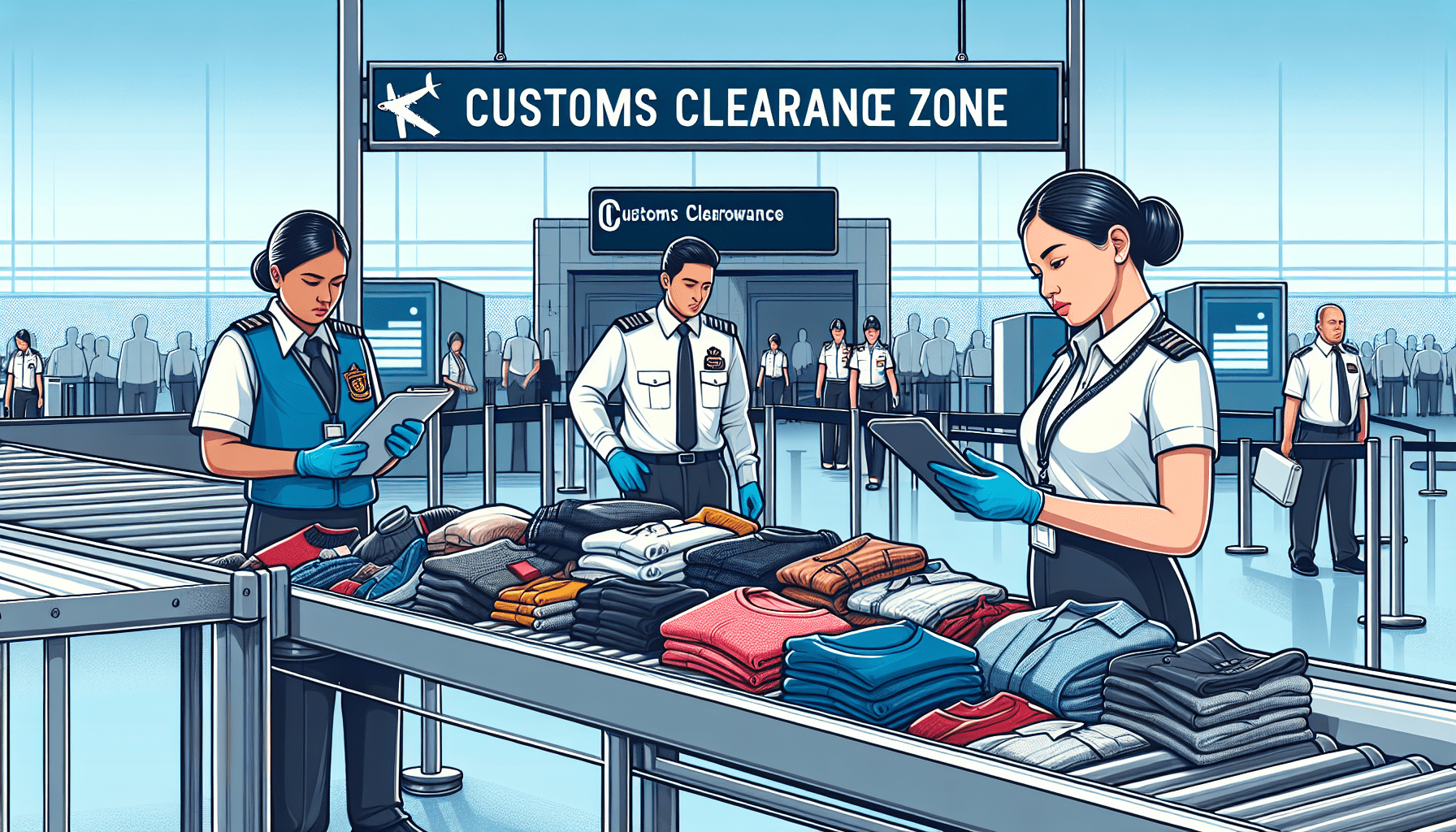
In the world of international trade, customs clearance plays a critical role in ensuring the smooth flow of goods. This is particularly true when it comes to the apparel industry, where strict regulations and procedures must be followed to navigate through the complex web of customs requirements. From verifying the accuracy of documents to assessing the appropriate tariffs and duties, customs clearance for apparel requires meticulous attention to detail. In this article, we will explore the key considerations and challenges that businesses face when it comes to customs clearance for apparel, shedding light on crucial aspects and providing insights to streamline the process for seamless import and export operations.
Customs Clearance Process
Customs clearance is an essential step in the import and export of apparel. It involves a series of procedures and requirements that ensure compliance with customs regulations and facilitate the smooth movement of goods across borders. Understanding the customs clearance process is crucial for apparel businesses to avoid delays, penalties, and other potential issues that may arise during international trade.
Documentation
Proper documentation is the foundation of the customs clearance process for apparel. It is imperative to prepare and submit all the necessary paperwork accurately and in a timely manner. The key documents required for customs clearance of apparel include:
Commercial Invoice
The commercial invoice is a crucial document that provides detailed information about the goods being imported or exported. It includes the description of the apparel, quantity, value, and other relevant information such as the exporter and importer’s details.
Packing List
The packing list outlines the contents of each package or container and provides information on the dimensions, weight, and type of packaging used. It helps customs officials verify the accuracy of the shipment and ensures that the goods are appropriately classified and valued.
Bill of Lading/Airway Bill
The bill of lading or airway bill is a document issued by the carrier that confirms the receipt of the goods and serves as evidence of the contract of carriage. It is essential for customs clearance as it provides information on the origin, destination, and the parties involved in the transportation of the apparel.
Import/Export License
An import/export license may be required depending on the country of import or export. It is issued by the relevant government authority and grants the holder the permission to engage in international trade activities.
Insurance Certificate
While not always mandatory, an insurance certificate is often required for customs clearance. It provides proof that the goods are insured during transportation and protects the parties involved in the event of loss or damage.
Customs Entry
The customs entry, also known as the customs declaration, is a formal document that provides detailed information about the imported or exported goods. It includes the classification, value, quantity, and other relevant data required by customs authorities.
Classification of Apparel
The classification of apparel is a critical aspect of customs clearance. It determines the specific category or subcategory under which the apparel falls, based on the Harmonized System (HS) codes. The correct classification is essential for accurate duty and tax calculation and compliance with trade regulations.
HS Codes
HS codes are internationally recognized codes that classify goods for customs purposes. Each product, including apparel, is assigned a specific code that reflects its characteristics, materials used, and intended use. The correct HS code is crucial for accurate tariff determination and adherence to specific import or export regulations.
Tariff Regulations
Tariff regulations specify the duty rates applicable to different categories of apparel. These rates may vary depending on factors such as the country of origin, the preferential trade agreements in place, and any specific trade policies or restrictions. It is essential to stay up-to-date with the latest tariff regulations to ensure compliance and avoid any unexpected costs or penalties.
Quota Restrictions
Some countries impose quota restrictions on specific types of apparel. Quotas limit the quantity of certain products that can be imported or exported within a specified period. Apparel businesses must be aware of any quota restrictions that may apply to their products and ensure compliance with the prescribed limits.
Rules of Origin
Rules of origin determine the country of origin for apparel products and are essential for customs clearance. The rules specify the criteria that a product must meet to be considered as originating from a particular country. This designation impacts the application of preferential tariff rates and eligibility for trade agreements such as free trade agreements or trade preference programs.
Valuation of Apparel
The valuation of apparel is a critical step in the customs clearance process as it determines the customs value of the goods. The customs value, in turn, influences the calculation of duty and taxes payable. Accurate valuation is essential to ensure compliance with customs regulations and avoid potential disputes or penalties.
Transaction Value Method
The transaction value method is the primary method used for valuing apparel for customs purposes. It involves determining the value based on the actual price paid or payable for the goods when sold for exportation. The transaction value should include all costs up to the point of importation, such as transport and insurance costs.
Customs Valuation Methods
In situations where the transaction value method cannot be applied, customs authorities may use alternative valuation methods. These methods, outlined by the World Trade Organization (WTO), provide guidelines for determining the customs value based on factors such as comparable sales, deductive value, or computed value. It is essential to understand the specific customs valuation methods applicable to apparel to facilitate smooth customs clearance.
Related Party Transactions
Customs authorities closely scrutinize transactions between related parties, such as affiliated companies or business partners. The transaction value method may be subject to additional scrutiny to ensure that the price paid is reflective of the true value of the apparel. It is crucial to keep documentation and records that support the pricing and demonstrate that the transaction between related parties is at arm’s length.
Currency Conversion
When valuing apparel for customs purposes, it is important to convert the transaction value into the local currency of the importing country. The customs authorities typically use the prevailing exchange rate on the date of importation. Accurate and consistent currency conversion is essential to avoid discrepancies and ensure compliance with customs requirements.

Duty and Tax Calculation
The calculation of duties and taxes is a vital component of customs clearance for apparel. It determines the financial obligations and impacts the overall cost of importing or exporting apparel. Understanding the factors that affect duty and tax calculation is essential to avoid any surprises and effectively manage costs.
Tariff Rates
Tariff rates vary depending on the specific classification of apparel and the country of importation or exportation. Tariffs can be ad valorem (a percentage of the customs value) or specific (a fixed amount per unit of measurement). Keeping track of the applicable tariff rates is crucial for estimating costs accurately and ensuring compliance with customs regulations.
VAT and Sales Tax
Value Added Tax (VAT) or Sales Tax may be applicable to apparel imports or exports, depending on the country’s tax laws. VAT or sales tax is a consumption tax levied on the value of goods or services. The tax rate and the specific procedures for VAT or sales tax calculation may vary among countries. Understanding the VAT or sales tax requirements is important to ensure compliance and accurately calculate the total duty and tax payable.
Excise Duty
Excise duty may also apply to certain categories of apparel, particularly those classified as luxury or environmentally sensitive items. Excise duties are often specific to each country and are in addition to regular customs duties. It is crucial to determine if any excise duties are applicable and factor them into the overall cost of importing or exporting apparel.
Duty Exemptions or Preferences
Some countries offer duty exemptions or preferential tariff rates for certain categories of apparel. These exemptions or preferences may be granted to products originating from specific countries or as part of trade agreements. Apparel businesses should explore opportunities for duty exemptions or preferences to optimize cost savings and facilitate competitive pricing.
Customs Inspection
Customs inspections are conducted to verify the accuracy and compliance of the apparel being imported or exported. Inspections may be carried out in various forms, ranging from document inspections to physical examinations. Understanding the different types of inspections and the associated requirements is crucial to ensure a smooth customs clearance process.
Document Inspection
Document inspections involve a thorough review of the accompanying paperwork, including invoices, packing lists, and other relevant documents. Customs officials assess the documentation for accuracy, completeness, and compliance with customs regulations. It is important to ensure that all necessary documents are prepared correctly and readily available for inspection.
Physical Inspection
Physical inspections involve the visual inspection of the apparel by customs officials. They may examine the goods to ensure that they correspond to the documentation, verify the marking and labeling requirements, and check for any signs of damage or irregularities. Apparel businesses should prepare their shipments in a manner that facilitates efficient and expedited physical inspections.
Sampling and Testing
In some cases, customs authorities may conduct sampling and testing of the apparel to ensure compliance with safety, quality, or regulatory standards. This is particularly relevant for products that may pose health or safety risks, such as children’s clothing or textiles. Understanding the specific requirements for sampling and testing is essential to avoid delays and ensure compliance with applicable regulations.
Customs Bonds
Customs bonds are financial guarantees that ensure the payment of duties, taxes, and other financial obligations to customs authorities. They may be required in certain circumstances, such as for temporary importation, transit shipments, or bonded warehousing. Apparel businesses should be aware of the conditions under which customs bonds are required to avoid any delays or complications during customs clearance.
Licenses and Permits
Certain licenses and permits may be necessary for the customs clearance of apparel, depending on the specific requirements of the importing or exporting country. These licenses and permits are granted by the relevant government authorities and serve as evidence of compliance with specific regulations.
Import License
An import license may be required in some countries to permit the importation of apparel. The import license is issued by the designated government authority and outlines the conditions and restrictions applicable to the importation of the goods. Apparel businesses should verify if an import license is required and obtain one in advance to ensure smooth customs clearance.
Export License
Similarly, an export license may be necessary in certain situations, especially for the exportation of restricted or sensitive apparel products. The export license specifies the conditions and requirements for the exportation of the goods and is issued by the relevant government authority.
Quota Permit
For apparel products subject to quota restrictions, a quota permit may be necessary to allocate and track the permitted quantity. The quota permit is issued by the government authority responsible for monitoring and regulating the importation or exportation of quota-controlled apparel.
Labeling and Marking Requirements
Many countries have specific labeling and marking requirements for apparel products. These may include information such as country of origin, fiber content, care instructions, and safety warnings. Failure to comply with these requirements can result in delays or rejection of the goods during customs clearance. Apparel businesses should ensure that all labeling and marking requirements are met to avoid any compliance issues.
Customs Broker
Navigating the customs clearance process can be complex and time-consuming, especially for small or inexperienced apparel businesses. Engaging the services of a customs broker can greatly facilitate the process and ensure compliance with all customs regulations.
Role and Importance
A customs broker is a licensed professional who specializes in customs regulations and procedures. They act as intermediaries between the apparel businesses and customs authorities, providing expertise and assistance in preparing and submitting the required documentation, classifying the apparel, calculating duties and taxes, and ensuring compliance with all applicable regulations.
Benefits of Hiring a Customs Broker
Hiring a customs broker offers several benefits for apparel businesses. Firstly, it saves time and resources by outsourcing the complex customs clearance process to professionals who are well-versed in customs regulations. Secondly, a customs broker can provide expert advice and guidance, ensuring that all documentation and procedures are in order to avoid any delays or penalties. Lastly, a customs broker can help optimize costs by identifying duty exemptions or preferential rates that may apply to the apparel being imported or exported.
Finding a Reliable Customs Broker
When choosing a customs broker, it is important to select a reliable and experienced professional. Recommendations from industry peers or trade associations can be a good starting point. Conducting due diligence and verifying the qualifications and certifications of the customs broker is crucial. Additionally, a customs broker specializing in apparel or textile products may have specific expertise that is relevant to the industry.
Common Challenges During Customs Clearance
While customs clearance is a necessary process, it is not without its challenges. Apparel businesses should be aware of these challenges to mitigate potential issues and ensure a smooth customs clearance experience.
Delays in Processing
Delays in customs processing can occur due to various factors, including high volumes of incoming shipments, customs officials’ workload, or incomplete or incorrect documentation. Apparel businesses should allow for additional time when planning their import or export activities to account for potential delays.
Incorrect or Incomplete Documentation
Inaccurate or incomplete documentation is a common issue that can lead to customs clearance delays or even rejections. It is important to double-check all paperwork and ensure that all required documents are prepared accurately and completely.
Discrepancies in Valuation
Valuation discrepancies, such as undervaluing or misrepresenting the price of the apparel, can lead to disputes with customs authorities. It is essential to accurately determine the customs value and ensure consistency with the transaction value and other valuation methods.
Non-compliance with Regulations
Failure to comply with customs regulations can result in penalties, fines, or even seizure of the goods. It is crucial to stay informed about the latest customs regulations, tariff rates, and other requirements to ensure compliance and avoid unnecessary complications.
Tips for Smooth Customs Clearance
To facilitate smooth customs clearance for apparel, consider the following tips:
Plan Ahead
Proper planning is key to avoiding delays and ensuring a smooth customs clearance process. Allow sufficient time for documentation preparation, validation, and submission. Anticipate potential challenges or issues and have contingency plans in place.
Ensure Accurate Documentation
Accuracy and completeness of documentation are crucial for a seamless customs clearance experience. Verify that all required documents are prepared accurately and in accordance with customs regulations. Double-check the information provided, such as the classification, value, and descriptions of the apparel.
Engage a Customs Expert
Consider hiring a customs expert or customs broker to navigate the complex customs clearance process. Their expertise and experience can help ensure compliance, streamline procedures, and mitigate potential issues that may arise during customs clearance.
Stay Informed
Stay updated with the latest customs regulations, tariff rates, and other relevant trade policies. Regularly consult official government websites, trade organizations, or seek professional advice to stay informed about changes that may impact the customs clearance process for apparel.
In conclusion, the customs clearance process for apparel involves a series of procedures, documentation requirements, and compliance with customs regulations. Accuracy, compliance, and proper planning are essential to facilitate smooth customs clearance and avoid delays, penalties, or disputes. By understanding the customs clearance process, engaging experts when needed, and staying informed about the latest trade regulations, apparel businesses can navigate the complexities of international trade with confidence.
Customs Clearance For Raw Materials

In the world of international trade, ensuring a smooth customs clearance process for raw materials is essential. Whether you are a supplier or a manufacturer, the timely arrival of raw materials is crucial for maintaining productivity and meeting customer demands. However, navigating the complex regulations and procedures involved in customs clearance can be a daunting task. This article provides valuable insights and practical tips to help you streamline the customs clearance process, avoid costly delays, and ensure efficient transportation of raw materials to your production facilities.

Importance of Customs Clearance for Raw Materials
Customs clearance plays a vital role in the importation of raw materials. It ensures compliance with import regulations, avoids penalties and delays, and helps maintain supply chain efficiency. By understanding the customs clearance process, preparing the necessary documents, and properly classifying the raw materials, businesses can streamline their operations and ensure a smooth flow of goods.
Ensuring Compliance with Import Regulations
One of the primary reasons why customs clearance is important for raw materials is to ensure compliance with import regulations. Each country has its own set of rules and requirements for importing goods, including raw materials. Failure to comply with these regulations can result in severe penalties, including fines and even the confiscation of the goods. By going through the customs clearance process, businesses can ensure that their imports meet all the necessary regulatory standards and avoid any legal complications.
Avoiding Penalties and Delays
Customs clearance not only helps with compliance but also helps avoid penalties and delays in the importation process. Without proper customs clearance, raw materials may be held at the port, resulting in costly delays and disruptions in the supply chain. Additionally, non-compliance with import regulations can lead to penalties imposed by customs authorities. By going through the customs clearance process, businesses can mitigate these risks and ensure a smooth and timely importation of raw materials.
Maintaining Supply Chain Efficiency
An efficient supply chain is pivotal for the success of any business, and customs clearance plays a significant role in maintaining that efficiency. By ensuring smooth and timely importation of raw materials, customs clearance helps prevent disruptions in the production process. Without proper customs clearance, raw materials may be delayed at the port, leading to operational inefficiencies and potential losses. By prioritizing customs clearance, businesses can maintain a robust supply chain, meet production deadlines, and deliver products to customers in a timely manner.
Understanding Customs Clearance Process
To fully grasp the importance of customs clearance for raw materials, it is essential to understand the customs clearance process itself. The process typically involves document preparation, assessment of customs duties and taxes, and physical inspection of the goods.
Document Preparation
One of the initial steps in customs clearance is the preparation of the necessary documents. These documents include the commercial invoice, bill of lading, packing list, import license, and certificate of origin. Each document serves a specific purpose and provides crucial information about the imported raw materials. Ensuring the accuracy and completeness of these documents is vital for a smooth customs clearance process.
Customs Duties and Taxes
Customs duties and taxes are an integral part of the customs clearance process. These charges are levied by the customs authorities and are based on the value and type of raw materials being imported. Understanding the duty rates, ad valorem duty, specific duty, additional duties, and value-added tax (VAT) applicable to the imported raw materials is crucial for calculating the total customs duties and taxes.
Physical Inspection
In some cases, customs authorities may conduct a physical inspection of the imported raw materials. This inspection aims to verify the accuracy of the declared value, quantity, and quality of the goods. A thorough inspection ensures compliance with import regulations and helps prevent any illegal or prohibited items from entering the country. While physical inspections may cause slight delays, they are an important part of maintaining customs integrity and ensuring the safety and quality of imported raw materials.
Required Documents for Customs Clearance
To facilitate the customs clearance process for raw materials, businesses need to ensure they have the required documents readily available. These documents serve as evidence of the transaction and provide vital information about the imported goods. The most common documents required for customs clearance include:
Commercial Invoice
A commercial invoice is a document provided by the exporter or supplier that includes details of the transaction, such as the description of the goods, quantity, unit price, and total value. The invoice provides customs authorities with essential information to assess the customs duties and taxes applicable to the raw materials.
Bill of Lading
A bill of lading is a document issued by the shipping company or the carrier that serves as proof of shipment. It contains information about the consignor, consignee, and the goods being transported. The bill of lading is a crucial document for customs clearance as it helps establish ownership and serves as evidence of the contract of carriage.
Packing List
A packing list provides a comprehensive breakdown of the contents of each package or container being imported. It includes details such as the quantity, weight, dimensions, and packaging materials used. The packing list helps customs authorities verify the accuracy of the declaration and ensures that the raw materials are properly packaged for transportation.
Import License
Depending on the country and the type of raw materials being imported, an import license may be required. An import license is a document issued by the relevant government authority that grants permission to import certain goods. It is crucial to obtain the necessary import licenses before initiating the customs clearance process to avoid any legal complications.
Certificate of Origin
A certificate of origin is a document that certifies the country where the raw materials originate. It is typically issued by a chamber of commerce or any other authorized entity. The certificate of origin is important for determining eligibility for preferential treatment under various trade agreements or for calculating the applicable customs duties and taxes.
Classification of Raw Materials
Proper classification of raw materials is essential for customs clearance. The classification helps determine the appropriate customs duties and taxes applicable to the imported goods. There are two main systems used for classifying goods: the Harmonized System (HS) Codes and tariff classification.
Harmonized System (HS) Codes
The Harmonized System (HS) is an internationally recognized system for classifying products. It assigns a unique code to each product, including raw materials. These codes are used worldwide for customs purposes and facilitate international trade. Properly identifying the correct HS code for raw materials is crucial for accurate classification and assessment of customs duties.
Tariff Classification
Tariff classification involves determining the specific classification code within the HS system for the imported raw materials. The classification is based on various factors, such as the composition, intended use, and physical characteristics of the goods. The correct tariff classification is crucial for determining the applicable customs duties, ensuring compliance with import regulations, and preventing disputes during the customs clearance process.
Determining Duty Rates
Once the raw materials are properly classified, it becomes easier to determine the duty rates applicable to the imported goods. Duty rates vary depending on the classification, country of origin, and any trade agreements in place. By accurately classifying the raw materials, businesses can calculate the customs duties and taxes and properly account for these charges in their import costs.
Calculating Customs Duties and Taxes
Calculating customs duties and taxes is a crucial step in the customs clearance process for raw materials. The total amount payable depends on various factors, including the value of the goods, applicable duty rates, and any additional charges imposed by the customs authorities.
Ad Valorem Duty
Ad valorem duty is a type of customs duty that is calculated as a percentage of the customs value of the imported raw materials. The customs value is typically determined based on the transaction value or the assessable value of the goods. Ad valorem duty is one of the most common types of duties imposed by customs authorities worldwide.
Specific Duty
Specific duty is a fixed amount levied on a per-unit basis for the imported raw materials. This type of duty is not based on the value of the goods but rather on the quantity or weight. Specific duty rates are typically determined based on the classification of the raw materials and are applied uniformly.
Additional Duties
In addition to ad valorem duty and specific duty, customs authorities may impose additional duties on specific types of raw materials. These additional duties may be imposed for various reasons, including safeguard measures to protect domestic industries or addressing unfair trade practices. It is important to be aware of any additional duties that may apply to the imported raw materials to accurately calculate the total customs charges.
Value Added Tax (VAT)
Value Added Tax, or VAT, is a consumption tax imposed by some countries on the importation of goods. The VAT rate is calculated as a percentage of the customs value plus any applicable customs duties and other charges. VAT is typically payable by the importer and is recovered through subsequent sales within the country. Including VAT in the customs clearance calculations is crucial for accurate cost forecasting and financial planning.
Customs Clearance Procedures
The customs clearance process involves several procedures that need to be followed to successfully import raw materials. These procedures typically include the submission of customs declarations, payment of customs duties and taxes, customs examination, and the release of the raw materials.
Submission of Customs Declaration
Before the imported raw materials can be cleared by customs, a customs declaration must be submitted. The customs declaration provides customs authorities with detailed information about the imported goods, including their description, quantity, value, and origin. It is important to accurately complete the customs declaration to avoid any delays or disputes during the customs clearance process.
Payment of Customs Duties and Taxes
After the customs declaration is submitted, the total customs duties and taxes must be paid. The payment can be made directly to the customs authorities or through a designated bank. It is important to ensure timely payment to avoid any delays or penalties. Proof of payment is typically required before the raw materials can be released from customs custody.
Customs Examination
In some cases, customs authorities may conduct a physical examination of the imported raw materials. This examination aims to verify the accuracy of the declared information, including the quantity, value, and quality of the goods. The customs examination may involve visual inspection, sample testing, or laboratory analysis. It is important to cooperate with customs authorities during the examination process to avoid any delays or disputes.
Release of Raw Materials
Once all the necessary procedures have been completed, and the customs duties and taxes have been paid, the imported raw materials can be released by customs. The release may involve the issuance of a release order or the removal of any customs seals or locks. It is crucial to have the necessary documentation readily available for inspection during the release process to ensure a smooth and timely clearance.
Customs Clearance Agents or Brokers
Navigating the complexities of customs clearance can be challenging for businesses, especially when it comes to raw materials. Engaging the services of customs clearance agents or brokers can greatly simplify the process and ensure compliance with import regulations.
Role and Responsibilities
Customs clearance agents or brokers act as intermediaries between businesses and customs authorities. Their role is to facilitate the customs clearance process, ensuring that all necessary documents are prepared accurately and submitted on time. They have in-depth knowledge of import regulations and customs procedures, allowing them to navigate the complexities of the customs clearance process effectively. Additionally, customs clearance agents or brokers can also provide valuable advice on tariff classification, duty rates, and any additional requirements for specific types of raw materials.
Expertise in Import Regulations
Import regulations can vary from one country to another and are subject to frequent changes. Customs clearance agents or brokers have a thorough understanding of these regulations, ensuring that businesses remain compliant at all times. They stay updated with any changes in import requirements, ensuring that the necessary documents and procedures are properly implemented. By leveraging their expertise, businesses can streamline the customs clearance process and avoid any potential compliance issues.
Communication with Customs Authorities
Effective communication with customs authorities is crucial for a smooth customs clearance process. Customs clearance agents or brokers have established relationships with customs officials, allowing for better communication and coordination. They can effectively liaise with customs authorities on behalf of businesses, addressing any issues or inquiries promptly. This streamlined communication channel ensures that any potential disputes or delays are resolved efficiently, minimizing any disruptions in the supply chain.
Common Customs Clearance Issues
Despite taking all necessary precautions, businesses may still encounter some common customs clearance issues when importing raw materials. It is important to be aware of these issues and take proactive measures to prevent or address them.
Incomplete or Incorrect Documentation
One of the most common issues encountered during customs clearance is incomplete or incorrect documentation. Any missing or inaccurate information can result in delays or even rejection of the customs clearance application. To avoid this issue, businesses should double-check all the required documents and ensure the accuracy and completeness of the information provided.
Delays in Customs Processing
Delays in customs processing can occur due to various reasons, including congestion at the port, high volumes of imports, or administrative issues. These delays can disrupt the supply chain and lead to additional costs. To minimize the impact of delays, it is important to submit the customs clearance documents as early as possible and stay proactive in monitoring the progress of the clearance process.
Disputed Classification
Disputes over the classification of raw materials can arise during the customs clearance process. If there is a disagreement between customs authorities and businesses regarding the classification of the imported goods, it can lead to delays and additional costs. To prevent such disputes, it is crucial to accurately classify the raw materials and provide supporting evidence to justify the classification chosen.
Non-Compliance with Regulatory Requirements
Non-compliance with import regulations can lead to severe consequences, including penalties and the confiscation of goods. Businesses must stay updated with the latest import requirements and ensure full compliance. Engaging the services of customs clearance agents or brokers can greatly reduce the risk of non-compliance and ensure that all regulatory requirements are met.
Tips for Smooth Customs Clearance
To ensure a smooth customs clearance process for raw materials, businesses should follow these tips:
Proper Documentation
Prepare all the necessary documents accurately and ensure that they are complete before initiating the customs clearance process. Double-check the information provided to avoid any delays or disputes during the clearance process.
Accurate Classification
Take the time to properly classify the raw materials based on the Harmonized System (HS) Codes and other applicable tariff classifications. Accurate classification ensures that the correct duty rates and regulatory requirements are applied, minimizing potential disputes.
Timely Submission
Submit the customs clearance documents as early as possible to avoid any delays. By being proactive and ensuring timely submission, businesses can streamline the clearance process and minimize any disruptions in the supply chain.
Engaging Professional Customs Clearance Services
Consider engaging the services of customs clearance agents or brokers to navigate the complexities of the customs clearance process. Their expertise and knowledge of import regulations can greatly simplify the process and ensure compliance with all requirements.
Conclusion
Customs clearance is of utmost importance when importing raw materials. It ensures compliance with import regulations, avoids penalties and delays, and maintains supply chain efficiency. By understanding the customs clearance process, preparing the necessary documents, properly classifying the raw materials, and calculating customs duties and taxes accurately, businesses can ensure a smooth flow of raw materials and maintain a robust supply chain. Engaging the services of customs clearance agents or brokers further enhances the efficiency of the customs clearance process and minimizes the risk of non-compliance. By following these guidelines, businesses can navigate the complexities of customs clearance and effectively manage their importation of raw materials, contributing to efficient supply chain management.
Customs Clearance Steps

In order to navigate the complex world of international trade, it is imperative for businesses to have a thorough understanding of the customs clearance steps. The process of customs clearance involves a series of formalities that must be fulfilled in order to ensure the smooth transition of goods across international borders. From documentation and inspection to assessment of duties and taxes, each step plays a crucial role in determining the efficiency and legality of the import/export process. This article will provide a concise overview of the key customs clearance steps, equipping you with the essential knowledge to successfully navigate this intricate domain.
Customs Clearance Steps
Customs clearance refers to the process of fulfilling all the necessary requirements and procedures to ensure the legal import or export of goods. It involves various steps and is essential for both the government and businesses to regulate trade activities and collect duties and taxes. Understanding these customs clearance steps is crucial for individuals and businesses involved in international trade. This article provides a comprehensive overview of the ten key steps involved in the customs clearance process.
1. Documentation Preparation
The first step in the customs clearance process is preparing the necessary documentation. This includes gathering all the required paperwork, such as commercial invoices, packing lists, bills of lading or airway bills, and any additional supporting documents specific to the goods being imported or exported. Accurate and complete documentation is essential to ensure smooth customs clearance and avoid unnecessary delays or penalties. It is advisable to consult with a customs broker or expert to ensure compliance with the specific requirements of the customs authority.
2. Goods Inspection
After the documentation is prepared, the next step is goods inspection. Customs authorities inspect the goods to verify their condition, quantity, and conformity with the declared information in the documentation. Inspection may involve physical examination, sampling, or testing, especially for certain hazardous or regulated products. Goods that do not meet the required standards or pose a risk to health, safety, or the environment may be subject to further scrutiny or even seized by the customs authorities.
3. Customs Declaration
Once the goods have been inspected, the customs declaration must be made. The customs declaration is a document that provides detailed information about the imported or exported goods, such as their nature, quantity, value, and origin. It is crucial to accurately and honestly complete the customs declaration to avoid any potential legal issues or penalties. In many countries, electronic customs declarations are becoming the norm, streamlining the process and reducing paperwork.

4. Duty and Tax Assessment
After the customs declaration is submitted, the customs authorities assess the duties and taxes applicable to the imported or exported goods. Duties are usually calculated based on the value, quantity, or weight of the goods, and tax rates vary depending on the country and the type of goods. It is important to note that duties and taxes can significantly impact the overall cost of importing or exporting goods, and careful consideration should be given to these financial implications during the planning stage.
5. Payment of Duties and Taxes
Once the duties and taxes have been assessed, the next step is to make the necessary payments. Payment methods vary depending on the customs authority and the country. It is common for customs authorities to accept electronic funds transfers, credit cards, or cash payments. Some countries may require prepayment of duties and taxes, while others may allow deferred payments or provide options for duty drawback or refund schemes. Timely payment is crucial to ensure the goods can proceed to the next step of the customs clearance process.
6. Customs Examination
After the duties and taxes have been paid, customs authorities conduct a final examination of the goods. This may involve a physical inspection of the goods, rechecking the documentation, or verifying compliance with any specific regulations or certifications. Customs examination aims to ensure that the goods adhere to all legal requirements, including safety, quality, and the relevant trade laws. Failure to pass the customs examination may result in goods being held or detained for further investigation or subject to penalties.
7. Release of Goods
Once the customs examination is successfully completed and all the necessary requirements are met, the goods are released by the customs authorities. The release of goods allows them to enter or exit the country legally and proceed to their final destination, whether it is a warehouse, a distribution center, or directly to the recipient. It is crucial to have proper coordination and arrangements in place to ensure a smooth and efficient release process, minimizing any potential delays or disruptions to the supply chain.
8. Post-Clearance Audit
After the goods are released, customs authorities may conduct a post-clearance audit. This audit is conducted to verify the accuracy and integrity of the customs declaration and the compliance of the importers or exporters with the customs laws and regulations. The audit may involve sampling transactions, reviewing the supporting documentation, and assessing the importer’s or exporter’s internal control systems. It is essential to maintain proper records and documentation to facilitate this post-clearance audit and ensure compliance with the customs authority’s requirements.
9. Appeals and Disputes
In the event of any disputes or disagreements with the customs authority’s decisions or actions, individuals or businesses have the right to appeal. The appeals process allows for a thorough review of the case to ensure fairness and transparency. It is crucial to follow the specific process and timelines outlined by the customs authority for submitting appeals and providing the necessary supporting documentation. Engaging the services of a customs expert or legal advisor specializing in customs law can help navigate the appeals process effectively.
10. Recordkeeping
The final step in the customs clearance process is recordkeeping. It is essential to maintain detailed records of all the customs-related documentation, including the customs declarations, invoices, bills of lading, and any other pertinent records. These records should be securely stored and easily accessible for a certain period, as specified by the customs authorities. Proper recordkeeping not only ensures compliance with customs regulations but also facilitates future audits, internal reviews, or any inquiries related to the imported or exported goods.
In conclusion, customs clearance involves a series of interconnected steps that are crucial for individuals and businesses engaged in international trade. From documentation preparation to recordkeeping, each step plays an essential role in ensuring compliance, facilitating smooth trade activities, and avoiding unnecessary delays or penalties. Understanding these customs clearance steps and engaging the services of customs experts or brokers can help streamline the process and mitigate any potential risks or challenges.
What Is The Single Window Initiative, And How Does It Streamline Import Processes?

The Single Window Initiative revolutionizes import processes by creating a centralized platform for submitting and receiving trade-related information. This digital platform enables businesses to electronically submit all required documentation and data to multiple government agencies involved in importation. With the Single Window, importers no longer need to navigate through various disparate systems, resulting in significant time and cost savings. This article explores the Single Window Initiative’s key features, benefits, and its impact on import processes.
What is the Single Window Initiative?
The Single Window Initiative (SWI) is a trade facilitation concept that aims to streamline and simplify import processes by creating a centralized platform for submitting and processing trade-related documents and information. It involves the integration of various government agencies, ensuring a harmonized and automated approach to import procedures. By providing a single point of entry for traders to submit all the necessary documentation, the SWI reduces the burden of paperwork and data duplication, enhances efficiency, and improves the overall trading experience.
Definition of the Single Window Initiative
The Single Window Initiative can be defined as a digital platform that allows importers and exporters to submit all the required information and documents related to their shipments to a single government portal. This eliminates the need to send separate documents to various government agencies involved in the import process, such as customs, port authorities, and other regulatory bodies. The SWI facilitates the exchange of information among these agencies, streamlining the import process and reducing the time and costs associated with trade.
Objectives of the Single Window Initiative
The main objectives of the Single Window Initiative are to simplify and harmonize trade procedures, reduce administrative burden, enhance transparency and accountability, and improve overall trade efficiency. By providing a single point of entry for trade-related documentation, the SWI aims to eliminate redundant paperwork, minimize data duplication, and facilitate seamless information exchange between government agencies. This results in faster clearance times, reduced costs, and increased predictability for importers and exporters.
Key components of the Single Window Initiative
The Single Window Initiative comprises several key components that are pivotal to its successful implementation. These components include the integration of government agencies, electronic data interchange (EDI), harmonization of data and processes, and automation and digitalization of import procedures. By integrating different government agencies, the SWI promotes a collaborative and efficient approach to trade facilitation. EDI enables the electronic exchange of information, reducing paperwork and expediting communication between stakeholders. The harmonization of data and processes ensures consistency and interoperability, while automation and digitalization enhance process efficiency and accuracy.
Benefits of the Single Window Initiative
The implementation of the Single Window Initiative brings forth a multitude of benefits for both traders and government agencies involved in import processes. These benefits are instrumental in streamlining trade operations and facilitating cross-border transactions.
Efficiency in import processes
One of the primary benefits of the Single Window Initiative is the improved efficiency of import processes. By providing a centralized platform for submitting trade-related documentation, the SWI reduces the need for manual document handling and physical visits to various government offices. This streamlines the import process and enables faster clearance times, allowing importers to receive their goods expeditiously.
Time and cost savings
The Single Window Initiative also results in significant time and cost savings for importers and exporters. In a traditional trade environment where multiple agencies require separate documents, importers face prolonged processing times and increased costs. However, by simplifying and centralizing the submission of documents and information, the SWI eliminates redundancies and minimizes the administrative burden, saving both time and money for traders.
Reduced paperwork and data duplication
Another key benefit of the Single Window Initiative is the reduction of paperwork and data duplication. Instead of submitting the same information multiple times to various government agencies, importers and exporters can provide the required data once through the SWI platform. This eliminates the need for duplicate documentation and reduces the potential for errors, ensuring accuracy and consistency in trade-related information.
Improved accuracy and data quality
The Single Window Initiative enhances the accuracy and quality of trade-related data by employing automated processes and electronic data interchange. Manual data entry and handling are prone to errors and inconsistencies, leading to delays and disputes in trade operations. With the SWI, data can be digitally captured and validated, minimizing the risk of mistakes and improving the overall quality and reliability of trade-related information.
Enhanced transparency and accountability
Transparency and accountability are crucial elements in trade facilitation, and the Single Window Initiative promotes these principles by creating a centralized platform for trade-related information. With all import documents and data available in one place, government agencies can access and analyze this information more efficiently. This not only fosters greater transparency in import processes but also facilitates stronger accountability of all stakeholders involved, ensuring compliance with trade regulations and minimizing the risk of illicit trade activities.
How does the Single Window Initiative work?
To understand how the Single Window Initiative works, it is essential to delve into its key operational mechanisms. The successful implementation of the SWI relies on the integration of government agencies, electronic data interchange, harmonization of data and processes, and the automation and digitalization of import procedures.
Integration of government agencies
At the heart of the Single Window Initiative is the integration of various government agencies involved in trade facilitation. These agencies, including customs authorities, port authorities, regulatory bodies, and other stakeholders, collaborate to ensure seamless coordination and information sharing. Through the SWI platform, these agencies can access and process trade-related information efficiently, enabling smoother import operations and faster clearance times.
Electronic data interchange (EDI)
Electronic data interchange plays a crucial role in the functioning of the Single Window Initiative. EDI enables the electronic exchange of trade-related information among stakeholders, eliminating the need for paper-based documents and manual data entry. By implementing standardized data formats and communication protocols, the SWI facilitates seamless interoperability and information exchange, enhancing efficiency and accuracy throughout the import process.
Harmonization of data and processes
Harmonization of data and processes is essential to the success of the Single Window Initiative. By ensuring consistency and compatibility among various government agencies and stakeholders, the SWI promotes streamlined information flows and reduces the risk of data discrepancies. Harmonization involves standardizing data formats, terminology, and procedures, allowing for greater interoperability and efficiency in import processes.
Automation and digitalization of import procedures
Automation and digitalization are key enablers of the Single Window Initiative. By leveraging technology, the SWI automates repetitive import procedures, such as document submission, data verification, and processing. This reduces manual intervention, minimizes errors, and accelerates the overall import process. Digitalization involves the transformation of paper-based documents into electronic formats, enabling faster data capture, storage, and retrieval. Automated processes and digitalization enhance efficiency, accuracy, and transparency in import operations.
Key stakeholders in the Single Window Initiative
The successful implementation and functioning of the Single Window Initiative require the active participation and collaboration of various stakeholders. These stakeholders play essential roles in driving the adoption and operation of the SWI.
Government agencies
Government agencies, including customs authorities, port authorities, and other regulatory bodies, are primary stakeholders in the Single Window Initiative. These agencies are responsible for ensuring the efficient clearance of imported goods and enforcing trade regulations. Through the SWI, government agencies collaborate to streamline import processes, share information, and enhance coordination for effective trade facilitation.
Importers and exporters
Importers and exporters are key stakeholders in the Single Window Initiative, as they are the primary beneficiaries of streamlined import processes. By utilizing the SWI, importers and exporters can submit all the necessary trade-related documentation and information through a single platform. This simplifies the import process, reduces paperwork, and enables faster clearance of goods, ultimately benefiting their business operations.
Customs authorities
Customs authorities are pivotal stakeholders in the Single Window Initiative, as they are responsible for customs clearance and enforcement of trade regulations. Through the SWI, customs authorities can access and process trade-related information more efficiently, enabling faster customs clearance times and reducing the administrative burden. Customs authorities also collaborate with other government agencies to ensure smooth information flows and effective risk management.
Port authorities
Port authorities play a crucial role in the Single Window Initiative, as they oversee the physical movement of goods and ensure compliance with port-related regulations. Through the SWI, port authorities can receive real-time information on imported goods, enabling efficient planning and allocation of resources. Seamless collaboration with other stakeholders, such as customs authorities and government agencies, enhances the overall efficiency of port operations and expedites cargo clearance.
Freight forwarders and logistics providers
Freight forwarders and logistics providers are integral stakeholders in the Single Window Initiative, as they facilitate the movement of goods across borders. By leveraging the SWI, freight forwarders and logistics providers can submit trade-related documentation electronically, improving efficiency and minimizing delays. Seamless integration with customs authorities and other government agencies ensures timely exchange of information, enhancing the effectiveness of freight forwarding and logistics operations.
Software providers
Software providers are essential stakeholders in the Single Window Initiative, as they develop and maintain the technology platforms required for its operation. These software providers ensure the smooth functioning of the SWI by developing user-friendly interfaces, implementing data security measures, and providing technical support to the government agencies, importers, and other stakeholders involved.
Implementation challenges and solutions
The implementation of the Single Window Initiative comes with its fair share of challenges. However, these challenges can be addressed through effective coordination among government agencies, establishment of legal and regulatory frameworks, technical integration and interoperability, capacity building and training, and efficient change management and stakeholder engagement.
Coordination among government agencies
One of the primary challenges in implementing the Single Window Initiative is achieving effective coordination among various government agencies. Each agency has its own mandates, procedures, and systems, making integration a complex process. To address this challenge, there needs to be a strong commitment from all stakeholders to collaborate and share information. Establishing governance structures, coordinating committees, and communication channels can foster effective coordination and information exchange among government agencies.
Legal and regulatory frameworks
Another challenge in implementing the Single Window Initiative is the need to establish legal and regulatory frameworks that support the operation of the SWI. These frameworks should define the roles and responsibilities of government agencies, importers, exporters, and other stakeholders. They should also outline the requirements for data protection, privacy, and security. By developing comprehensive legal and regulatory frameworks, countries can ensure the smooth functioning of the SWI and provide a clear legal framework for all stakeholders involved.
Technical integration and interoperability
Technical integration and interoperability pose significant challenges in implementing the Single Window Initiative. Different government agencies may have different IT systems, data formats, and communication protocols. Achieving seamless integration and interoperability requires standardization and compatibility among these systems. By implementing common data standards, developing data exchange mechanisms, and establishing interoperable IT infrastructure, countries can overcome technical integration challenges and ensure the smooth functioning of the SWI.
Capacity building and training
Capacity building and training are critical for the successful implementation of the Single Window Initiative. Government agencies, importers, and other stakeholders need to be equipped with the necessary skills and knowledge to effectively utilize the SWI platform. Training programs and capacity-building initiatives should be conducted to educate stakeholders on the functionalities of the SWI, data submission requirements, and regulatory compliance. By investing in capacity building and training, countries can enhance the adoption and utilization of the SWI and ensure its long-term sustainability.
Change management and stakeholder engagement
Change management and stakeholder engagement are essential in successfully implementing the Single Window Initiative. Resistance to change, lack of awareness, and limited stakeholder engagement can hinder the adoption and operation of the SWI. It is crucial to communicate the benefits of the SWI to all stakeholders and involve them in the decision-making process. Strong leadership, effective communication, and stakeholder engagement strategies can facilitate the smooth transition to the SWI and ensure its acceptance and success.
Success stories of the Single Window Initiative
The successful implementation of the Single Window Initiative has been demonstrated by several countries across the globe. These success stories highlight the tangible benefits and positive outcomes that can be achieved through the adoption of the SWI.
Case study 1: Country A
Country A implemented the Single Window Initiative to streamline its import processes and enhance trade efficiency. By integrating government agencies, implementing electronic data interchange, and automating import procedures, Country A achieved significant improvements in clearance times and cost savings. Importers and exporters experienced reduced paperwork, faster customs clearance, and enhanced transparency. The SWI also facilitated stronger cooperation among government agencies, enabling more effective risk management and trade regulation enforcement.
Case study 2: Country B
Country B embraced the Single Window Initiative to transform its trade ecosystem. Through the harmonization of data and processes, automation, and digitalization, Country B achieved greater efficiency and accuracy in import procedures. Importers and exporters benefited from simplified document submission, faster clearance times, and reduced costs. The SWI also enhanced data integrity and improved collaboration among government agencies, leading to more consistent and effective trade facilitation.
Case study 3: Country C
Country C implemented the Single Window Initiative to modernize its trade processes and enhance its competitiveness in the global market. By successfully integrating government agencies, implementing electronic data interchange, and automating import procedures, Country C achieved significant time and cost savings for importers and exporters. The SWI also improved transparency, accountability, and data quality, enabling the government to enforce trade regulations more effectively and combat illicit trade activities.
International examples of Single Window Initiatives
The Single Window Initiative has gained momentum globally, with several countries implementing their versions of the concept. Some notable examples of international Single Window Initiatives include:
United States – Automated Commercial Environment (ACE)
The United States implemented the Automated Commercial Environment (ACE) as its Single Window Initiative. ACE serves as a centralized platform for submitting trade-related information and documentation to various government agencies. It streamlines import procedures, enhances transparency, and improves information exchange between stakeholders. ACE has significantly reduced clearance times and administrative burdens for importers and exporters, supporting more efficient trade operations.
Singapore – TradeNet
Singapore’s TradeNet is a successful Single Window Initiative that has revolutionized the country’s trade processes. TradeNet enables seamless data sharing and electronic submission of trade-related documents, facilitating faster customs clearance and reducing administrative costs. With TradeNet, Singapore has achieved world-class trade efficiency and become a global trading hub.
Netherlands – Port Community System (PCS)
The Netherlands implemented the Port Community System (PCS) as its Single Window Initiative to enhance efficiency and coordination in its ports. PCS serves as a digital platform that connects various port stakeholders, including customs authorities, port authorities, and logistics providers. It enables streamlined data exchange, reduces paperwork, and improves visibility and transparency in port operations. The PCS has contributed to the Netherlands’ reputation as a leading maritime and logistics hub.
Challenges and future developments in the Single Window Initiative
While the Single Window Initiative has demonstrated numerous benefits for trade facilitation, there are still challenges to be addressed and future developments to be explored.
Standardization and interoperability
Standardization and interoperability are ongoing challenges in the Single Window Initiative. Achieving compatibility among different IT systems, data formats, and communication protocols continues to pose difficulties. To overcome this challenge, there is a need for international collaboration and the establishment of common data and communication standards. By achieving greater standardization and interoperability, the efficiency and effectiveness of the SWI can be further enhanced.
Cybersecurity and data protection
As the Single Window Initiative relies on digital platforms and the exchange of sensitive trade-related information, cybersecurity and data protection are critical considerations. The SWI must implement robust security measures to safeguard trade data from unauthorized access, manipulation, or theft. Governments and stakeholders must prioritize cybersecurity investments, establish robust data protection mechanisms, and comply with international data protection regulations to ensure the secure operation of the SWI.
Integration with international trade facilitation initiatives
The Single Window Initiative needs to be integrated with international trade facilitation initiatives to promote seamless global trade. As countries strive to enhance cross-border trade, interoperability between different Single Window systems becomes crucial. By harmonizing data formats, communication protocols, and procedures, countries can enable smoother exchange of trade-related information and further facilitate international trade.
Artificial intelligence and machine learning
The future development of the Single Window Initiative could leverage artificial intelligence (AI) and machine learning technologies. AI and machine learning can automate data analysis, identify patterns, and provide real-time insights for effective risk management and decision-making. By implementing AI and machine learning algorithms, countries can enhance the intelligence and predictive capabilities of the SWI, leading to more efficient and data-driven trade facilitation.
Conclusion
The Single Window Initiative presents a transformative approach to trade facilitation, streamlining import processes, and improving overall efficiency. By providing a centralized platform for trade-related information and documentation, the Single Window Initiative reduces paperwork, minimizes data duplication, and enhances transparency and accountability. Through the integration of government agencies, the adoption of electronic data interchange, and the automation of import procedures, countries can achieve significant time and cost savings, while ensuring accuracy and data quality. The successful implementation of the Single Window Initiative requires effective coordination among stakeholders, the establishment of legal and regulatory frameworks, and the adoption of interoperable IT systems. Despite challenges, the Single Window Initiative has demonstrated success in various countries, with tangible benefits for importers, exporters, and government agencies. As the world becomes increasingly interconnected, the Single Window Initiative will continue to evolve, addressing standardization, cybersecurity, and integrating with international trade facilitation initiatives. The future development of the Single Window Initiative holds great potential, with emerging technologies like artificial intelligence and machine learning poised to further enhance trade facilitation and reshape global supply chains.
ISF 10+2 For Apparel

The article provides an insightful overview of the ISF 10+2 requirement specifically applicable to the apparel industry. Understanding the intricacies and implications of this regulation is essential for apparel importers, ensuring compliance and avoiding penalties. This article will delve into the key elements of the ISF 10+2 requirement, highlighting its relevance for the apparel sector and offering valuable guidance for importers looking to navigate this regulatory framework effectively.

What is ISF 10+2?
Explanation of ISF
Import Security Filing (ISF), also known as the 10+2 program, is a requirement by U.S. Customs and Border Protection (CBP) for importers to provide specific information about their shipments before they are loaded onto a vessel bound for the United States. This program aims to enhance supply chain security and ensure that high-risk cargo is identified and targeted for closer inspection. The ISF 10+2 program was implemented as part of the Security and Accountability for Every Port (SAFE Port) Act of 2006.
Meaning of 10+2
The term “10+2” refers to the ten data elements required from the importer and two data elements required from the carrier in the ISF filing. The importer is responsible for providing information such as the manufacturer, seller, and buyer of the goods, while the carrier must provide details about the vessel and the container carrying the shipment. This combined set of data elements helps the CBP assess the risk associated with each shipment and take necessary actions to maintain security.
Why is ISF 10+2 important for apparel?
Impact on apparel importers
ISF 10+2 has a significant impact on apparel importers due to the high volume of apparel goods imported into the United States. Apparel importers must comply with the ISF 10+2 requirements to avoid penalties, fines, and shipment delays. Non-compliance with ISF 10+2 can disrupt the supply chain, result in financial losses, and harm business relationships.
Enhanced supply chain security
ISF 10+2 plays a crucial role in enhancing supply chain security in the apparel industry. By providing detailed information about the importers, suppliers, and cargo, the CBP can effectively assess the risk associated with apparel shipments. This enables targeted inspection of high-risk cargo, thereby preventing the entry of counterfeit products, illegal substances, and other security threats into the United States.
Requirements of ISF 10+2 for apparel
Filing the Importer Security Filing (ISF)
Apparel importers are required to file the Importer Security Filing (ISF) at least 24 hours before the container is loaded onto the vessel bound for the United States. The ISF must be submitted electronically through the CBP’s Automated Broker Interface (ABI) or any other approved electronic filing system.
Providing 10+2 data elements
Apparel importers must provide the ten data elements related to the importer, and the carrier must provide the two data elements related to the vessel and container. These data elements include details about the manufacturer, seller, buyer, importer of record, consignee, ship-to party, container stuffing location, and other relevant information.
Timing and penalties
Strict adherence to the timing requirements is critical for apparel importers. Failure to submit the ISF within the 24-hour timeframe can lead to penalties and fines imposed by the CBP. The penalties for non-compliance can range from monetary fines to shipment holds or even denial of entry into the United States.
ISF 10+2 data elements
Importers’ data
Importers are required to provide information such as their company name and address, the buyer’s name and address, and the seller’s name and address. Additionally, importers must provide the manufacturer’s name and address, the Harmonized System (HS) code of the goods, and the container stuffing location.
Suppliers’ data
Importers must also provide details about their suppliers, including the name and address of the manufacturer or supplier, as well as the country where the goods are manufactured. This information helps the CBP verify the legitimacy of the supply chain and detect any potential risks associated with the apparel goods.
Cargo and shipping data
Apparel importers are required to provide information about the cargo, such as the bill of lading number, the quantity and description of the goods, and the container number. Additionally, importers must provide the seal number of the container and any applicable tracking numbers.
Consolidator and container stuffers data
Importers must also provide details about the party responsible for consolidating the goods or stuffing the container. This includes the name and address of the consolidator or container stuffer, as well as the location where the container was loaded.
Benefits of complying with ISF 10+2
Avoiding penalties and fines
Complying with ISF 10+2 helps apparel importers avoid penalties and fines imposed by the CBP. By submitting the required information accurately and within the specified timeframe, importers reduce the risk of non-compliance and the associated financial consequences.
Minimizing cargo delays
Compliance with ISF 10+2 ensures smooth cargo clearance and minimizes the risk of shipment delays. By providing all the necessary data elements in a timely manner, apparel importers facilitate the CBP’s risk assessment process, enabling faster cargo inspections and reducing potential delays at the port of entry.
Improving supply chain efficiency
Complying with ISF 10+2 can lead to improved supply chain efficiency in the apparel industry. By streamlining the data collection and submission process, importers can better utilize their resources, reduce administrative burdens, and foster stronger partnerships with suppliers and carriers.
Challenges in implementing ISF 10+2 for apparel
Data accuracy and timeliness
One of the major challenges in implementing ISF 10+2 for apparel is ensuring data accuracy and timeliness. Importers must collect and validate the required data from various parties involved in the supply chain, including suppliers, manufacturers, and carriers. Any inaccuracies or delays in data submission can result in penalties, fines, and shipment delays.
Complexity of data collection
Collecting the necessary data elements for ISF 10+2 compliance can be complex in the apparel industry. With multiple parties involved, including manufacturers, suppliers, consolidators, and container stuffers, importers must establish effective communication channels to obtain accurate and complete information. Managing and organizing this data can be challenging, requiring efficient data management systems and processes.
Integration with existing systems
Integrating the ISF 10+2 requirements with existing systems and processes can present challenges for apparel importers. Importers must ensure seamless data transfer between their internal systems and the CBP’s electronic filing systems. This requires integration capabilities and robust data management solutions to ensure accurate and timely data transmission.
Tips for successful compliance with ISF 10+2
Start early and be prepared
To achieve successful compliance with ISF 10+2, apparel importers should start the process early and be well-prepared. This includes educating themselves about the requirements, establishing communication channels with suppliers and carriers, and implementing necessary systems and processes to collect and submit the required data elements.
Establish clear communication channels
Clear and efficient communication channels are essential for successful ISF 10+2 compliance. Importers should establish regular communication with their suppliers, manufacturers, consolidators, and container stuffers to ensure timely and accurate data collection. Open lines of communication help address any challenges or discrepancies in data submission.
Utilize automated software solutions
Utilizing automated software solutions can greatly facilitate ISF 10+2 compliance for apparel importers. These solutions can streamline data collection, validation, and submission processes, reducing manual efforts and enhancing data accuracy. Importers should explore available software options that integrate with their existing systems and provide comprehensive support for ISF 10+2 compliance.
Common mistakes to avoid
Incomplete or inaccurate data submission
One common mistake apparel importers should avoid is submitting incomplete or inaccurate data. Failure to provide all the required data elements or providing incorrect information can result in penalties and fines. Importers should ensure they have access to accurate information from all parties involved and follow proper data validation processes.
Missing filing deadlines
Missing the 24-hour filing deadline for ISF 10+2 can have severe consequences for apparel importers. To avoid penalties and shipment delays, importers should establish effective processes and reminders to ensure timely submission of the ISF. Adequate planning and coordination with suppliers and carriers are essential to meet the filing deadlines.
Failure to maintain records
Importers must maintain records related to their ISF filings for a period of five years. Failure to maintain these records can lead to penalties and difficulties in dealing with any potential audits or inquiries. It is crucial for importers to establish robust record-keeping practices to ensure compliance with the CBP’s requirements.
Comparison of ISF 10+2 with other trade regulations
Differences between ISF 10+2 and ACE Entry Summary
The ISF 10+2 program is distinct from the ACE Entry Summary filing, which is a separate requirement for importers. While ISF 10+2 focuses on security-related data elements, the ACE Entry Summary involves providing details related to customs valuation, classification, and duty payment. Both filings serve different purposes but are essential for trade compliance in the apparel industry.
How ISF 10+2 complements C-TPAT program
The ISF 10+2 program complements the Customs-Trade Partnership Against Terrorism (C-TPAT) program. C-TPAT is a voluntary initiative by the CBP that aims to strengthen international supply chains’ security through enhanced cooperation between the government and the private sector. By complying with ISF 10+2, importers demonstrate their commitment to supply chain security, which aligns with the objectives of the C-TPAT program.
Future developments and potential changes
Updates to ISF 10+2 requirements
The ISF 10+2 requirements are subject to potential updates and changes as the CBP continues to assess and enhance security measures. Importers should stay updated with any regulatory changes and adjust their processes and systems accordingly to ensure ongoing compliance with ISF 10+2.
Impact of evolving technologies
Evolving technologies, such as blockchain and artificial intelligence, have the potential to revolutionize the trade compliance landscape, including ISF 10+2. These technologies can streamline data management, improve supply chain visibility, and enhance risk assessment capabilities. Importers should embrace these technologies to maximize efficiency and compliance in the context of ISF 10+2 for apparel.
In conclusion, ISF 10+2 plays a crucial role in ensuring supply chain security for apparel importers. Compliance with ISF 10+2 requirements is essential to avoid penalties, minimize cargo delays, and improve overall supply chain efficiency. Despite the challenges, importers can achieve successful compliance by starting early, establishing clear communication channels, and leveraging automated software solutions. By avoiding common mistakes and staying updated with regulatory changes, apparel importers can navigate the complex landscape of ISF 10+2 and secure their trade operations in the apparel industry.
ISF 10+2 For Home Appliances

In the realm of international trade and customs regulations, compliance is of paramount importance. As an importer or exporter of home appliances, it is crucial to understand and adhere to the ISF 10+2 requirements. The ISF (Importer Security Filing) 10+2 is a comprehensive measure implemented by the U.S. Customs and Border Protection (CBP) to enhance the security and efficiency of cargo entering the United States. By providing crucial information about your shipment in advance, this regulatory framework aims to streamline the customs process and mitigate potential risks. In this article, we will explore the key aspects of ISF 10+2 specifically tailored for the home appliances industry and highlight the importance of compliance to ensure smooth operations and avoid penalties.
What is ISF 10+2 for home appliances?
Definition of ISF 10+2
ISF 10+2, also known as Importer Security Filing, is a requirement implemented by the U.S. Customs and Border Protection (CBP) agency for all importers to submit electronic information about their shipments prior to shipment departure. The 10+2 refers to the 10 data elements provided by the importer and the 2 additional data sets provided by the carrier or freight forwarder.
Purpose of ISF 10+2
The purpose of ISF 10+2 is to enhance supply chain security by providing CBP with advance information about shipments entering the United States. This allows the CBP to identify and address any potential security risks associated with the shipment, while also streamlining the import process and facilitating regulatory compliance for importers and other stakeholders.
ISF 10+2 requirements
Filing the ISF
Under the ISF 10+2 requirements, importers are responsible for providing 10 data elements, which include information such as manufacturer, seller, buyer, and consignee. Additionally, the carrier or freight forwarder is required to provide 2 data sets, including the vessel stow plan and container status messages.
Timeframe for filing
Importers are required to file ISFs at least 24 hours prior to the vessel’s departure from the foreign port. However, for shipments that have a transit time of fewer than 24 hours, the ISF must be filed as early as possible, but no later than the vessel’s arrival at the first U.S. port.
Penalties for non-compliance
Non-compliance with ISF 10+2 requirements can result in significant penalties, including monetary fines and potential shipment delays. It is crucial for importers and other relevant parties to ensure full compliance with the filing and submission requirements to avoid these penalties.
Exceptions and exemptions
Low-value shipment exemption
Certain low-value shipments are exempted from the ISF 10+2 requirements. Shipments that have a value of $800 or less are not subject to the filing requirements. However, it is important to note that other customs requirements and regulations may still apply to these shipments.
Transportation and logistics exemptions
There are certain exemptions for certain types of transportation and logistics services. For example, shipments that are transported solely by air or rail and do not enter the customs territory of the United States are exempt from the ISF 10+2 requirements.
Exceptions for certain types of home appliances
Some types of home appliances may have specific exceptions or requirements under the ISF 10+2 regulations. It is important for importers of home appliances to consult with customs experts or legal counsel to ensure full compliance with these requirements.
Benefits of ISF 10+2
Enhanced supply chain security
ISF 10+2 provides CBP with valuable information about shipments before they arrive in the United States. This allows CBP to better assess the security risks associated with these shipments and take necessary measures to ensure the safety and integrity of the supply chain.
Improved transparency
By requiring importers to provide detailed information about their shipments, ISF 10+2 enables greater transparency in the import process. This transparency benefits both importers and CBP by fostering trust, facilitating communication, and reducing the potential for misunderstandings or delays.
Reduced risk of penalties
Complying with ISF 10+2 requirements significantly reduces the risk of penalties and fines imposed by CBP. By ensuring accurate and timely submission of the required information, importers can avoid potential disruptions to their supply chains and minimize financial liabilities.
Streamlined customs clearance process
ISF 10+2 facilitates a more efficient and streamlined customs clearance process. By providing advance information, CBP can perform risk assessments and make decisions regarding inspections or further examination well in advance. This helps to expedite the clearance process, reducing delays and unnecessary costs for importers.
Challenges and considerations
Complexity of the filing process
The ISF 10+2 filing process can be complex and requires careful attention to detail. Importers must accurately and completely provide all required information. Failure to do so can result in penalties or delays. Furthermore, the ISF 10+2 requirements are subject to change, necessitating ongoing monitoring and compliance.
Cost implications
Importers need to consider the cost implications of complying with ISF 10+2 requirements. This may include expenses related to software or technology systems to facilitate electronic filing, as well as potential costs associated with rectifying non-compliance issues or penalties.
Importance of accurate and timely information
The accuracy and timeliness of the information provided in the ISF 10+2 filing are critical. Any errors or delays in providing the required information can lead to increased scrutiny, potential penalties, and shipment delays. It is essential for importers to have processes in place to ensure the accuracy and timeliness of the data.
Impact on import timelines and costs
Failure to comply with ISF 10+2 requirements can lead to delays in the import process. These delays can have a cascading effect on the entire supply chain, impacting manufacturing schedules, distribution timelines, and ultimately, the cost of goods. Importers must factor in potential delays and costs associated with non-compliance when planning their import operations.
Tips for compliance
Understand the regulations
Importers should educate themselves on the ISF 10+2 regulations and stay updated on any changes or updates. By understanding the requirements, importers can develop and implement processes and systems to ensure compliance.
Partner with experienced customs brokers
Engaging experienced customs brokers or consultants can greatly assist importers in meeting ISF 10+2 requirements. These professionals have deep knowledge and expertise in customs regulations and can provide guidance, support, and assistance in navigating the filing process.
Maintain accurate and complete documentation
Importers must maintain accurate and complete documentation related to their shipments. This includes invoices, packing lists, bills of lading, and other relevant documents. These documents may be required during the filing process and can help ensure accurate and timely submission of the ISF 10+2.
Stay updated on changes to the ISF 10+2 requirements
ISF 10+2 requirements may change over time. Importers must stay informed about any updates or modifications to the regulations to ensure ongoing compliance. This can be achieved through regular communication with customs brokers, industry associations, or by actively monitoring official sources of information.
Common mistakes to avoid
Late or incomplete filing
Late or incomplete filing of the ISF 10+2 can lead to penalties and shipment delays. Importers must strictly adhere to the specified timelines and ensure all required information is provided accurately and completely.
Inaccurate or missing information
Providing inaccurate or missing information in the ISF 10+2 can result in delays and potential penalties. Importers should double-check all data provided in the filing to ensure accuracy and completeness, minimizing the risk of errors.
Failure to communicate with relevant stakeholders
Effective communication with relevant stakeholders, such as freight forwarders, carriers, and customs brokers, is essential for compliance with ISF 10+2 requirements. Failure to communicate or share necessary information with these parties can lead to misunderstandings and non-compliance issues.
Neglecting to review and update filings
Importers should regularly review their ISF 10+2 filings to ensure they remain accurate and up to date. Changes in shipping details, parties involved, or other relevant information must be promptly reflected in the filing to maintain compliance.
Implications for home appliance manufacturers and retailers
Supply chain management considerations
Home appliance manufacturers and retailers need to incorporate ISF 10+2 compliance into their supply chain management processes. This includes partnering with compliant suppliers, adhering to filing timelines, and ensuring accurate information flow throughout the supply chain.
Cost implications for manufacturing and distribution
ISF 10+2 compliance can have cost implications for home appliance manufacturers and retailers. This may include expenses related to software systems, internal resources, and potential penalties or delays. These costs should be factored into the overall product pricing and supply chain budgeting.
Impact on pricing and competitiveness
Non-compliance with ISF 10+2 can lead to delays, penalties, and increased costs, all of which can impact the pricing of home appliances. Competitiveness in the market can be affected if importers fail to meet the requirements and experience disruptions or increased costs compared to their competitors.
Global perspective on similar regulations
Comparison to other countries’ import security programs
Various countries have implemented their own import security programs similar to the ISF 10+2. These programs aim to enhance supply chain security and streamline customs procedures. Importers operating globally should familiarize themselves with the specific requirements of each country they do business with to ensure compliance.
Harmonization efforts and international trade agreements
Efforts are underway globally to harmonize import security programs and streamline trade processes. International trade agreements, such as the World Trade Organization’s Trade Facilitation Agreement, seek to establish uniform standards and practices to reduce barriers and promote greater efficiency in global trade.
Conclusion
Importance of compliance with ISF 10+2
Compliance with ISF 10+2 requirements is crucial for importers of home appliances to ensure smooth operations, minimize risks, and maintain a strong supply chain. By adhering to the regulations, importers can enhance security, improve transparency, and reduce the potential for penalties or delays.
Balancing security and efficiency in international trade
ISF 10+2 strikes a balance between enhancing supply chain security and facilitating efficient international trade. Importers must navigate the regulatory landscape, manage costs, and maintain accurate and timely information to achieve both security objectives and operational efficiency in the global marketplace.
ISF 10+2 Vs. ISF 5: What’s The Difference?

In the ever-evolving landscape of international trade, it is essential to stay updated on the latest customs regulations and requirements. Two terms that are frequently encountered in this realm are ISF 10+2 and ISF 5. These abbreviations refer to specific processes within the Importer Security Filing (ISF) program, which was introduced by U.S. Customs and Border Protection (CBP) to enhance cargo security. In this article, you will gain a comprehensive understanding of the key distinctions between ISF 10+2 and ISF 5, enabling you to make informed decisions and ensure smooth customs compliance for your import operations.

Overview of ISF 10+2
ISF 10+2 refers to the Importer Security Filing requirement, also known as the 10+2 rule. This rule was implemented by the US Customs and Border Protection (CBP) in order to enhance the security of imported goods. Under this rule, importers are required to provide specific information about their cargo to the CBP before the goods are loaded onto a vessel destined for the United States. The ISF 10+2 rule aims to improve risk assessment and prevent potential security threats.
Overview of ISF 5
On the other hand, ISF 5 represents the Importer Security Filing requirement for shipments arriving in the United States by air or truck. While ISF 10+2 applies to shipments arriving by ocean, ISF 5 applies to those arriving by means other than vessel. The purpose of ISF 5 is to ensure that the CBP receives the necessary information to assess and, if necessary, mitigate any potential security risks associated with goods entering the country by air or truck.
Filing Requirements
Under the ISF 10+2 rule, importers are required to file ten data elements, while carriers must provide two additional data elements. The ten data elements required from importers include the seller name and address, buyer name and address, importer of record number, consignee name and address, manufacturer or supplier identity, country of origin, and commodity Harmonized System (HS) code. The two additional data elements that carriers must provide are the stow plan and container status messages.
For ISF 5, importers are required to provide seven data elements, which include the same buyer and seller information as ISF 10+2, as well as the buyer’s address abroad. Carriers, on the other hand, are required to provide two data elements, which are the house airway bill or bill of lading number and the master airway bill or bill of lading number.
Timing of Filing
When it comes to the filing timing, there is a difference between ISF 10+2 and ISF 5. For ISF 10+2, importers are required to submit the filing no later than 24 hours before the vessel departs from the foreign port. On the other hand, for ISF 5, importers are required to submit the filing no later than 2 hours prior to the arrival of the goods in the United States.
Importer Responsibilities
Under both ISF 10+2 and ISF 5, importers have crucial responsibilities to fulfill. Firstly, importers must ensure that the information provided during the filing process is accurate and complete. They are also responsible for ensuring that any updates or changes to the submitted information are promptly communicated to the CBP. Additionally, importers must make sure that they have a bond in place to cover any potential penalties or fees associated with non-compliance.
Carrier Responsibilities
While importers have their own set of responsibilities, carriers also play a significant role in the ISF process. Under ISF 10+2, carriers are responsible for providing the stow plan, which includes information on the location of each container on board the vessel. They are also required to provide container status messages, which inform the CBP of any changes or updates to the status of the container. Similarly, under ISF 5, carriers must provide the necessary airway bill or bill of lading numbers to ensure the CBP receives the required information.
Data Elements Required
As mentioned earlier, the specific data elements required for ISF 10+2 and ISF 5 differ slightly. While both filing options require similar information about the buyer, seller, and importers, ISF 10+2 includes additional details such as the manufacturer or supplier identity and the commodity HS code. The inclusion of these additional data elements in ISF 10+2 aims to provide the CBP with more comprehensive information about the cargo being imported.
Fees and Penalties
It is important for importers and carriers to understand the fees and penalties associated with non-compliance to the ISF filing requirements. Failing to comply with the ISF 10+2 or ISF 5 rules can result in significant consequences, including monetary penalties. Importers may face penalties of up to $5,000 per violation, while carriers could be subject to penalties of up to $5,000 per violation in the case of ISF 10+2, and up to $10,000 per violation for ISF 5.
Benefits of ISF 10+2
Implementing the ISF 10+2 rule has brought several benefits to the trade industry. By requiring importers to provide detailed information about their cargo before loading, it allows the CBP to assess and identify any potential security threats. This helps in ensuring the safety and security of the supply chain and promotes a more efficient flow of goods across borders. The ISF 10+2 rule also aids in targeting high-risk shipments, reducing the risk of illegal or dangerous goods entering the country.
Choosing the Right Filing Option
When it comes to choosing between ISF 10+2 and ISF 5, it is crucial for importers and carriers to consider the mode of transportation being used for their shipments. If the cargo is being transported by ocean, then ISF 10+2 is the appropriate filing option. On the other hand, if the cargo is arriving by air or truck, ISF 5 should be used for the filing. It is important to carefully assess and determine the correct filing option to ensure compliance with the CBP regulations and avoid any potential penalties or consequences.
In conclusion, understanding the differences between ISF 10+2 and ISF 5 is essential for importers and carriers involved in the international trade industry. By complying with the filing requirements and fulfilling their respective responsibilities, importers and carriers contribute to the overall security and efficiency of the supply chain. Properly choosing the right filing option based on the mode of transportation ensures compliance and minimizes the risk of non-compliance. By staying informed and up to date with the regulations, importers and carriers can navigate the complexities of the ISF filing process successfully.
Customs Clearance For Consumer Goods
In the global market, the process of customs clearance for consumer goods plays a crucial role in ensuring smooth trade and compliance with import regulations. As a business owner, it is imperative that you understand the intricate procedures involved in facilitating the seamless movement of your goods across international borders. From navigating complex documentation requirements to managing duties and taxes, this article will provide you with a comprehensive overview of customs clearance for consumer goods, equipping you with the knowledge needed to streamline your import operations and avoid potential delays or penalties.
Understanding Customs Clearance
What is customs clearance?
Customs clearance is the process that takes place when goods pass through a country’s borders, either for import or export. It involves the submission of required documents, payment of duties and taxes, and compliance with customs regulations to enable the smooth movement of goods across international borders.
Why is customs clearance required?
Customs clearance is required because it allows customs authorities to ensure that goods entering or leaving a country comply with legal requirements, such as import/export regulations and safety standards. It also enables the collection of duties and taxes on imported goods, which helps to protect domestic industries and generate revenue for the government.
Who is responsible for customs clearance?
The responsibility for customs clearance lies with the importer or exporter of the goods. It is their responsibility to ensure that all necessary documentation is provided, customs duties and taxes are paid, and the goods comply with applicable regulations. Importers and exporters can choose to handle the customs clearance process themselves or outsource it to a customs broker or agent.
Importance of customs clearance for consumer goods
Customs clearance is of utmost importance for consumer goods as it ensures that only safe and compliant products are allowed into the market. It helps protect consumers by preventing the entry of substandard or hazardous goods. Additionally, the proper clearance of consumer goods enables smooth supply chains, minimizing disruptions and delays in the delivery of products to retailers and ultimately to consumers.
Customs Clearance Process
Documentation requirements
One of the key aspects of customs clearance is ensuring that all the required documents are prepared and provided to the customs authorities. These documents typically include the bill of lading or airway bill, commercial invoice, packing list, certificate of origin, import licenses and permits, and any other relevant documents specific to the goods being imported or exported.
Submitting customs declaration
The customs declaration is a crucial step in the customs clearance process. It involves providing detailed information about the imported or exported goods, including their value, quantity, origin, and classification. Customs declarations can be submitted electronically or in paper form, depending on the customs regulations of the country involved.
Customs inspections
Customs inspections are conducted to verify the accuracy of the information provided in the customs declaration, as well as to ensure compliance with import/export regulations. There are different types of customs inspections, including physical inspections of goods, documentary inspections, and risk assessments and profiling. These inspections aim to detect any discrepancies, undeclared or prohibited goods, and determine the appropriate duties and taxes.
Payment of customs duties and taxes
Once the goods have been assessed and inspected, the importer is responsible for paying the applicable customs duties and taxes. The amount payable is calculated based on the tariff classification and valuation of the goods. Various methods of payment are available, such as cash, bank transfers, or electronic payment systems. It is important to ensure timely payment to avoid any delays in the release of goods.
Release of goods
After all the necessary steps in the customs clearance process have been completed, and the duties and taxes have been paid, the customs authorities will issue a clearance notification. This notification confirms that the goods are cleared for release and can be delivered to their destination. Importers can arrange for transportation and delivery of the goods, either through their own logistics team or with the assistance of customs clearance agents.
Documentation Requirements
Bill of lading or airway bill
The bill of lading or airway bill is a crucial document that serves as a contract between the shipper and the carrier for the transportation of goods. It contains details such as the parties involved, the origin and destination of the goods, and the terms and conditions of carriage.
Commercial invoice
The commercial invoice is a document issued by the seller to the buyer, providing a detailed description of the goods, their value, and terms and conditions of the sale. It is an important document for customs authorities to determine the correct customs duties and taxes payable.
Packing list
A packing list provides a detailed breakdown of the contents of a shipment, including the quantity, weight, and dimensions of each item. It helps customs authorities in verifying the accuracy of the goods declared and ensures proper handling and identification of the goods during transportation and customs inspections.
Certificate of origin
The certificate of origin is a document that certifies the country in which the goods were produced or manufactured. It is often required to determine eligibility for preferential trade agreements, calculate customs duties, or enforce anti-dumping measures.
Import licenses and permits
Depending on the nature of the goods being imported or exported, additional licenses or permits may be required. These can include import/export licenses, sanitary or phytosanitary certificates, or permits for goods subject to special regulations, such as firearms, chemicals, or endangered species.
Other relevant documents
In addition to the above-mentioned documents, there may be other specific documents required for certain types of goods or specific import/export processes. These can include certificates of inspection, test reports, product registrations, or any other documents that may be necessary to meet the requirements of customs authorities.
Submitting Customs Declaration
Filling out the customs declaration form
The customs declaration form must be completed accurately and in detail. It requires the importer or exporter to provide information such as the value, quantity, description, and classification of the goods, as well as details about the importer, exporter, and any parties involved in the transaction. It is important to double-check the form for any errors or omissions before submission.
Accuracy and completeness of information
The information provided in the customs declaration must be accurate and complete. Any discrepancies or inaccuracies can lead to delays, penalties, or even seizure of the goods. It is crucial to ensure that the declared value, quantity, and classification match the documents and the actual goods being imported or exported.
Electronic vs. paper declaration
Many countries now offer the option of submitting customs declarations electronically through dedicated online portals or systems. This can streamline the process, reduce paperwork, and expedite clearance. However, in some cases, paper declarations may still be required, so it is important to familiarize yourself with the specific customs regulations of the country of import or export.
Declaration submission process
The customs declaration must be submitted to the appropriate customs authorities within the prescribed timeframe. The submission process can vary depending on the country and customs regulations. It may involve providing physical copies of the declaration documents or uploading them electronically through designated channels. Following the submission, the customs authorities will review the declaration and either approve it or request additional information or documentation.
Customs Inspections
Types of customs inspections
Customs inspections can take different forms depending on the risk level or type of goods being imported or exported. Physical inspections involve physically examining the goods and their packaging to verify their accuracy, condition, and compliance with regulations. Documentary inspections focus on reviewing the accompanying documents to ensure their accuracy and compliance. Risk assessments and profiling involve using algorithms and data analysis techniques to identify high-risk shipments for further examination.
Physical inspection of goods
During a physical inspection, customs officers may open packages or containers to inspect the goods inside. They may use tools such as X-ray machines or sniffer dogs to detect any prohibited or undeclared items. The purpose of a physical inspection is to ensure that the goods match the description in the customs declaration and comply with applicable regulations, such as safety standards or import restrictions.
Documentary inspection
Documentary inspections involve a thorough review of the accompanying documents, including the customs declaration, commercial invoice, packing list, and any other relevant documents. Customs officers will check for accuracy and consistency of information, ensuring that the declared value, quantity, and classification of the goods are correct and match the documents provided.
Risk assessment and profiling
Customs authorities conduct risk assessments and profiling to identify high-risk shipments that may require further inspection. They use advanced data analysis techniques, including artificial intelligence and machine learning algorithms, to analyze data from various sources such as import/export records, intelligence reports, and risk indicators. This helps them focus their inspection efforts on suspicious or risky consignments, improving the efficiency of customs procedures.
Consequences of non-compliance
Failure to comply with customs regulations can have serious consequences. Non-compliance can result in delays in the clearance process, penalties, fines, or even the seizure of the goods. It is important to ensure that all necessary documentation is prepared accurately, and the goods comply with import/export regulations to avoid these potential pitfalls.
Payment of Customs Duties and Taxes
Calculating customs duties and taxes
Customs duties and taxes are calculated based on various factors, including the tariff classification and valuation of the imported goods. Tariff classification involves categorizing the goods into specific tariff codes, which determines the applicable duty rates. Valuation of imported goods is based on their transaction value, which includes the cost of the goods, insurance, and freight charges.
Tariff classification
Tariff classification is the process of categorizing goods into specific codes or categories for the purpose of determining the applicable customs duties and taxes. The Harmonized System (HS) is an international standard for tariff classification used by most countries. It assigns a unique code to each product based on its characteristics, composition, and intended use.
Valuation of imported goods
To determine the customs value of imported goods, the transaction value method is commonly used. This method involves considering the price actually paid or payable for the goods, including any additional costs such as insurance and freight charges. It is important to accurately calculate the customs value to ensure the correct amount of duties and taxes are paid.
Methods of payment
Payment of customs duties and taxes can be made using various methods, depending on the customs regulations of the country. Common methods include cash payment, bank transfers, or electronic payment systems. It is important to ensure that the payment is made within the specified timeframe to avoid any delays in the release of the goods.
Potential exemptions and reliefs
Certain goods may qualify for exemptions or reliefs from customs duties and taxes. These can include goods imported for specific purposes such as medical supplies, diplomatic missions, or humanitarian aid. It is essential to be aware of any applicable exemptions or reliefs and follow the necessary procedures to benefit from them.
Release of Goods
Clearance notification
Once all the necessary steps in the customs clearance process have been completed, the customs authorities will issue a clearance notification. This notification confirms that the goods have been cleared for release and can be delivered to their destination. It is important to monitor communication channels for the clearance notification and promptly arrange for the transportation and delivery of the goods.
Customs clearance agents
To facilitate the release of goods, importers can engage the services of customs clearance agents. These agents are professionals with expertise in customs regulations and procedures. They can assist with preparing and submitting the necessary documentation, liaising with the customs authorities, and coordinating the transportation and delivery of the goods. Engaging a customs clearance agent can help ensure a smooth and efficient clearance process.
Storage and delivery
After customs clearance has been obtained, it is important to arrange for the storage and delivery of the goods. This can involve coordinating with logistics providers, warehouses, and transportation companies to ensure that the goods are handled and transported in accordance with the required standards. Timely and efficient storage and delivery are essential to ensure that the goods reach their intended destination without delay.
Tracking and monitoring
Throughout the customs clearance process, it is important to track and monitor the progress of the goods. This can involve using software systems or tracking tools provided by customs authorities or logistics providers. By monitoring the location and status of the goods, importers can stay informed about their shipment’s progress and take necessary actions in case of any issues or delays.
Common Challenges in Customs Clearance
Missing or incorrect documents
One of the most common challenges in customs clearance is the absence or inaccuracy of required documents. Missing or incorrect documents can lead to delays, penalties, or even the refusal of entry of the goods. To overcome this challenge, it is essential to thoroughly understand the documentation requirements and ensure that all necessary documents are prepared accurately and submitted on time.
Delays and long processing times
Customs clearance processes can sometimes be time-consuming, resulting in delays in the release of goods. Factors such as high volume of shipments, staffing issues, or complex clearance procedures can contribute to longer processing times. To mitigate this challenge, it is advisable to plan ahead, allow sufficient time for the clearance process, and engage the services of customs clearance professionals who have experience navigating complex procedures.
Customs valuation disputes
Customs valuation disputes can arise when there is a disagreement between the customs authorities and the importer/exporter regarding the value of the goods. These disputes can result in delays and additional costs. To avoid valuation disputes, it is crucial to accurately calculate the customs value based on the transaction value method and provide supporting documentation if requested by the customs authorities.
Non-compliance penalties
Non-compliance with customs regulations can lead to penalties, fines, or even the seizure of the goods. This highlights the importance of understanding and complying with all applicable regulations, including import/export restrictions, safety standards, and documentation requirements. To avoid non-compliance penalties, it is crucial to stay informed about the relevant regulations and seek professional assistance if needed.
Language and cultural barriers
Dealing with customs authorities from different countries can present language and cultural barriers. Miscommunication or misunderstanding of requirements can lead to delays or non-compliance issues. It is essential to ensure effective communication by engaging the services of customs brokers or agents who have language skills and cultural understanding to navigate these potential challenges.
Tips for Smooth Customs Clearance Process
Research and compliance
Thorough research and understanding of the customs regulations and documentation requirements of the country of import or export are essential for a smooth customs clearance process. This includes staying updated with any changes or updates to regulations that may impact your shipments. Compliance with relevant regulations will help avoid delays and non-compliance penalties.
Use a customs broker or agent
Engaging the services of a customs broker or agent can greatly simplify the customs clearance process. These professionals have in-depth knowledge of customs regulations, documentation requirements, and procedures. They can assist with preparing and submitting the necessary documents, coordinating with customs authorities, and providing guidance and advice throughout the clearance process.
Accurate documentation
Accuracy and completeness of documentation are crucial for successful customs clearance. Ensure that all the required documents are prepared accurately and provide a clear and detailed description of the goods being imported or exported. Double-check the documents for errors or omissions before submission to avoid potential delays or penalties.
Early submission of customs declaration
To expedite the customs clearance process, it is advisable to submit the customs declaration as early as possible. Early submission allows for ample time for customs authorities to review the documents and conduct any necessary inspections or assessments. This helps to avoid last-minute rushes and potential delays.
Prepare for inspections
Customs inspections are a routine part of the clearance process. Being prepared for inspections can help minimize delays and facilitate a smoother process. Ensure that the goods are properly packed and labeled, and that all necessary supporting documents are readily available for inspection. Cooperation with customs officers and providing accurate information during inspections can contribute to a positive clearance experience.
Importance of Engaging Professionals
Advantages of customs brokers
Engaging the services of customs brokers can provide numerous advantages for importers and exporters. Customs brokers have specialized knowledge and expertise in customs regulations and procedures. They are well-versed in the documentation requirements, tariff classification, and valuation methods, which enables them to navigate complex clearance procedures efficiently.
Expertise in customs regulations
Customs regulations can be complex and subject to frequent changes. Engaging customs brokers or agents ensures access to professionals who stay updated with the latest regulations and developments in customs processes. Their expertise can help importers and exporters make informed decisions, avoid compliance issues, and address any challenges that arise during the clearance process.
Efficient handling of paperwork
Customs clearance involves a significant amount of paperwork, including the preparation and submission of various documents. Customs brokers have experience in handling these documents accurately and efficiently. They can ensure that all necessary documents are prepared correctly, adhere to the requirements of customs authorities, and are submitted in a timely manner.
Navigating complex clearance procedures
Clearing goods through customs can involve complex procedures, particularly when dealing with multiple countries or specific types of goods. Customs brokers have the knowledge and experience to navigate these complexities and ensure compliance with all relevant regulations and requirements. Their expertise can help streamline the clearance process and minimize the potential for delays or non-compliance issues.
Reducing risks and avoiding penalties
Engaging customs brokers or agents can help importers and exporters reduce risks and avoid penalties associated with non-compliance. Customs brokers have in-depth knowledge of customs regulations, documentation requirements, and valuation methods. They can provide guidance on tariff classification, customs valuation, and other compliance issues, helping to ensure that the correct duties and taxes are paid and that all necessary regulations are followed.
In conclusion, understanding customs clearance is vital for smooth and efficient international trade. From documentation requirements to the release of goods, each step of the customs clearance process plays a critical role in ensuring compliance with regulations and facilitating the movement of goods. Engaging professionals such as customs brokers or agents can provide valuable assistance in navigating the complexities of customs procedures, reducing risks, and avoiding penalties. By following best practices and being well-prepared, importers and exporters can ensure a seamless customs clearance process for their consumer goods.
Customs Clearance For Wine And Spirits

When it comes to importing or exporting wine and spirits, navigating the process of customs clearance can be a complex and challenging task. From adhering to strict regulations and requirements to ensuring compliance with tax and duty obligations, every step of the process must be meticulously executed. This article provides a comprehensive overview of customs clearance for wine and spirits, offering invaluable insights and guidance for individuals and businesses involved in the international trade of these beverages. From understanding the necessary documentation to managing potential delays and avoiding common pitfalls, this article serves as an indispensable resource for anyone seeking a seamless and hassle-free customs clearance experience.
Understanding Customs Clearance Process
Importance of Customs Clearance
Customs clearance is a crucial step in the importation process for wine and spirits. It involves the submission of necessary documentation and the payment of tariffs and taxes to enable their entry into a country. Proper customs clearance ensures compliance with legal requirements, protects public health and safety, and promotes fair trade practices.
Customs Documentation
Customs documentation plays a vital role in the clearance process. It includes the invoice, bill of lading, packing list, and any other relevant documents that provide detailed information about the imported goods. These documents are essential for assessing the value, origin, and classification of the wine and spirits, as well as ensuring compliance with import regulations.
Tariffs and Taxes
Tariffs and taxes are an integral part of customs clearance for wine and spirits. Tariffs are imposed by governments to control the flow of goods across borders and protect domestic industries. Taxes, on the other hand, are levies imposed on the importation of alcoholic beverages to generate revenue. These charges can significantly impact the cost of importing wine and spirits and must be accurately calculated and paid during customs clearance.
Requirements for Importing Wine and Spirits
Age Restrictions
Importing wine and spirits is subject to age restrictions in many countries. It is crucial to verify the legal drinking age of the destination country and ensure compliance with the regulations. Failure to adhere to age restrictions can result in penalties, confiscation of the goods, and even legal consequences.
Shipping and Labeling Requirements
Shipping and labeling requirements for wine and spirits differ from country to country. It is essential to understand the specific regulations concerning packaging, labeling, and documentation for each destination. Compliance with these requirements is crucial to avoid delays, penalties, or even rejection of the import.
Import Licenses and Permits
Some countries require import licenses and permits for the importation of wine and spirits. These licenses ensure compliance with local laws, provide traceability, and protect consumers. Importers must research and obtain the necessary licenses and permits before initiating the customs clearance process.
Prohibited and Restricted Items
Restrictions on Alcohol Content
Different countries have varying restrictions on alcohol content for imported wine and spirits. Some jurisdictions have maximum limits for alcohol percentage, while others may have specific regulations for certain categories of alcoholic beverages. Compliance with these restrictions is essential to avoid confiscation or rejection of the imported goods.
Prohibited Ingredients
Certain ingredients may be prohibited for use in the production of wine and spirits in some countries. These restrictions may include additives, artificial flavors, or substances that pose health risks. Importers must carefully review the ingredient requirements of the destination country and ensure compliance to avoid customs issues.
Import Restrictions by Country
Aside from alcohol content and prohibited ingredients, various countries have specific import restrictions on wine and spirits. These limitations may include quantity limits, specific certifications, or even restrictions on the importation of certain brands or types of alcoholic beverages. Importers must be aware of these restrictions and comply with them during the customs clearance process.

Customs Duties and Taxes
Calculating Customs Duties
Customs duties, also known as import duties or tariffs, are taxes imposed on imported goods. The amount of customs duties levied is usually based on the value, quantity, and classification of the wine and spirits being imported. Importers must accurately calculate these duties to ensure compliance with regulations and avoid any issues during customs clearance.
Taxation on Wine and Spirits
In addition to customs duties, imported wine and spirits are usually subject to additional taxation. These taxes can be specific to alcoholic beverages and are often imposed based on factors such as alcohol content or volume. Importers must be aware of the specific taxation rates and regulations of the destination country to properly account for these costs during customs clearance.
Exemptions and Special Considerations
Certain exemptions and special considerations may apply to the customs duties and taxes for wine and spirits. Free trade agreements, preferential trade arrangements, or specific regulations for the wine and spirits industry may provide opportunities for reduced duties or tax exemptions. Importers should explore these possibilities and take advantage of any exemptions or special considerations to minimize costs and facilitate customs clearance.
Customs Clearance Process
Selecting a Customs Broker
Importers of wine and spirits often rely on customs brokers to navigate the complex customs clearance process. Customs brokers are licensed professionals who specialize in customs regulations and procedures. They assist importers in preparing and submitting the required documentation, calculating duties and taxes, and ensuring compliance with import regulations. Selecting a reputable and experienced customs broker is essential for a smooth and efficient clearance process.
Submitting Required Documents
Proper documentation is essential for the customs clearance of wine and spirits. Importers must ensure the accuracy and completeness of all required documents, such as the commercial invoice, bill of lading, packing list, import licenses, and permits. Timely submission of these documents to the customs authorities is crucial to avoid delays and potential penalties.
Import Inspections and Testing
Customs authorities may conduct inspections and testing to verify the contents, quality, and compliance of the imported wine and spirits. These inspections may include visual checks, sampling, and laboratory analysis. Importers should be prepared for such inspections and ensure that the goods meet all applicable standards and regulations to facilitate the customs clearance process.
Clearance Delays and Issues
Common Clearance Problems
Several common issues can cause delays or problems in the customs clearance of wine and spirits. These include inaccurate or incomplete documentation, improper labeling or packaging, non-compliance with import restrictions, and inaccurate calculation of duties and taxes. Importers must address these issues promptly to avoid clearance delays, additional costs, or even rejection of the import.
Resolving Customs Issues
In the event of customs issues or rejections during the clearance process, importers must promptly address and resolve them. This may involve providing additional documentation, obtaining necessary permits or certifications, or addressing any non-compliance issues. Working closely with the customs authorities and the appointed customs broker is crucial to finding suitable solutions and facilitating the clearance process.
Appealing Customs Decisions
If an importer disagrees with a customs decision or believes there has been an error, it is possible to appeal the decision. This may involve providing additional information, evidence, or arguments to support the appeal. Importers should consult with their customs broker or legal counsel to properly navigate the appeal process and seek a fair resolution.
Wine and Spirits Packaging
Packaging Requirements
Packaging requirements for wine and spirits can vary depending on the destination country. Regulations may govern the use of specific materials, the labeling of packages, and even restrictions on bottle sizes or types. Importers must ensure compliance with these packaging requirements to avoid delays and ensure the integrity and safety of the goods during transportation.
Labeling Regulations
Labeling regulations for wine and spirits are critical to providing consumers with accurate and essential information. These regulations may cover aspects such as alcohol content, origin, allergen information, health warnings, and bottle size. Importers must adhere to these regulations to ensure compliance and consumer safety.
Wine Bottles and Packaging Innovations
The wine and spirits industry has witnessed various innovations in bottle designs, closures, and packaging materials. These innovations not only enhance the aesthetic appeal and functionality of the products but also address sustainability concerns. Importers should stay informed about packaging trends and innovations to meet consumer expectations and regulatory requirements.
Transportation and Warehouse Storage
Choosing a Freight Forwarder
Transporting wine and spirits requires careful consideration of logistics and transportation methods. Importers should select a reliable and experienced freight forwarder specializing in the transportation of alcoholic beverages. The freight forwarder must have expertise in handling temperature-controlled shipments, international regulations, and proper documentation to ensure the safe and timely delivery of the goods.
Temperature-Controlled Transport
Maintaining the quality and integrity of wine and spirits during transportation is essential. Temperature-controlled transport, such as refrigerated containers or specialized vehicles, is often necessary to preserve the product’s characteristics and prevent deterioration. Importers must work with their freight forwarder to ensure that the goods are transported under suitable temperature conditions.
Warehouse Storage
Proper storage of wine and spirits is crucial to maintain their quality and prevent damage. Importers should consider partnering with warehousing facilities equipped with temperature control systems, suitable ventilation, and adequate security measures. These facilities must comply with local regulations regarding alcoholic beverage storage and should have proper inventory management systems in place.
Certifications and Quality Standards
Certifications for Wine and Spirits
Certifications play a significant role in assuring the quality, authenticity, and compliance of wine and spirits. Certifications such as Certified Organic, Appellation of Origin, or Designation of Origin validate the production methods, origin, and quality of the products. Importers should seek out certified suppliers and ensure that the imported goods meet the relevant certification requirements.
Quality Control Measures
Ensuring the quality and safety of wine and spirits is of utmost importance. Importers must implement robust quality control measures throughout the supply chain to maintain product integrity. This includes regular testing, compliance with health and safety standards, and adherence to best practices in storage and handling.
Sustainable and Organic Practices
Sustainability and organic production practices are gaining increasing importance in the wine and spirits industry. Importers should consider sourcing from producers who prioritize sustainable and organic practices, reducing their environmental impact and promoting social responsibility. Ensuring compliance with relevant sustainability certifications can enhance the marketability and appeal of the imported goods.
Future Trends and Challenges
Changing Global Regulations
The regulatory landscape for wine and spirits is continuously evolving. Importers must stay informed about changes in global regulations, including import restrictions, labeling requirements, and environmental regulations. Adapting to these changes proactively will be crucial to maintaining compliance and successfully navigating the customs clearance process.
Technology and Automation
Technology and automation are transforming the customs clearance process for wine and spirits. Electronic data exchange, digital documentation management, and automated customs systems streamline procedures and enhance efficiency. Importers should consider leveraging these technological advancements to expedite the clearance process and reduce administrative burdens.
Sustainability and Climate Change
The wine and spirits industry faces increasing pressure to address sustainability and climate change concerns. Importers should anticipate stricter regulations regarding packaging materials, carbon footprint reduction, and sustainable sourcing practices. Embracing sustainable practices and incorporating them into the customs clearance process will be vital for both regulatory compliance and consumer demand.
In conclusion, understanding the customs clearance process for wine and spirits is crucial for importers to ensure compliance, avoid delays, and successfully navigate international trade regulations. From understanding the importance of customs clearance to identifying requirements, restrictions, and considerations specific to the wine and spirits industry, importers must carefully manage the customs clearance process. By staying up to date with regulations, working with experienced customs brokers and freight forwarders, and prioritizing quality and sustainability, importers can overcome challenges and seize future opportunities in the evolving global marketplace.