
Archive for March 2024
ISF 10+2 For Chemicals

The ISF 10+2 for Chemicals is a crucial process that all companies involved in the import and export of chemical products must comply with. This article provides a concise overview of the requirements and importance of the ISF 10+2 for Chemicals. By ensuring the accurate and timely submission of this information, companies can avoid costly penalties and delays in the clearance of their chemical shipments. Understanding the key elements of the ISF 10+2 for Chemicals is essential for businesses looking to maintain compliance and smooth operations in the chemical industry.

What is ISF 10+2?
Overview of ISF 10+2
ISF 10+2, also known as Importer Security Filing, is a regulation implemented by the United States Customs and Border Protection (CBP) to enhance supply chain security. It requires importers to submit specific information about their cargo to the CBP in advance, at least 24 hours before the cargo is loaded onto a vessel destined for the United States. This regulation applies to all shipments, including those containing chemicals, and aims to improve customs enforcement and mitigate the risk of terrorist threats.
Requirements for ISF 10+2
Under ISF 10+2, importers are required to submit a total of twelve data elements to the CBP. These data elements include information about the importer, seller, buyer, manufacturer, ship-to party, container stuffing location, consolidator, and cargo. It is essential for importers to ensure the accuracy and completeness of these data elements, as any discrepancies or omissions can result in penalties or delays in the clearance process. Additionally, the ISF must be submitted electronically through the CBP’s Automated Broker Interface (ABI) or the Automated Commercial Environment (ACE) systems.
Importance of ISF 10+2 for Chemicals
The implementation of ISF 10+2 is of utmost importance for chemicals importers due to the inherent risks associated with the transportation and handling of hazardous substances. By providing detailed information in advance, importers can help the CBP assess and analyze potential threats while ensuring the safe flow of chemicals into the country. The accurate and timely submission of ISF 10+2 also enables effective risk management and fosters trust between importers and customs authorities.
Reporting Elements of ISF 10+2
Importer Security Filing
The Importer Security Filing is the core requirement of ISF 10+2. It involves the submission of detailed information about the importer, consignee, and the party responsible for initiating the shipment, along with their contact details. This filing ensures that the CBP has the necessary information to anticipate any potential security risks associated with the cargo and allows them to engage in targeted screening and inspection processes.
10 Data Elements
The ten data elements required in the ISF 10+2 filing include valuable information about the supplier, buyer, cargo, and vessel. These data elements encompass the manufacturer (or supplier), seller (or owner), buyer, ship-to party, country of origin, harmonized tariff schedule number, container stuffing location, consolidator, bill of lading (BOL) number, and the foreign port of unlading. The accurate reporting of these elements contributes to the efficiency of import operations and reduces the likelihood of non-compliance.
2 Data Elements
In addition to the ten data elements, the ISF 10+2 filing also requires two additional elements that are related specifically to the security of the cargo. These elements include the stow plan and container status messages. The stow plan provides information about the placement of the cargo on the vessel, whereas the container status messages allow the CBP to monitor the status and location of the containers throughout the supply chain. These elements ensure better visibility and security of the transported chemicals.
Timelines for Reporting
When it comes to ISF 10+2 reporting, importers must adhere to specific timelines to avoid penalties or delays in customs clearance. The Importer Security Filing must be submitted at least 24 hours before the cargo is loaded onto a vessel destined for the United States. Any changes or updates to the initial filing must be communicated to the CBP promptly. Importers are also required to provide the container status messages to customs authorities within 24 hours of loading the cargo onto the vessel in the foreign port.
Benefits of ISF 10+2 for Chemicals
Enhanced Supply Chain Security
ISF 10+2 plays a vital role in enhancing the security of the supply chain for chemical importers. By providing precise and comprehensive information about the cargo, importers enable the CBP to identify potential security risks and take appropriate measures to safeguard the supply chain. This proactive approach helps prevent the infiltration of hazardous materials or other dangerous substances that could pose a threat to national security.
Reduced Risk of Unauthorized Entry
By implementing ISF 10+2, chemical importers can significantly reduce the risk of unauthorized entry of goods into the United States. The detailed information provided in the Importer Security Filing allows customs authorities to perform rigorous risk assessments and target potential high-risk shipments. This enhanced scrutiny ensures that only authorized and safe chemicals are allowed to enter the country, thereby protecting public health and safety.
Improved Customs Clearance Process
Compliance with ISF 10+2 can lead to an improved customs clearance process for chemical importers. By providing accurate and timely information, importers help expedite the inspection and release of their cargo at the ports of entry. This efficiency results in faster delivery times and reduces storage costs for chemicals. Additionally, importers who consistently demonstrate compliance with ISF 10+2 may be eligible for expedited clearance programs, further streamlining their supply chain operations.
Common Challenges for Chemical Importers
Complexity of Complying with ISF 10+2
One of the primary challenges faced by chemical importers is the complexity of complying with the requirements of ISF 10+2. The regulation involves gathering and reporting extensive data about multiple entities involved in the supply chain, including manufacturers, suppliers, buyers, and shippers. Ensuring the accuracy and completeness of these data elements can be time-consuming and challenging, especially when dealing with international suppliers.
Identification of Accurate Data
Chemical importers often struggle with the identification and verification of accurate data required for ISF 10+2 reporting. It is crucial for importers to develop robust systems and processes to collect and validate the necessary information from their suppliers. This may involve partnering with suppliers who have the necessary expertise to provide accurate data or implementing data management tools to streamline the data collection and verification process.
Timely Submission of ISF 10+2
Meeting the strict timelines for ISF 10+2 submission can be another challenge for chemical importers. Missing the 24-hour filing deadline can result in penalties or delays in customs clearance. Importers must establish efficient communication channels with their suppliers and carriers to ensure the timely collection and submission of the required information. Proactive planning and coordination are essential to meet the reporting deadlines consistently.
Penalties for Non-compliance
Non-compliance with ISF 10+2 can have severe consequences for chemical importers. The CBP may impose monetary penalties for late filings, inaccurate information, or failure to comply with the reporting requirements. These penalties can significantly impact an importer’s bottom line and reputation. Therefore, chemical importers must prioritize compliance and invest in robust processes and systems to avoid penalties and maintain a good standing with customs authorities.
Tips for Successful ISF 10+2 Compliance
Thorough Research and Understanding
To ensure successful compliance with ISF 10+2, chemical importers must conduct thorough research and develop a comprehensive understanding of the regulation and its requirements. This includes staying updated on any changes or updates to the regulation and seeking guidance from industry experts or legal professionals specializing in customs compliance. By being well-informed, importers can navigate the complexities of ISF 10+2 more effectively and minimize the risk of non-compliance.
Developing Strong Relationships with Suppliers
A key strategy for successful ISF 10+2 compliance is establishing strong relationships with suppliers. Importers should communicate the importance of accurate and timely data submission for customs compliance purposes. Collaborating with reliable suppliers who prioritize compliance can simplify the reporting process and ensure the availability of accurate data. Building mutually beneficial partnerships can also lead to improved efficiency and reduced errors in the supply chain.
Accurate Data Gathering and Management
To overcome the challenge of identifying accurate data, chemical importers should implement robust data gathering and management processes. This involves developing standardized procedures for collecting and verifying the required information, including harmonized tariff codes, manufacturer information, and buyer details. Utilizing technology solutions that automate data collection and management can significantly improve accuracy and streamline the compliance process.
Utilizing Automated Compliance Solutions
Chemical importers can leverage automated compliance solutions to streamline ISF 10+2 reporting and reduce the risk of errors. These software solutions automate data collection, validation, and submission processes, ensuring accuracy and timely filing. Automated compliance solutions can also help importers stay up to date with changing regulatory requirements and assist in the integration of data with other supply chain management systems.
Maintaining Timely Communication and Updates
Effective communication and regular updates between chemical importers, suppliers, and carriers are essential for successful ISF 10+2 compliance. Importers should establish clear channels of communication to quickly collect any updates or changes to the required data elements. Proactive communication can help avoid last-minute changes or delays in reporting, ensuring compliance with the timelines set by the CBP.
ISF 10+2 Best Practices for Chemical Importers
Early Data Collection
Chemical importers should adopt a proactive approach to data collection for ISF 10+2 compliance. This involves engaging with suppliers and requesting the necessary information well in advance of the filing deadline. By collecting data early, importers can address any discrepancies or missing information, ensuring accurate and complete reporting within the required timeline.
Collaboration with Freight Forwarders and Customs Brokers
Working closely with freight forwarders and customs brokers can greatly facilitate ISF 10+2 compliance for chemical importers. These professionals have the expertise and knowledge to navigate the complexities of customs regulations and can provide valuable guidance throughout the compliance process. Importers should establish collaborative relationships with these partners to leverage their expertise and ensure smooth and efficient compliance.
Periodic Data Review and Update
Importers should periodically review and update the ISF 10+2 data to reflect any changes or developments in the supply chain. This includes verifying the accuracy of information provided by suppliers and ensuring that the data elements are still relevant and up to date. Regular data review and update processes contribute to ongoing compliance and minimize the risk of non-compliance due to outdated or incorrect information.
Integration of Compliance Software
The integration of compliance software into the import processes can significantly streamline ISF 10+2 compliance for chemical importers. These software solutions automate data collection, validation, and submission, eliminating manual errors and ensuring timely filing. Integration with other supply chain management systems enhances data accuracy and visibility, leading to improved compliance and supply chain efficiency.
Regular Training and Education for Staff
To maintain a high level of compliance with ISF 10+2, chemical importers should invest in regular training and education for their staff. This ensures that employees are familiar with the regulatory requirements, understand the importance of compliance, and are equipped with the necessary skills to fulfill their roles effectively. Ongoing training programs also enable importers to stay updated on any changes or updates to the regulation and enhance overall compliance culture within the organization.
Top Resources for ISF 10+2 Information and Assistance
US Customs and Border Protection (CBP) Website
The official website of the United States Customs and Border Protection is a valuable resource for chemical importers seeking information and assistance regarding ISF 10+2 compliance. The CBP’s website provides detailed guidelines, regulations, and frequently asked questions related to ISF 10+2 filing for chemicals. Importers can access the latest updates and contact relevant CBP personnel for further clarification or guidance.
Trade Associations and Industry Groups
Chemical importers can also turn to trade associations and industry groups for information and assistance with ISF 10+2 compliance. These organizations often provide seminars, webinars, and educational materials focused on customs compliance and supply chain security. By becoming members of these associations, importers gain access to a network of industry professionals who can share best practices and provide guidance on navigating ISF 10+2 regulations.
Freight Forwarders and Customs Brokers
Freight forwarders and customs brokers play a crucial role in assisting chemical importers with ISF 10+2 compliance. These professionals have extensive knowledge and experience in customs regulations and can guide importers through the compliance process. Importers can seek recommendations from trusted partners or conduct research to identify reputable freight forwarders and customs brokers specializing in chemical shipments.
Compliance Software Providers
Compliance software providers offer specialized solutions to streamline ISF 10+2 compliance for chemical importers. These software solutions automate data collection, validation, and reporting processes, significantly reducing the risk of errors and ensuring timely filing. Importers can research and partner with compliance software providers to implement customized solutions that meet their specific needs and enable seamless integration with existing systems.
Case Studies: Successful ISF 10+2 Implementation
Chemical Importer A: Streamlining Compliance Processes
Chemical Importer A successfully implemented ISF 10+2 compliance by streamlining its compliance processes. The company invested in automated compliance software that integrated with its supply chain management systems, allowing seamless data collection and submission. By leveraging accurate and timely data, Chemical Importer A significantly reduced the risk of errors and penalties, resulting in faster customs clearance and improved supply chain efficiency.
Chemical Importer B: Reducing Penalties for Non-compliance
Chemical Importer B faced challenges with timely submission of ISF 10+2 and incurring penalties for non-compliance. To address this issue, the company established a closer collaboration with its freight forwarder and customs broker. Through regular communication and data sharing, Chemical Importer B was able to improve the accuracy and completeness of its filings, resulting in a significant reduction in penalties and smoother customs clearance processes.
Chemical Importer C: Improved Supply Chain Security
Chemical Importer C prioritized supply chain security through ISF 10+2 compliance. The company implemented a comprehensive training program for its staff, ensuring they understood the importance of accurate data reporting and the potential security risks associated with non-compliance. By investing in robust data management systems and fostering a culture of compliance, Chemical Importer C achieved enhanced supply chain security, mitigating potential threats and maintaining a strong partnership with customs authorities.
Future of ISF 10+2 for Chemicals
Anticipated Regulatory Changes
The future of ISF 10+2 for chemicals may see potential regulatory changes to further enhance supply chain security. As new risks and challenges emerge, customs authorities may introduce additional requirements or modifications to the existing regulations. Chemical importers should remain vigilant and stay updated on any regulatory changes to ensure ongoing compliance and maintain a proactive approach to supply chain security.
Advancements in Compliance Technology
Advancements in compliance technology will continue to shape the future of ISF 10+2 for chemicals. Automation, artificial intelligence, and data analytics are expected to play a significant role in streamlining compliance processes and improving data accuracy. Importers can expect more sophisticated compliance software solutions that integrate seamlessly with other supply chain management systems, enhancing efficiency and reducing the risk of errors.
Industry Collaboration for Secure Supply Chains
The future of ISF 10+2 for chemicals also includes increased industry collaboration for secure supply chains. Chemical importers, trade associations, customs authorities, and other stakeholders need to work together to develop best practices, share information, and address emerging security threats. Collaborative efforts can lead to the establishment of standardized processes and guidelines that further enhance supply chain security and ensure the safe transportation of chemicals.
Conclusion
In conclusion, ISF 10+2 is a critical regulation for chemical importers to enhance supply chain security and mitigate potential risks. Compliance with ISF 10+2 requirements is essential for importers to ensure the safe and efficient flow of chemicals into the United States. By adhering to the reporting elements, importers can improve customs clearance processes, reduce the risk of unauthorized entry, and enhance supply chain security. Despite the challenges faced, chemical importers can achieve successful compliance by conducting thorough research, establishing strong partnerships, implementing accurate data management processes, utilizing automated compliance solutions, and maintaining regular staff training. By leveraging available resources and learning from successful case studies, importers can navigate the complexities of ISF 10+2 and contribute to a secure and compliant supply chain for chemicals. It is crucial for chemical importers to prioritize compliance with ISF 10+2 and take action to implement the necessary processes and systems for successful compliance. By doing so, they can maintain a competitive edge in the industry, build trust with customs authorities, and ensure the safe and efficient transportation of chemicals into the United States.
What Are The Requirements For Labeling And Marking Imported Goods?

In the world of international trade, it is imperative to adhere to the stringent regulations and guidelines set forth for labeling and marking imported goods. The proper identification and documentation of products play a crucial role in ensuring transparency, consumer safety, and compliance with international standards. Therefore, understanding the specific requirements for labeling and marking becomes indispensable for importers and exporters alike. This article aims to provide an in-depth analysis of the essential prerequisites and guidelines that govern the labeling and marking of imported goods, offering valuable insights and clarity in navigating the complex landscape of global trade.
Importance of labeling and marking
Labeling and marking play a crucial role in ensuring consumer safety and providing essential information about products. When products are properly labeled and marked, consumers can make informed purchasing decisions, knowing exactly what they are buying. This includes information about the product’s ingredients, origin, usage instructions, and potential hazards. Labeling also helps in tracking and identifying products in case of recalls and safety issues.
Moreover, labeling and marking serve as important tools in preventing fraud and counterfeit products. By implementing clear labeling and marking requirements, authorities can deter counterfeiters and protect consumers from buying fake or substandard products. Proper labeling also allows consumers to differentiate between genuine and fake products, maintaining the integrity and reputation of brands.
Furthermore, labeling and marking facilitate customs clearance and compliance with import regulations. When goods arrive at a country’s port, customs officials rely on accurate labeling and marking to determine the content, quantity, and other relevant information of imported products. This ensures compliance with local regulations and smooth customs clearance processes, preventing unnecessary delays and penalties.
Country-specific labeling requirements
It is important to note that labeling requirements may vary from country to country. Each nation has its own set of regulations and standards that products must adhere to. These requirements encompass specific labeling standards and symbols, language and format requirements, and other specifications that vary depending on the target market.
For instance, countries often have regulations for product labeling that specify the mandatory symbols or certifications required to be displayed on the labels. These symbols can indicate anything from product safety standards to environmental certifications. Additionally, language requirements may mandate that labels be in the local language or in multiple languages if the product is intended for international distribution.
Product-specific labeling requirements
Different product categories have their own distinct labeling requirements. For example, health and safety warnings are mandatory for certain products, such as chemicals, pharmaceuticals, and household cleaning agents. These warnings provide consumers with important information regarding proper usage, potential hazards, and precautions to be taken.
Moreover, product origin labeling is often required, especially for items like textiles, garments, and food products. Indicating the country of origin helps consumers make informed decisions and supports fair trade practices. In addition, ingredients labeling is crucial for certain industries, including food and cosmetics, where consumers need to be aware of potential allergens or ingredients they may wish to avoid.

Labeling requirements for packaging
Packaging labels and product labels are two distinct types of labeling, each with its own requirements. Packaging labels provide information about the packaging itself, including dimensions, weight, and materials used. This helps both consumers and suppliers to accurately assess packaging requirements, logistics, and shipping costs.
Additionally, packaging labels play an essential role in promoting recycling and environmental sustainability. Many countries have implemented specific labeling requirements to indicate whether the packaging is recyclable, made from recycled materials, or includes environmentally friendly practices. This information empowers consumers to make eco-conscious choices and supports initiatives aimed at reducing waste and environmental impact.
Labeling requirements for textiles and garments
The textile and garment industry has specific labeling requirements to provide consumers with important information about the product. One of the key elements is fiber content and care instructions labeling. Manufacturers must clearly indicate the composition of the textile or garment, including the percentage of different fibers used. Care instructions, such as washing, drying, and ironing instructions, are also essential for maintaining product quality and prolonging its lifespan.
Furthermore, sizing and garment labeling are crucial for the apparel industry. Properly labeling clothing sizes helps consumers find the right fit and prevents any confusion or disappointment. Additionally, country of origin labeling allows consumers to make conscious purchasing decisions and supports fair trade practices by promoting transparency within the supply chain.
Labeling requirements for food and beverages
The food and beverage industry has strict labeling requirements to ensure transparency and provide consumers with vital information. Nutritional information labeling is mandatory in many countries, displaying the calorie content and amounts of essential nutrients per serving. This helps consumers make informed dietary choices and maintain a healthy lifestyle.
Furthermore, allergen labeling is crucial to protect individuals with allergies or dietary restrictions. Food products must clearly indicate if they contain common allergens, such as nuts, eggs, dairy, or gluten. This enables consumers to make safe choices and avoid potential health risks.
Additionally, country of origin labeling is often required for food and beverages. This information allows consumers to support local producers or make informed decisions regarding imported products. Furthermore, organic labeling standards may exist, indicating whether the product meets specific organic farming and production criteria.
Labeling requirements for electronics and appliances
The electronics and appliance industry requires specific labeling to provide consumers with important information about the products. Product specifications and ratings labeling is crucial in this sector. Consumers need to know the specifications, features, and capabilities of electronics and appliances to make informed decisions based on their specific needs.
Energy efficiency labeling is another critical aspect of the electronics industry. Labels specifying the product’s energy efficiency rating allow consumers to choose energy-saving options and reduce their environmental footprint. Additionally, safety warnings and certifications provide consumers with assurance that products meet the necessary safety standards.
Labeling requirements for cosmetics and personal care products
Cosmetics and personal care products have labeling requirements that ensure consumer safety and address specific product information. Ingredient labeling is essential in this industry to inform consumers about the composition of the product and any potentially harmful or allergenic ingredients.
Moreover, product usage instructions and warnings are provided to guide consumers on how to safely and effectively use the cosmetics or personal care products. This includes information on proper application, storage, and any precautions to be taken.
Furthermore, expiration date labeling is important to ensure that consumers are aware of the product’s shelf life and can use it safely within the recommended period. This helps prevent the use of expired products that may cause harm or be less effective.
Marking requirements for imported goods
In addition to labeling, marking requirements play a significant role in regulating imported goods. Country of origin marking is a common requirement, indicating the country from which the product originated. This information allows consumers to make conscious buying decisions and support local industries or make informed choices regarding imported goods.
Furthermore, importer identification marking is often required to identify the entity responsible for importing the goods. This marking helps authorities track and hold accountable the importers for compliance and any potential issues.
Moreover, specific marking standards may be mandated for certain products or industries. For example, certain electronics may require safety certifications or conformity markings, such as CE marks in the European Union, to ensure compliance with relevant regulations and standards.
Consequences of non-compliance with labeling and marking requirements
Failure to comply with labeling and marking requirements can have serious consequences for importers and manufacturers. Customs penalties and delays are among the immediate consequences of non-compliance. Customs authorities have the power to impose fines and delay the release of goods until the labeling and marking issues are rectified, leading to additional costs and disruptions to supply chains.
Furthermore, non-compliance can result in product recalls and fines. If products are found to be improperly labeled or marked, authorities may order a recall, causing significant financial losses and damaging brand reputation. Fines may also be levied as a punishment for non-compliance or negligence in meeting labeling and marking requirements.
Importantly, non-compliance can have a negative impact on brand reputation. Consumers expect accurate and transparent labeling, and any failure to meet these expectations can harm the perception of a brand. This can lead to loss of consumer trust, a decline in sales, and long-term damage to the brand’s image and market position.
In conclusion, the labeling and marking of products are of utmost importance in ensuring consumer safety, preventing fraud, facilitating customs clearance, and complying with specific requirements. Understanding country-specific and product-specific labeling requirements is crucial for importers and manufacturers to avoid penalties, delays, and reputational damage. Compliance with labeling and marking regulations not only protects consumers but also supports fair trade practices, environmental sustainability, and market transparency.
ISF 10+2 For Air Freight

The ISF 10+2 program for air freight is a crucial component of US customs regulations that must be adhered to by all businesses involved in importing goods via air. This program requires importers to provide detailed information about the cargo being transported at least 48 hours prior to its arrival in the United States. By ensuring accurate and timely submission of this information, the ISF 10+2 program aims to enhance border security and streamline the customs clearance process for air freight shipments. Understanding the requirements and obligations of the ISF 10+2 program is essential for importers and freight forwarders to avoid unnecessary delays and penalties during the importation process.
What is ISF 10+2?
Definition
ISF 10+2 refers to the Importer Security Filing requirement implemented by the U.S. Customs and Border Protection (CBP) for ocean freight shipments entering the United States. It is also commonly known as the “10+2 Rule.” The rule mandates that importers provide specific data elements about their shipments to CBP at least 24 hours prior to the vessel’s departure from the foreign port.
Purpose
The purpose of ISF 10+2 is to enhance the security of the United States’ maritime trade by allowing CBP to assess potential risks associated with inbound shipments before they arrive at US ports. By requiring importers to provide detailed information about their shipments in advance, CBP can identify and target high-risk cargo for further inspection, ultimately improving the overall security of the supply chain.
Requirements
Under ISF 10+2, importers are responsible for submitting ten data elements relating to the overseas supplier, buyers, importers, consignees, and shipment details. In addition to these ten elements, two additional data elements must also be provided for the ISF filing. Failure to comply with the ISF 10+2 filing requirements can result in penalties, customs holds, and delays in cargo release.
Importers’ Responsibilities
Filing the ISF
Importers are responsible for filing the ISF, either directly or through a third-party filer, accurately and within the specified timeframe. The ISF must be submitted at least 24 hours prior to the vessel’s departure from the foreign port. It is essential for importers to understand the filing process and ensure all necessary information is included to comply with CBP regulations.
Providing Accurate Information
Importers must provide accurate information for all the required data elements. This includes details such as the manufacturer or supplier name and address, seller or owner name and address, buyer or importer name and address, container stuffing location, consolidator name and address, importer of record (IOR) number, consignee number(s), country of origin, and Harmonized System (HS) code. Ensuring the accuracy of this information is crucial to comply with CBP regulations and avoid potential penalties or delays.
Meeting Deadlines
Importers must meet the deadline for filing the ISF at least 24 hours prior to vessel departure. It is important to start the filing process early to allow sufficient time for gathering and verifying all necessary information. Importers should establish efficient processes and collaborate with their suppliers and freight forwarders to ensure timely submission of the ISF, reducing the risk of non-compliance and associated consequences.
The 10 Data Elements
Manufacturer (or Supplier) Name and Address
Importers are required to provide the name and address of the manufacturer or supplier of the imported cargo. This information helps CBP identify the origin of the goods and conduct risk assessments.
Seller (or Owner) Name and Address
The seller or owner of the goods also needs to be identified in the ISF filing. This information helps CBP track the chain of custody and verify the legitimacy of the shipment.
Buyer (or Importer) Name and Address
Importers must provide their own name and address as the buyer or importer of the goods. This allows CBP to establish contact and ensure compliance with all applicable regulations.
Ship-to Name and Address
The ship-to name and address refers to the location where the goods will be delivered within the United States. CBP needs this information to verify the final destination of the cargo and assess potential risks.
Container Stuffing Location
The container stuffing location is the place where the goods were loaded into the shipping container overseas. This information is essential for CBP to assess potential security risks associated with containerized cargo.
Consolidator (Stuffer) Name and Address
If a consolidator or stuffer is involved in the loading of the container, their name and address must be provided in the ISF filing. This allows CBP to track and verify the parties involved in the shipment process.
Importer of Record (IOR) Number
The Importer of Record (IOR) number is a unique identifier assigned to the importing party by CBP. Importers must provide this number in the ISF filing to facilitate customs clearance and ensure accurate recordkeeping.
Consignee Number(s)
The consignee number(s) refers to the party to whom the goods are consigned or the ultimate recipient of the shipment. This information helps CBP track and verify the intended recipients of the cargo.
Country of Origin
Importers must specify the country of origin for the goods. This allows CBP to determine the applicability of trade agreements, assess tariff rates, and perform risk assessments.
Harmonized System (HS) Code
The Harmonized System (HS) code is an internationally recognized classification system for traded goods. Importers must provide the HS code for their imported goods to ensure accurate classification and proper assessment of duties and fees by CBP.

The 2 Additional Data Elements
Importer Security Filing (ISF) Bond
Importers may be required to secure an ISF bond, also known as a Importer Security Bond, to comply with ISF 10+2 requirements. The bond provides financial assurance to CBP and guarantees the payment of any potential penalties or fines in case of non-compliance.
Container Status Messages (CSM)
Container Status Messages (CSM) refer to updates on the status and movement of containers throughout the supply chain. Providing CSM information allows CBP to track the location and status of containers and ensure the security and integrity of the imported goods.
Consequences of Non-Compliance
Penalties
Failure to comply with ISF 10+2 requirements can result in significant penalties. CBP has the authority to impose fines and penalties for non-compliance, which can range from monetary fines to seizure of goods or even criminal charges in severe cases. Importers must take the ISF filing requirements seriously to avoid such consequences.
Customs Holds
Non-compliance with ISF 10+2 may also lead to customs holds on the imported goods. A customs hold can result in delays in cargo clearance and release, causing disruptions to the supply chain and potential financial losses for importers. It is crucial for importers to ensure timely and accurate ISF filings to avoid customs holds.
Delay in Cargo Release
Failure to comply with ISF 10+2 requirements can cause delays in the release of imported cargo. CBP may place shipments on hold until the necessary information is provided or additional inspections are conducted. These delays can result in increased costs, missed delivery deadlines, and customer dissatisfaction. Importers should prioritize ISF compliance to avoid such delays and ensure a smooth flow of goods through the supply chain.
Benefits of Compliance
Avoiding Penalties
One of the primary benefits of ISF 10+2 compliance is avoiding penalties and fines imposed by CBP for non-compliance. By meeting the filing requirements and submitting accurate and timely ISF filings, importers can mitigate the risk of penalties and maintain a good standing with CBP.
Reducing Customs Delays
Complying with ISF 10+2 requirements helps reduce customs delays for imported cargo. By providing advance information to CBP, importers enable the agency to conduct risk assessments and identify high-risk shipments. This proactive approach minimizes the chances of lengthy inspections or holds, ensuring faster customs clearance and facilitating smooth cargo flow.
Improved Supply Chain Visibility
Compliance with ISF 10+2 provides importers with improved visibility into their supply chain. By submitting accurate and detailed information about their shipments, importers can track their cargo more effectively, anticipate potential delays or disruptions, and make informed decisions to optimize their supply chain operations. This increased visibility leads to greater efficiency, enhanced customer satisfaction, and better overall supply chain management.
ISF Filing Options
Self-Filing
Importers have the option to file the ISF themselves using the Automated Broker Interface (ABI) system or other CBP-approved electronic data interchange (EDI) methods. This option requires importers to have a solid understanding of the filing process, access to the necessary software or systems, and the ability to provide accurate and timely information.
Third-Party Filers
Many importers choose to hire third-party filers, such as licensed customs brokers or freight forwarders, to handle their ISF filings. Third-party filers have expertise in customs regulations and procedures and can ensure accurate and timely submissions. This option allows importers to focus on their core business activities while entrusting the ISF filing process to professionals.
Automated Filing Systems
Importers can also leverage automated filing systems that integrate with their existing supply chain management or enterprise resource planning (ERP) systems. These systems streamline the ISF filing process, eliminate manual data entry, and reduce the risk of errors or delays. Automated filing systems enable importers to achieve greater efficiency and accuracy in their ISF compliance efforts.
Tips for Smooth ISF 10+2 Compliance
Start Early
To ensure smooth ISF 10+2 compliance, importers should start the filing process as early as possible. Gathering and verifying all the required information can take time, especially when dealing with complex supply chains. Starting early allows importers to identify any potential challenges or issues and take proactive measures to address them before the filing deadline.
Ensure Accuracy
Accuracy is crucial when it comes to ISF filings. Importers must invest the necessary time and resources to ensure that all the provided information is accurate and up to date. Careful attention to detail and thorough verification can significantly reduce the chances of errors or discrepancies that may lead to penalties or delays.
Collaborate with Suppliers and Freight Forwarders
Importers should establish effective communication and collaboration with their overseas suppliers and freight forwarders. Clear communication channels enable importers to obtain accurate and timely information, ensuring that all necessary data elements are included in the ISF filing. Collaborating with trusted partners helps streamline the filing process and reduces the risk of non-compliance.
Monitor and Update ISF Information
Importers should establish internal processes to monitor and update ISF information as necessary. Changes to shipment details, such as delays or rerouting, need to be promptly communicated to CBP to ensure accurate risk assessment and avoid potential penalties. Regularly reviewing and updating ISF information ensures compliance with CBP requirements and helps maintain a secure and efficient supply chain.
Common Challenges and Solutions
Complex Supply Chains
Importers with complex supply chains often face challenges when it comes to ISF 10+2 compliance. Multiple suppliers, consolidators, and shipping routes can make gathering and verifying data elements more time-consuming and prone to errors. Implementing advanced supply chain management systems or leveraging the expertise of third-party filers can help address these challenges and ensure smooth compliance.
Limited Supplier Cooperation
In some cases, importers may encounter limited cooperation from overseas suppliers when gathering the necessary data for ISF filing. Language barriers, different time zones, or reluctance to provide detailed information can hinder compliance efforts. Building strong relationships with suppliers, establishing effective communication channels, and emphasizing the importance of compliance can help overcome these challenges and ensure accurate and timely ISF filings.
Utilizing Technology Solutions
Leveraging technology solutions can greatly simplify the ISF 10+2 compliance process. Automated filing systems, electronic data interchange (EDI) platforms, and advanced supply chain management software can streamline the gathering and submission of ISF data elements. These solutions reduce manual effort, eliminate the risk of errors, and enhance efficiency in complying with ISF requirements.
Conclusion
ISF 10+2, or the Importer Security Filing requirement, plays a crucial role in enhancing the security of maritime trade entering the United States. Importers have the responsibility to file the ISF accurately and in a timely manner, providing the required data elements to CBP. Compliance with ISF 10+2 requirements helps avoid penalties and customs delays while improving supply chain visibility. Importers can choose to self-file, hire third-party filers, or leverage automated filing systems to meet the ISF filing requirements. By adopting best practices, such as starting early, ensuring accuracy, collaborating with suppliers and freight forwarders, and utilizing technology solutions, importers can achieve smooth ISF 10+2 compliance and establish a secure and efficient supply chain.
How Do I Handle Import Permits And Licenses?

Import permits and licenses play a crucial role in international trade, ensuring compliance with regulations and facilitating the smooth movement of goods across borders. Navigating the complexities of import permits and licenses can be overwhelming, but with the right approach, you can streamline the process and avoid costly mistakes. This article provides valuable insights and practical guidance on how to effectively handle import permits and licenses, empowering you to navigate the intricate web of regulations with confidence.
Understanding Import Permits and Licenses
Import permits and licenses are essential documents required by governments to regulate the importation of goods into a country. These permits and licenses are necessary to ensure compliance with local regulations, protect domestic industries, maintain security, and ensure public safety.
What are import permits?
Import permits are authorization documents issued by the government that allow individuals or companies to import specific goods into a country. These permits outline the conditions, requirements, and restrictions for importing goods and are granted after fulfilling certain criteria established by the authorities.
What are import licenses?
Import licenses, on the other hand, are permits granted for the importation of certain goods that may require additional control or scrutiny due to specific factors, such as health and safety concerns, protection of domestic industries, or international agreements. Import licenses are typically granted for restricted or prohibited goods and require supporting documentation to prove compliance with the relevant regulations.
Why are import permits and licenses required?
Import permits and licenses are required to ensure that the imported goods meet the necessary standards, regulations, and specifications set by the government. These documents enable the authorities to control the flow of goods, monitor imports for restricted or prohibited items, and ensure that the import process is in accordance with national policies. Import permits and licenses also help protect domestic industries by preventing unfair competition and safeguarding consumers from substandard or unsafe products.
Types of Import Permits and Licenses
There are various types of import permits and licenses, each serving specific purposes and requirements. Understanding the different types is crucial for importers to ensure compliance with regulations and avoid any unnecessary delays or penalties.
General import permits
General import permits are the most common type of permits and are typically required for importing goods that are not subject to any specific restrictions or control measures. These permits cover a wide range of goods and are usually obtained by providing basic information about the imported products and paying applicable fees.
Specific import permits
Specific import permits are granted for goods that require additional control due to certain factors, such as health and safety concerns, protection of domestic industries, or environmental requirements. These permits may involve providing additional documentation, obtaining certifications, or meeting specific import quotas or standards.
Import licenses for restricted goods
Import licenses for restricted goods are required for importing goods that are regulated or require special approval from relevant authorities. These could include goods related to health, agriculture, pharmaceuticals, chemicals, or technology. Importers may need to demonstrate compliance with specific regulations, obtain necessary permits or certifications, or submit supporting documents to acquire these licenses.
Import licenses for prohibited goods
Import licenses for prohibited goods are needed when importing items that are strictly prohibited by the importing country’s laws and regulations. These goods may include illegal drugs, weapons, endangered species, or counterfeit products. Importing such goods is a serious offense and can result in severe penalties or legal consequences.
Identifying the Need for Import Permits and Licenses
Before importing goods, it is essential to carefully research and identify any import permits or licenses required for the specific products and the destination country. Here are the steps to follow:
Researching import regulations
Start by researching the import regulations of the destination country. Identify the government agencies responsible for issuing permits and licenses and understand their requirements and processes.
Determining if your goods require permits
Review the specific regulations for the goods you intend to import. Different countries have different requirements, and certain products may require permits or licenses due to health and safety concerns, intellectual property rights, or protection of domestic industries. Determine if your goods fall into any of these categories.
Identifying specific permits and licenses
Once you have determined that your goods require permits or licenses, identify the specific ones you need to obtain. Understand the application procedures, required documentation, fees, and any additional requirements for each permit or license.

Obtaining Import Permits and Licenses
Obtaining import permits and licenses can be a complex process, but by following these steps, you can streamline the application process and increase your chances of success.
Contacting the relevant authorities
Reach out to the appropriate government agencies responsible for issuing import permits and licenses. Obtain their contact information and inquire about the application process, required documentation, and any specific requirements for your goods.
Preparing necessary documentation
Gather all the necessary documentation required for your permit or license application. This may include product details, invoices, shipping documents, certificates of origin, product safety certifications, and any supporting documents requested by the authorities.
Submitting the application
Submit your completed application form, along with the required documentation, to the relevant government agency. Ensure that all information provided is accurate and up to date.
Paying fees and providing financial guarantees
Depending on the country and the type of permit or license, you may be required to pay application fees or provide financial guarantees. Ensure you understand the payment process and comply with the necessary financial requirements.
Understanding the Application Process
The application process for import permits and licenses requires attention to detail and adherence to specific guidelines. Here are the key steps to follow:
Completing the application form
Carefully fill out the application form, providing accurate and complete information. Ensure that all required fields are filled in and double-check for any errors or omissions.
Providing accurate and detailed information
When providing information on the application form, be thorough and precise. Include all necessary details, such as product descriptions, quantities, value, and any specific requirements or regulations that apply.
Attaching supporting documents
Attach all supporting documents required for your permit or license application. These may include invoices, product specifications, certificates of origin, or any other documents requested by the relevant authorities.
Complying with specific requirements
Ensure that your application and supporting documents meet all specific requirements outlined by the government agency responsible for issuing the import permit or license. Failure to comply with these requirements may result in rejection or delays in processing.
Submitting the application within deadlines
Adhere to the specified application deadlines. Late submissions may result in additional delays or penalties, so it is crucial to plan ahead and submit your application in a timely manner.
Managing Additional Requirements
In addition to obtaining import permits and licenses, there are often other requirements that importers must comply with to ensure a smooth import process. These requirements may vary depending on the nature of the goods, the destination country, or specific regulations. Consider the following:
Obtaining certificates or test reports
Certain goods may require additional certifications, test reports, or quality control documents before they can be imported. Research the specific requirements for your products and obtain any necessary certificates or test reports from accredited laboratories or relevant authorities.
Complying with labeling and packaging standards
Ensure that your goods comply with the labeling and packaging standards of the destination country. Incorrect or non-compliant labeling can result in customs rejections or delays in clearing customs inspections.
Meeting product quality and safety requirements
Verify that your products meet the quality, health, and safety standards of the destination country. Conduct necessary tests or inspections to ensure compliance and obtain any required certifications or approvals.
Securing necessary insurance coverage
Depending on the nature of your goods, it may be necessary to secure appropriate insurance coverage to protect against loss or damage during transportation. Consult with insurance providers to determine the coverage needed for your imports.
Engaging customs brokers or freight forwarders
Consider engaging the services of experienced customs brokers or freight forwarders who can help navigate the complexities of the import process. These professionals can provide valuable expertise, ensuring compliance with import regulations and assisting with customs documentation and procedures.
Handling Import Permit Amendments or Renewals
Import permits and licenses may require amendments or renewals under certain circumstances. It is essential to handle these processes promptly to avoid any disruptions in your import operations.
Updating permit or license details
If there are any changes to the details provided in your import permit or license, such as product specifications or quantities, contact the relevant government agency to initiate the amendment process. Provide all necessary documentation to support the requested changes.
Extending permit validity
If your import permit or license is nearing its expiration date and you wish to continue importing, apply for an extension in advance. Failure to renew on time may result in delays or suspension of import privileges.
Applying for permit amendments
In case of changes to the import conditions or requirements, apply for permit amendments promptly. Seek guidance from the relevant authorities on the necessary steps and documentation required for the amendment process.
Renewing permits and licenses
To continue importing goods, ensure timely renewal of your import permits and licenses. Understand the renewal process and submit all required documentation within the specified time frame to avoid any disruptions in your import operations.
Avoiding delays and penalties
Stay proactive in managing your import permits and licenses to avoid any delays or penalties. Regularly review the validity and conditions of your permits and licenses, and take necessary action well in advance to prevent non-compliance issues.
Complying with Import Regulations
Compliance with import regulations is crucial for importers to avoid legal complications and ensure the smooth flow of goods through customs. Keep the following aspects in mind to maintain compliance:
Understanding import restrictions
Thoroughly understand the import restrictions imposed by the destination country. Familiarize yourself with the rules and regulations governing the importation of goods, including any limitations on certain products, materials, or substances.
Being aware of prohibited goods
Understand the list of prohibited goods in the destination country, which cannot be imported under any circumstances. Ensure that your imports do not include any prohibited items to avoid legal consequences and penalties.
Following country-specific regulations
Different countries may have specific regulations and requirements for importing certain goods. Research and understand these country-specific regulations to ensure compliance and avoid any misunderstandings or violations.
Adhering to import quotas and embargoes
Certain goods may be subject to import quotas or embargoes imposed by the destination country. Ensure that you comply with these quotas or embargoes and do not exceed the allowed quantities or violate any trade restrictions.
Navigating Customs Procedures
Navigating customs procedures is a critical part of the import process. Understanding the key steps involved will help ensure a smooth clearance and prompt delivery of your imported goods.
Preparing required customs documentation
Prior to shipping, prepare all necessary customs documentation, such as the commercial invoice, packing list, bill of lading or airway bill, and any additional documents required by customs authorities. Accurate and complete documentation is essential for smooth customs clearance.
Submitting the import declaration
Submit the import declaration to the customs authorities, providing all required information and supporting documents. Ensure that all details provided are accurate and comply with the regulations set forth by the customs authorities.
Clearing customs inspections
Be prepared for customs inspections, which may involve physical examination of your goods. Ensure that your goods meet all necessary standards, labeling requirements, and safety regulations to expedite the customs clearance process.
Paying applicable import duties and taxes
Upon customs clearance, you will be required to pay import duties and taxes, which are calculated based on the value and nature of the imported goods. Ensure that you have the necessary funds available to cover these costs.
Seeking Professional Assistance
Navigating the complexities of import permits and licenses can be daunting. Engaging professional assistance can greatly facilitate the import process and minimize the risk of errors or non-compliance.
Engaging import/export consultants
Consider working with import/export consultants who specialize in handling international trade regulations. These experts can provide valuable guidance in understanding and complying with import permit and license requirements.
Consulting legal or customs experts
Legal or customs experts can provide specific advice and guidance on import regulations, helping you navigate the intricacies of the permit and license application process. They can also assist in resolving any legal or compliance issues that may arise.
Hiring customs brokers or agents
Customs brokers or agents have in-depth knowledge of import regulations and customs procedures. They can handle the paperwork, interact with the customs authorities on your behalf, and ensure compliance with all necessary requirements.
Utilizing trade facilitation services
Familiarize yourself with trade facilitation services offered by various organizations, such as chambers of commerce or trade associations. These services can provide valuable resources, training, and networking opportunities to enhance your knowledge of import regulations and connect you with industry experts.
By understanding import permits and licenses, identifying the necessary requirements, and following the correct procedures, you can navigate the import process successfully. It is crucial to stay informed, comply with regulations, and seek professional assistance when needed to ensure a smooth and compliant importation of goods.
Customs Clearance Delays

As a global business professional, being familiar with customs clearance procedures is crucial to ensure the smooth flow of international trade. However, one challenge that often arises is customs clearance delays. These delays can have a significant impact on businesses, causing disruptions to supply chains, increased costs, and missed delivery deadlines. In this article, we will explore the common reasons behind customs clearance delays and provide practical tips to mitigate their effects, enabling you to navigate the complex world of international trade more efficiently and effectively.

Common Causes of Customs Clearance Delays
Incomplete or Incorrect Documentation
One of the most common causes of customs clearance delays is incomplete or incorrect documentation. When importers fail to provide all the necessary paperwork or make errors in their documentation, customs officials are unable to process the shipment efficiently. This can lead to significant delays as customs authorities may require additional information or clarification before releasing the goods. It is vital for importers to carefully review all the required documents and ensure they are complete and accurate before submitting them for clearance.
Goods or Packaging Not Compliant with Regulations
Another frequent cause of customs clearance delays is when goods or packaging do not comply with the regulations of the importing country. Customs officials have the responsibility to inspect and verify that imported goods meet all the necessary regulatory requirements. If the goods or their packaging do not meet the specified standards, they may be held for further inspection or rejected altogether. This can result in significant delays in the customs clearance process. To minimize this risk, importers should familiarize themselves with the regulations of the importing country and ensure that their goods and packaging comply with these standards.
High Volume of Imports
A high volume of imports can also contribute to customs clearance delays. When customs authorities are faced with an overwhelming number of shipments to process, it becomes challenging for them to handle each clearance efficiently. The sheer volume of imports can lead to backlogs and delays in processing times. Importers should be aware that during peak seasons or periods of high import activity, customs clearance times may be significantly longer. It is essential to plan ahead and allow for extra time when shipping goods during these periods.
Insufficient Communication between Customs and Importers
Insufficient communication between customs authorities and importers can also result in customs clearance delays. Clear and open lines of communication are crucial to ensure that all necessary information is provided and any issues or inquiries can be addressed promptly. When there is a lack of communication or miscommunication between the two parties, delays can occur as importers may be unaware of any required actions or documentation. To avoid these delays, importers should establish and maintain regular communication channels with customs authorities to stay informed and address any concerns or requirements promptly.
Implications of Customs Clearance Delays
Increased Costs for Importers
Customs clearance delays can have significant cost implications for importers. During the time that goods are held up in customs, importers may incur various expenses such as demurrage charges, storage fees, and penalties for delayed deliveries. Additionally, importers may have to pay for additional transportation costs to expedite the delivery once the goods are released from customs. These increased costs can put a strain on the importers’ financial resources and impact their profitability.
Delays in Deliveries and Supply Chain Disruptions
Customs clearance delays can also result in delays in deliveries and disruptions in the supply chain. When goods are held up in customs, it can affect the timing of deliveries to customers, leading to dissatisfaction and potential loss of business. Delays in the supply chain can also create ripple effects, impacting other aspects of operations and causing inefficiencies. Importers need to consider the potential impact of customs clearance delays on their overall supply chain and work towards minimizing these disruptions.
Financial Losses
Customs clearance delays can lead to financial losses for importers. In addition to the increased costs mentioned earlier, importers may incur losses related to spoiled or perishable goods, missed sales opportunities, or contractual penalties for late deliveries. These financial losses can be significant and have long-term consequences for importers’ financial stability. It is crucial for importers to understand the potential risks and take necessary measures to minimize the impact of customs clearance delays on their business.
Potential Risk of Damaged Goods
During customs clearance delays, goods may be held in storage or subjected to additional handling, increasing the risk of damage. Goods that are not properly stored or handled can be susceptible to damage from factors such as improper temperature control, mishandling, or accidents. Importers need to be vigilant and ensure that their goods are adequately protected during customs clearance delays to mitigate the risk of damage. This may involve working with specialized logistics providers or implementing additional measures to safeguard the goods.
Steps to Minimize Customs Clearance Delays
Ensure Proper Documentation
To minimize customs clearance delays, importers should prioritize ensuring proper documentation. This involves thoroughly reviewing the required documentation for each shipment, including commercial invoices, packing lists, certificates of origin, and any other relevant documents. Importers should also verify that all the information provided is accurate and up to date. By ensuring proper documentation, importers can help expedite the customs clearance process and reduce the likelihood of delays.
Comply with Packaging and Labeling Regulations
Another crucial step in minimizing customs clearance delays is to comply with packaging and labeling regulations. Importers should familiarize themselves with the specific requirements of the importing country regarding packaging materials, labeling, and marking. Non-compliance with these regulations can result in delays and even rejection of the goods. Importers should invest in appropriate packaging materials and ensure that their packaging meets the required standards to facilitate smooth customs clearance.
Collaborate with Customs Brokers and Agents
Working with experienced customs brokers and agents can significantly help in minimizing customs clearance delays. Customs brokers are professionals who specialize in navigating the complex customs clearance process and can provide valuable expertise and guidance. They can assist importers in preparing the necessary documentation, communicating with customs authorities, and ensuring compliance with regulations. Collaborating with customs brokers and agents can streamline the customs clearance process and enhance efficiency.
Maintain Open Communication with Customs Authorities
Maintaining open lines of communication with customs authorities is essential for minimizing customs clearance delays. Importers should establish regular communication channels with customs officials, ensuring that they are aware of any requirements or changes in regulations. Open communication allows importers to address any concerns or inquiries promptly, reducing the likelihood of delays. Importers should also proactively provide necessary information to customs authorities and keep them informed throughout the customs clearance process.
Technologies and Tools to Expedite Customs Clearance
Electronic Data Interchange (EDI) Systems
Electronic Data Interchange (EDI) systems can greatly expedite the customs clearance process. EDI enables the electronic exchange of information between importers and customs authorities, eliminating the need for manual paperwork. With EDI, importers can submit their documentation electronically, allowing customs officials to process the information more efficiently. This technology reduces the chances of errors or misinterpretations, leading to faster customs clearance times.
Automation and Artificial Intelligence (AI) Applications
Automation and artificial intelligence (AI) applications have revolutionized various industries, including customs clearance. These technologies can streamline the customs clearance process by automating manual tasks, such as data entry and document processing. AI applications can analyze vast amounts of data, identify patterns, and make intelligent decisions, reducing the need for human intervention. Automation and AI can significantly expedite customs clearance and improve overall efficiency.
Blockchain Technology for Transparent Documentation
Blockchain technology offers a secure and transparent method for managing trade documentation. By using blockchain, importers can create an immutable record of their documentation, providing transparency and traceability throughout the customs clearance process. This technology allows customs authorities to access the necessary information securely and quickly, reducing the time required for document verification. Blockchain technology holds great potential for expediting customs clearance and increasing transparency in international trade.
Mobile Apps for Real-time Tracking and Updates
Mobile apps have become powerful tools for real-time tracking and updates in various industries, including customs clearance. Importers can leverage mobile apps to track the progress of their shipments, receive notifications about customs clearance status, and communicate with customs authorities. Real-time tracking and updates allow importers to stay informed and take necessary actions promptly, reducing the chances of delays. Mobile apps provide convenience and visibility, enhancing the overall efficiency of customs clearance.
Best Practices for Efficient Customs Clearance
Preparation and Organization of Documentation
Preparation and organization of documentation are key best practices for efficient customs clearance. Importers should ensure that all the required documents are complete, accurate, and easily accessible. Proper organization of documents reduces the chances of delays due to missing or misplaced paperwork. By adopting a systematic approach to documentation, importers can streamline the customs clearance process and minimize the risk of delays.
Regular Monitoring of Regulatory Changes
Regulatory changes can significantly impact customs clearance processes. Importers should proactively monitor any changes in import/export regulations, tariffs, or customs procedures that may affect their shipments. Staying up to date with these changes allows importers to make necessary adjustments in their documentation, packaging, or processes to ensure compliance and reduce the likelihood of delays. Regular monitoring of regulatory changes is essential for maintaining efficient customs clearance practices.
Investing in Customs Compliance Training
Investing in customs compliance training for employees involved in the import/export process is crucial for efficient customs clearance. Training ensures that employees are knowledgeable about the relevant regulations, documentation requirements, and customs procedures. Well-trained employees can navigate the customs clearance process more effectively, reducing the chances of errors or delays. Customs compliance training should be an ongoing initiative to keep employees updated on any changes in regulations or procedures.
Establishing Relationships with Trusted Customs Brokers
Developing relationships with trusted customs brokers is a valuable best practice for efficient customs clearance. Trusted customs brokers have extensive experience and expertise in navigating the customs clearance process. Importers should select customs brokers who are well-established, reliable, and have a good track record of successful customs clearances. Building strong relationships with customs brokers facilitates effective communication, enhances collaboration, and promotes smoother customs clearance processes.
Impact of Regulatory Changes on Customs Clearance
New Trade Agreements and Tariff Policies
New trade agreements and tariff policies can have a significant impact on customs clearance processes. Changes in trade agreements may result in modifications to import/export regulations, documentation requirements, or customs procedures. Importers must stay abreast of any new trade agreements and tariff policies to ensure compliance and smooth customs clearance. Failure to comply with these changes can lead to delays or penalties, adversely affecting importers’ operations.
Revised Import/Export Regulations
Revisions to import/export regulations can directly affect the customs clearance process. Importers need to monitor any amendments or updates to these regulations and adjust their documentation, packaging, or processes accordingly. Failure to comply with revised import/export regulations can result in delays and even rejection of shipments. Importers should establish processes to stay informed about any changes in regulations and promptly implement necessary adjustments.
Adoption of Advanced Security Measures
The adoption of advanced security measures by customs authorities can impact customs clearance processes. Heightened security protocols, such as cargo scanning, risk assessment algorithms, or stricter document verification, can lead to increased scrutiny and potential delays. Importers should be aware of these advanced security measures and ensure that they provide the necessary documentation and information to comply with them. Cooperation with customs authorities and proactive measures to enhance security compliance can help minimize clearance delays.
Implementation of Updated Customs IT Systems
The implementation of updated customs information technology (IT) systems can have both positive and negative impacts on customs clearance processes. While updated IT systems can enhance the efficiency and speed of customs clearance, there may be initial challenges during the transition phase. Importers should familiarize themselves with the features and functionalities of updated customs IT systems and prepare their documentation and processes accordingly. Adequate training and support from customs authorities can facilitate a smooth transition and minimize any potential delays.
Regional Differences in Customs Clearance Processes
Variations in Documentation Requirements
Customs clearance processes may vary across regions, leading to differences in documentation requirements. Importers need to understand the specific requirements of each region they are importing into or exporting from. Documentation such as commercial invoices, packing lists, certificates of origin, and import licenses may vary depending on the region. Importers should ensure that they have the correct documentation for each region to avoid delays and potential penalties.
Diverse Import/Export Laws and Regulations
Import/export laws and regulations can vary significantly from one region to another. Each country or region may have its own set of regulations governing customs clearance processes. Importers should familiarize themselves with the import/export laws and regulations of each region they are conducting business with. Keeping up to date with these diverse laws and regulations helps ensure compliance and minimize the risk of customs clearance delays.
Different Approaches to Risk Assessment
Different regions may have varying approaches to risk assessment in customs clearance processes. Some regions may prioritize strict risk assessment algorithms, while others may rely more on physical inspections. Importers should be aware of these variations and understand the specific risk assessment methodologies employed by each region. By familiarizing themselves with these approaches, importers can proactively address any potential risk factors and facilitate smooth customs clearance.
Varying Levels of Automation and Digitization
The level of automation and digitization in customs clearance processes can vary from region to region. Some regions may have advanced technology systems in place that streamline customs clearance, while others may still rely heavily on manual processes. Importers should adapt their processes and documentation requirements based on the level of automation and digitization in each region. Understanding the technological capabilities of each region can help importers navigate the customs clearance process more efficiently.
Case Studies of Successful Customs Clearance Strategies
Company X: Utilizing Electronic Data Interchange
Company X successfully expedited its customs clearance processes by implementing Electronic Data Interchange (EDI) systems. By digitizing their paperwork and utilizing EDI, Company X eliminated the need for manual document processing and reduced the chances of errors or delays. The streamlined process ensured that all necessary documentation was submitted accurately and promptly, leading to faster customs clearance times and reduced costs.
Company Y: Collaborating with Customs Brokers
Company Y achieved efficient customs clearance by establishing strong partnerships with trusted customs brokers. By leveraging the expertise and knowledge of their customs brokers, Company Y was able to navigate complex customs regulations and procedures seamlessly. Regular communication and collaboration with customs brokers ensured that necessary documentation was prepared correctly and submitted on time, minimizing customs clearance delays and disruptions in the supply chain.
Company Z: Implementing AI-powered Customs Clearance
Company Z implemented artificial intelligence (AI) applications in their customs clearance processes, resulting in significant time and cost savings. By automating manual tasks such as data entry and document processing, AI applications expedited the customs clearance process. AI algorithms analyzed vast amounts of data to identify patterns and make intelligent decisions, reducing the need for human intervention. Company Z experienced faster customs clearance times and improved overall efficiency through the implementation of AI-powered customs clearance.
Recent Initiatives to Improve Customs Clearance Efficiency
Establishment of Single Window Systems
Many countries have implemented single window systems to streamline customs clearance processes. Single window systems provide a centralized platform where importers can submit all the necessary documentation and information to relevant government agencies. This eliminates the need for duplicate submissions and reduces paperwork, leading to faster customs clearance times and improved efficiency.
Introduction of Authorized Economic Operator Programs
Authorized Economic Operator (AEO) programs have been introduced in various regions to enhance customs clearance efficiency and security. Importers who achieve AEO status are recognized as low-risk entities and receive certain benefits, such as simplified customs procedures and reduced inspections. AEO programs promote trusted partnerships between customs authorities and importers, facilitating expedited customs clearance and enhancing supply chain security.
Standardization of Customs Procedures
Efforts to standardize customs procedures have been made to promote consistency and efficiency. Standardizing customs procedures eliminates unnecessary variations across regions and simplifies the customs clearance process for importers. This streamlines operations and reduces the likelihood of delays due to regional differences in procedures.
Digitalization of Trade Documentation
The digitalization of trade documentation has become a key initiative to improve customs clearance efficiency. Many regions have transitioned from paper-based documentation to electronic documentation. Digitalizing trade documentation enhances accessibility, traceability, and saves time. Electronic documents can be easily shared and verified, reducing delays caused by physical paperwork handling.
Conclusion
Streamlining customs clearance processes is of utmost importance to importers. Customs clearance delays can lead to increased costs, disruptions in the supply chain, financial losses, and potential risks of damaged goods. To minimize these delays, importers should prioritize proper documentation, compliance with regulations, collaboration with customs brokers, and open communication with customs authorities. Implementing technologies and tools such as EDI systems, automation, AI applications, and blockchain technology can significantly expedite customs clearance. Best practices such as the preparation and organization of documentation, regular monitoring of regulatory changes, customs compliance training, and establishing relationships with trusted customs brokers are crucial for efficient customs clearance. Importers should also consider the impact of regulatory changes, regional differences in customs processes, and learn from successful case studies and recent initiatives. By adopting a continuous improvement mindset and embracing technology and best practices, importers can navigate the complex customs clearance process more efficiently and ensure smooth international trade operations.
How Do I File An Entry With U.S. Customs And Border Protection (CBP)?
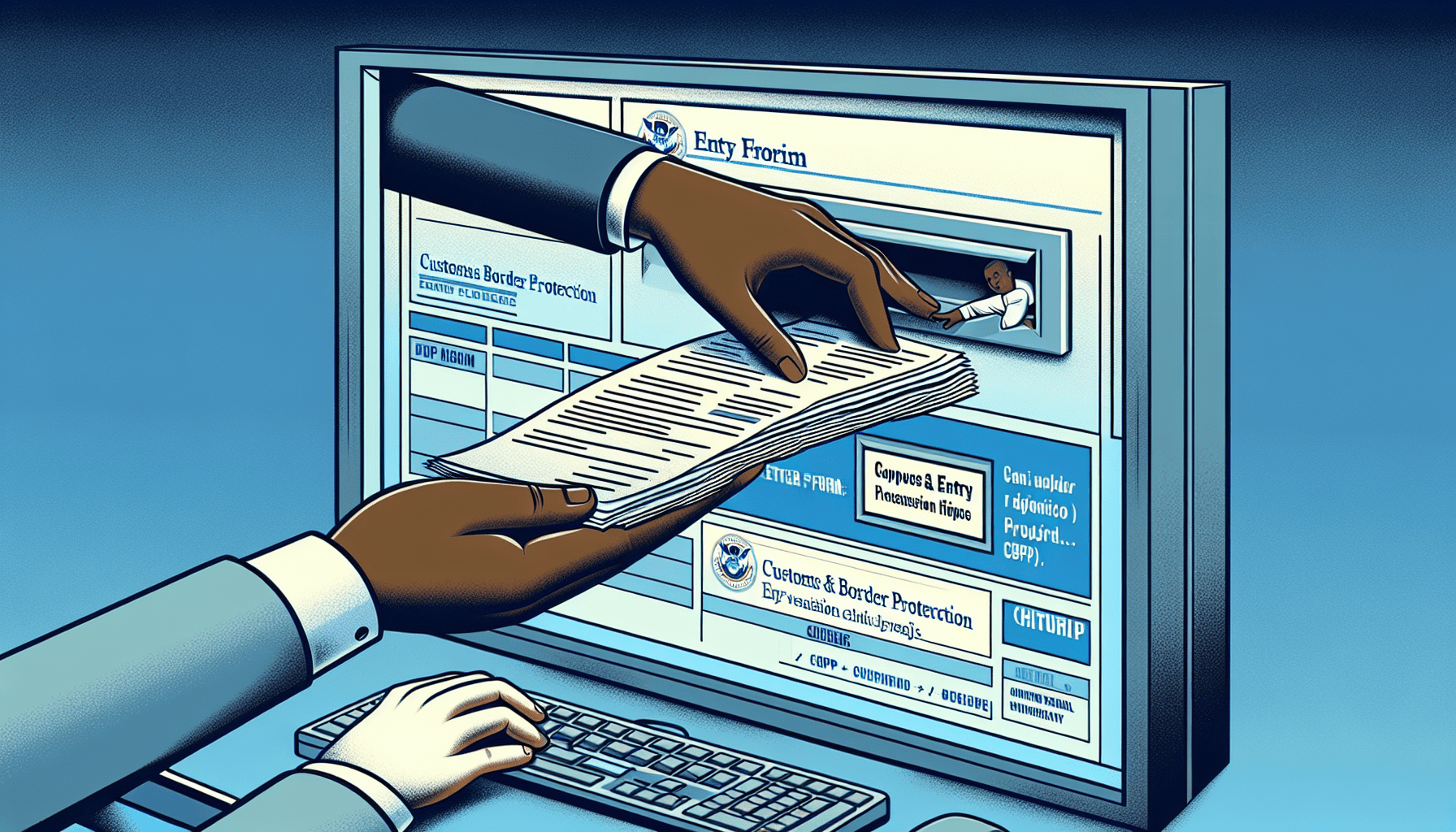
Filing an entry with U.S. Customs and Border Protection (CBP) can seem like a daunting task, especially for those who are unfamiliar with the process. However, understanding the steps involved and following the correct procedures can make the experience much smoother. In this article, we will walk you through the essential information and guidelines for filing an entry with CBP. From determining the appropriate entry type to completing the required documentation, we will provide you with the necessary insights to navigate this complex process effectively.
Create an Account
To begin the process of filing an entry with U.S. Customs and Border Protection (CBP), you will first need to create an account on the CBP website. This will allow you to access the necessary tools and resources to complete your entry.
Go to the CBP website
Start by navigating to the official CBP website. You can do this by typing “CBP” into your preferred search engine and clicking on the official website link.
Click on ‘Create an Account’ button
Once you are on the CBP website, look for the “Create an Account” button. This button is typically located in a prominent position on the homepage. Clicking on this button will initiate the account creation process.
Provide necessary information
Next, you will need to provide all the necessary information to create your CBP account. This may include personal information such as your name, contact details, and address. It is important to ensure that all the information you provide is accurate and up to date.
Verify your email address
After entering your information, you will need to verify your email address. CBP will send you an email with a verification link. Simply click on the link within the email to verify your email address and complete the account creation process.
Log in to the ACE Portal
Once you have successfully created your CBP account, you can proceed to log in to the ACE Portal. The ACE Portal is the online platform that allows users to interact with CBP and electronically submit entry documents.
Access the Automated Commercial Environment (ACE) Portal
To log in to the ACE Portal, go back to the CBP website and look for the login option. This is typically located at the top right corner of the website. Click on the login option, and it will redirect you to the ACE Portal login page.
Enter your username and password
On the ACE Portal login page, enter the username and password that you used during the account creation process. It is important to keep your login credentials secure and confidential to prevent unauthorized access to your account.
Complete the two-factor authentication process
To ensure the security of your account, CBP may require you to complete a two-factor authentication process. This typically involves verifying your identity through a secondary method, such as a unique code sent to your mobile device or email. Follow the instructions provided to complete the authentication process and gain access to the ACE Portal.
Access the eBond system
Once you have logged in to the ACE Portal, you can access the eBond system. The eBond system allows you to apply for and manage bonds electronically, which are often required when importing goods into the United States.
Click on ‘eBond’ tab in the ACE Portal
To access the eBond system, navigate to the ACE Portal and locate the ‘eBond’ tab. Click on this tab to enter the eBond system and proceed with the bond application process.
Select the desired bond type
Within the eBond system, you will be presented with various bond types. Select the bond type that is appropriate for your specific import needs. It is important to choose the correct bond type to ensure compliance with CBP regulations and requirements.
Fill in the required bond information
Once you have selected the bond type, you will need to provide all the necessary information for the bond application. This may include details such as the importer’s name and address, the amount of the bond, and any relevant supporting documentation. Make sure to fill in all the required fields accurately and completely.
Submit the bond application
After filling in the required bond information, review the application to ensure its accuracy. Once you are satisfied with the information provided, submit the bond application through the eBond system. CBP will review the application and notify you of its approval or any additional steps that may be required.

Enter Import Information
With your account created, log in to the ACE Portal, and access the eBond system, you are now ready to enter the import information for your goods. This step involves providing CBP with the necessary details about your shipment and the parties involved.
Provide basic shipment details
Begin by providing basic shipment details such as the port of entry, expected arrival date, and transportation method. This information will help CBP process your entry accurately and efficiently.
Specify the customs entry type
Next, specify the customs entry type for your import. This will depend on various factors, such as the nature of the goods and the purpose of the shipment. Choosing the correct customs entry type is crucial for ensuring compliance with CBP regulations.
Enter the importer of record information
As the importer of record, you will need to provide CBP with your information. This includes your name, address, and contact details. It is important to ensure that this information is accurate and up to date to avoid any delays or issues with your import.
Provide the foreign shipper details
In addition to the importer of record information, CBP will also require the details of the foreign shipper. This includes their name, address, and contact details. Make sure to provide this information accurately to facilitate the smooth processing of your entry.
Include product descriptions and quantities
Lastly, include detailed product descriptions and quantities for your import. This information should be as specific and accurate as possible to ensure that CBP can properly assess the goods and determine any applicable duties or restrictions.
Classify the Goods
The classification of goods is a critical step in the import process, as it determines the applicable duties, taxes, and regulations. To properly classify your goods, you will need to determine the Harmonized System (HS) code, which is an internationally recognized system for classifying products.
Determine the Harmonized System (HS) code
To determine the appropriate HS code for your goods, you will need to consider various factors such as the nature of the product, its composition, and its intended use. The HS code is a numerical code that categorizes products based on these factors.
Access the HTS database
To find the correct HS code, you can access the Harmonized Tariff Schedule (HTS) database. This database provides detailed information on the classification of goods and can help you narrow down the options based on your product’s characteristics.
Search for the appropriate classification
Using the HTS database, search for the appropriate classification for your goods. This may involve entering keywords related to your product or browsing through the different sections and chapters of the HTS to find the most accurate classification.
Review the General Rules of Interpretation (GRIs)
As you determine the HS code, it is important to review the General Rules of Interpretation (GRIs). These rules provide guidance on how to properly interpret and apply the HS code to specific products. Familiarize yourself with these rules to ensure accurate classification.
Assign the correct HS code
Once you have identified the most accurate classification for your goods, assign the corresponding HS code. This code will be used by CBP to determine the applicable duties, taxes, and regulations for your import. Double-check the code to ensure its accuracy before proceeding.
Calculate Duties and Taxes
After classifying your goods with the appropriate HS code, you will need to calculate the duties and taxes that apply to your import. CBP provides an online duty calculator to assist with this process.
Access the CBP’s online duty calculator
To access the duty calculator, visit the CBP website and look for the duty calculator tool. This tool allows you to enter the HS code and country of origin for your goods and obtain an estimate of the duties and taxes that will be levied.
Enter the HS code and country of origin
Enter the HS code that you assigned to your goods and specify the country of origin. These two pieces of information are crucial for accurately calculating the duties and taxes. Make sure to enter them correctly to obtain an accurate estimation.
Specify the valuation method
In addition to the HS code and country of origin, you will need to specify the valuation method for your goods. The valuation method determines how the value of the goods is calculated for duty purposes. Select the appropriate method based on your import.
Include any applicable preferential trade agreements
If your import qualifies for any preferential trade agreements, such as free trade agreements or special duty exemptions, make sure to include this information in the duty calculator. This will help you accurately calculate the duties and taxes that apply to your import.
Submit Entry Documentation
Once you have calculated the duties and taxes for your import, it is time to submit the entry documentation to CBP. This includes all the necessary paperwork and supporting documents required for the import.
Upload required documents
Start by gathering all the required documents for your import. This may include commercial invoices, bills of lading, packing lists, certificates of origin, and any other relevant supporting documents. Once you have them ready, upload them to the designated section of the ACE Portal.
Include commercial invoices and bills of lading
Commercial invoices provide detailed information about the goods, including their value, quantity, and origin. Bills of lading, on the other hand, serve as proof of shipment and ownership. Make sure to include both these documents in your entry documentation.
Attach packing lists and certificates of origin
Packing lists provide detailed information about the packaging and contents of the shipment. Certificates of origin certify the country of origin of the goods. Attach these documents to your entry documentation to provide further clarification and evidence of the shipment.
Include any other relevant supporting documents
Depending on the nature of your import, there may be other relevant supporting documents that you need to include in your entry documentation. This could include licenses, permits, or any other special requirements imposed by CBP or other regulatory agencies. Make sure to provide all the necessary supporting documentation to avoid any delays or issues with your entry.
Pay Required Fees
In addition to the duties and taxes, there may be other fees that you need to pay as part of the import process. These fees can include processing fees, merchandise processing fees, and user fees.
Calculate applicable fees
Before submitting your entry, calculate the applicable fees based on the information provided by CBP. Consider the type and value of your goods, as well as any additional services or requirements that may incur fees. Double-check the calculations to ensure accuracy.
Access the CBP’s online payment portal
To make the required fee payments, access the CBP’s online payment portal. This portal allows you to securely provide the necessary payment information and complete the payment process.
Provide necessary payment information
Follow the instructions provided on the payment portal to enter the necessary payment information. This may include credit card details or other accepted payment methods. Make sure to provide accurate and complete information to avoid any payment processing issues.
Submit the payment
Once you have entered the payment information, review the details to ensure accuracy. If everything is correct, submit the payment through the online payment portal. CBP will process the payment and provide confirmation of receipt.
Submit the Entry
After completing all the necessary steps and documentation, it is time to review, certify, and submit the entry to CBP. This is the final step before your goods can be assessed and cleared for entry into the United States.
Review all information for accuracy
Before submitting the entry, thoroughly review all the information provided for accuracy. Double-check all the details, including the shipment information, HS code, documentation, and payment information. Make any necessary corrections or updates before proceeding.
Verify compliance with import regulations
Ensure that your entry is compliant with all applicable import regulations, including CBP requirements and any other regulatory agencies involved in the import process. This includes verifying the accuracy of the classification, providing all required documentation, and fulfilling any special requirements.
Certify and submit the entry
Once you are confident that all the information is accurate and compliant, certify and submit the entry. This is typically done by selecting the appropriate submission option within the ACE Portal and confirming your submission. CBP will then process your entry and begin the assessment and clearance process.
Receive confirmation of submission
After submitting the entry, you will receive confirmation from CBP that your entry has been successfully submitted. This confirmation may be in the form of a notification within the ACE Portal or an email. Keep this confirmation for your records as proof of submission.
Monitor the Entry Status
Once your entry has been submitted, it is important to monitor its status to stay informed about any updates or requested actions. The ACE Portal provides a convenient way to track your entry and communicate with CBP throughout the import process.
Check the CBP’s ACE Portal
Regularly check the ACE Portal for updates on your entry status. The portal will display the current status of your entry, including any requests for additional information or actions needed. Stay vigilant and address any requests promptly to avoid delays or complications.
Track the status of your entry
Use the tracking features of the ACE Portal to monitor the progress of your entry. This can include tracking the clearance process, the assessment of duties and taxes, and the status of any related customs procedures. Stay informed about the progress of your entry to ensure timely and smooth processing.
Follow up on any requested actions
If CBP requests any additional information or actions, promptly follow up and provide the requested items. This may involve submitting additional documentation, clarifying details, or responding to inquiries. Address these requests as soon as possible to avoid delays and ensure the successful completion of your import.
Obtain release and delivery instructions
Once the assessment and clearance process is complete, CBP will provide release and delivery instructions for your goods. These instructions will specify the necessary steps to take to obtain physical possession of the imported goods. Follow these instructions carefully to ensure a seamless delivery process.
Customs Clearance For Exports
In the world of international trade, exporting goods can be a complex process, requiring meticulous attention to detail and adherence to various regulations. One crucial step in this journey is customs clearance for exports. This process involves the necessary documentation and assessment of goods by customs authorities to ensure compliance with legal requirements, including the payment of duties and taxes. By understanding the intricacies of customs clearance, exporters can streamline their operations, avoid delays, and navigate the global market with confidence. Generating a smooth transition from production to delivery, customs clearance for exports is an indispensable element of successful trade ventures.
Importance of Customs Clearance
Customs clearance is an integral process in international trade that ensures the legality of exports and helps to steer clear of penalties and delays. Without proper customs clearance, exporters can face significant legal consequences and financial setbacks. This article will delve into the importance of customs clearance, the customs clearance process, the essential export documentation, customs declarations, inspections, duties and fees, the role of customs clearance agents, dealing with delays, the automation of customs clearance, and the importance of compliance.
Customs Clearance Process
The customs clearance process involves a series of steps that exporters must follow to comply with customs regulations. By understanding and adhering to this process, exporters can minimize the risk of penalties and ensure a smooth flow of goods across international borders.
-
Preparation of Export Documents: Before exporting goods, exporters must gather and prepare the necessary documentation. This includes documents such as a commercial invoice, bill of lading or airway bill, packing list, and certificate of origin. These documents provide relevant information about the goods, their value, and their origin.
-
Submission of Documents: Once all the required export documents are in order, exporters must submit them to the customs authorities for review. This is typically done electronically through a customs management system or in person at the designated customs office.
-
Customs Inspection and Evaluation: Customs authorities conduct inspections and evaluate the goods to verify their compliance with regulations, including proper classification, valuation, and adherence to any specific requirements or restrictions. This step ensures that the goods meet the necessary standards and comply with trade policies.
-
Payment of Customs Duties and Fees: After the customs authorities have assessed the goods, exporters must pay any applicable customs duties and fees. These charges are determined based on the classification and value of the goods being exported. Timely payment ensures the smooth release of the goods from customs control.
Export Documentation
Accurate export documentation is crucial for customs clearance and facilitates the smooth transition of goods across borders. Here are some essential export documents that exporters must prepare and submit during the customs clearance process:
-
Commercial Invoice: This document provides detailed information about the exported goods, including the description, quantity, unit value, and total value. It serves as evidence of the transaction between the exporter and the buyer and is used for customs valuation purposes.
-
Bill of Lading or Airway Bill: The bill of lading is a document issued by the shipping company or carrier, while the airway bill is for air shipments. These documents serve as evidence of the contract of carriage and provide details about the shipment, such as the origin, destination, and consignee. They are crucial for customs clearance and logistics purposes.
-
Packing List: A packing list provides a detailed breakdown of the contents of each package or container being shipped. It includes information about the quantity, weight, dimensions, and packaging description of the goods. This document assists customs authorities in verifying the accuracy of the shipment and helps in the inspection process.
-
Certificate of Origin: The certificate of origin is necessary to determine the origin of the goods being exported. It certifies that the goods were produced, manufactured, or assembled in a particular country. This document is crucial for customs purposes, as it may affect the applicable customs duties, tariffs, or trade agreements between countries.
Customs Declarations
Customs declarations play a pivotal role in the customs clearance process, as they provide customs authorities with essential information about the goods being exported. Here are some important aspects to consider when completing customs declarations:
-
Types of Customs Declarations: There are various types of customs declarations, depending on the nature of the goods and the customs requirements of the exporting and importing countries. Some common types include entry summary declaration, export declaration, re-export declaration, and temporary export declaration. It is crucial to determine the appropriate type of declaration to accurately reflect the nature of the exported goods.
-
Required Information: Customs declarations require specific information about the goods, such as their description, quantity, value, weight, packaging, and intended use. Additionally, exporters may need to provide information related to the country of origin, the exporter’s details, and any applicable export licenses or permits.
-
Correct Classification of Goods: Goods are categorized into different harmonized system codes or commodity codes based on their characteristics and intended use. Accurate classification is essential for customs clearance, as it determines the applicable customs duties, taxes, and regulations. Exporters must ensure that they correctly classify their goods to avoid delays and potential penalties.
-
Valuation of Goods: Customs authorities determine the value of goods for customs clearance purposes. The value declared on the customs declaration should reflect the transaction value, which includes the price paid or payable for the goods, as well as any adjustments required by customs regulations. Proper valuation is crucial for assessing the correct customs duties, taxes, and fees.
Customs Inspections
Customs inspections are conducted to ensure compliance with regulations, verify the accuracy of documents, and assess the physical condition of the goods. Here are the main aspects of customs inspections in the clearance process:
-
Selection for Inspection: Customs authorities use risk-based selection methods to determine which shipments to inspect. These methods may consider factors such as the nature of the goods, the country of origin, the compliance history of the exporter, or specific intelligence on potential risks. Some shipments are selected for inspection randomly, while others are targeted based on certain criteria.
-
Physical Examination of Goods: Selected shipments undergo a physical examination, where customs officers inspect the goods to verify their accuracy and compliance with regulations. This may involve opening packages, checking labeling, verifying quantity and quality, and examining any seals or containers. Physical examinations help detect any discrepancies or inconsistencies in the documentation or actual goods being shipped.
-
Verification of Documents: Customs authorities compare the documentation provided by the exporter with the physical goods to ensure consistency and accuracy. They may cross-reference information on invoices, packing lists, and certificates of origin with the actual goods. Any discrepancies or irregularities can result in delays or additional scrutiny by customs authorities.
-
Sampling and Laboratory Testing: In some cases, customs authorities may take samples of the goods for laboratory testing or analysis. This is particularly relevant for certain products that require compliance with specific standards or safety regulations. Laboratory testing helps ensure that the goods meet the necessary requirements and do not pose any risks to public health or safety.
Customs Duties and Fees
Customs duties and fees are financial obligations that exporters must fulfill as part of the customs clearance process. Understanding and calculating these charges accurately is vital to avoid unnecessary expenses and delays. Here are some key aspects to consider:
-
Understanding Customs Duties: Customs duties are taxes levied on imported or exported goods by customs authorities. They are typically based on the value, quantity, or weight of the goods and are imposed to protect domestic industries, control imports, or generate revenue for the government. Exporters must be aware of the applicable customs duties in the destination country to factor them into their pricing and export planning.
-
Calculating Customs Duties: Customs duties can be calculated in different ways, depending on the customs regulations of the importing country. Some common methods include ad valorem duties (based on the value of the goods), specific duties (based on a specific unit, such as weight or quantity), or a combination of both. Exporters should consult the customs regulations and use the correct duty calculation method to determine the accurate amount.
-
Additional Fees and Charges: In addition to customs duties, exporters may also incur other fees and charges during the customs clearance process. These can include handling fees, administrative fees, customs broker fees, storage fees, and inspection fees. It is essential to account for these additional charges when estimating the overall cost of exporting goods.
Customs Clearance Agents
Employing a customs clearance agent can bring numerous benefits to exporters, given their expertise and knowledge in navigating the complexities of customs procedures. Here is an overview of the advantages, choosing a reliable agent, and the responsibilities of customs clearance agents:
-
Benefits of Employing an Agent: Customs clearance agents are well-versed in the customs clearance process and can provide valuable guidance and support to exporters. They have extensive knowledge of the documentation requirements, customs regulations, and potential pitfalls. Employing an agent can save time, avoid errors or omissions, and help ensure a smooth customs clearance experience.
-
Choosing a Reliable Agent: When selecting a customs clearance agent, exporters should consider several factors. These include the agent’s experience in the industry, their understanding of the specific export market, their reputation, and the services they offer. It is crucial to choose an agent with a proven track record and excellent communication skills to facilitate a seamless customs clearance process.
-
Agent’s Responsibilities and Role: Customs clearance agents are responsible for assisting exporters in preparing and submitting the necessary documentation, liaising with customs authorities on behalf of the exporter, coordinating inspections or laboratory tests, and dealing with any issues that may arise during the clearance process. They act as a bridge between exporters and customs authorities, ensuring compliance and efficiency.
Customs Clearance Delays
Customs clearance delays can be frustrating and costly for exporters. To avoid or minimize these delays, it is essential to understand their common causes and implement strategies to address them effectively. Here are some insights into the causes of delays and tips to mitigate them:
-
Common Causes of Delays: Customs clearance delays can stem from various factors, such as incomplete or inaccurate documentation, undeclared or misdeclared goods, non-compliance with regulations, inspections or laboratory testing requirements, customs system failures, or an overload of customs work. Exporters must anticipate these potential causes and take proactive measures to avoid delays.
-
Tips to Avoid Delays: To minimize customs clearance delays, exporters should adopt best practices, such as maintaining accurate and complete documentation, ensuring proper classification and valuation of goods, staying updated on customs regulations, partnering with reliable customs clearance agents, and establishing good communication with customs authorities. Regularly reviewing and streamlining internal processes and systems can also help expedite the clearance process.
-
Dealing with Delays Effectively: In situations where delays are unavoidable, exporters must adopt a problem-solving mindset. Promptly communicating and cooperating with customs authorities, providing any additional information or documentation required, and addressing any concerns or discrepancies can help resolve delays more efficiently. Seeking assistance from customs clearance agents or trade associations can also provide valuable support during challenging clearance situations.
Customs Clearance Automation
The automation of customs clearance processes through the use of advanced technologies has revolutionized the efficiency and effectiveness of international trade. Here are some insights into the advantages of automated systems, the challenges of implementation, and the current trends in automated customs clearance:
-
Advantages of Automated Systems: Automated customs clearance systems offer numerous advantages for exporters. They reduce the time and effort required for completing paperwork, minimize manual errors and inconsistencies, enhance data accuracy, enable quicker processing and clearance, provide real-time tracking of shipments, and improve transparency and visibility across the supply chain. Automated systems also facilitate better risk management and help detect and prevent fraud or smuggling.
-
Implementation Challenges: Implementing automated customs clearance systems can present certain challenges for exporters. These include the need for initial investment in technology and infrastructure, integration with existing systems, ensuring compatibility with customs authorities’ systems, data security concerns, and training employees to effectively utilize and manage the automated systems. Overcoming these challenges requires careful planning, collaboration with technology providers, and ongoing evaluation and optimization.
-
Current Trends in Automated Customs Clearance: The automation of customs clearance processes continues to evolve with emerging technologies and changing trade dynamics. Trends such as artificial intelligence, machine learning, blockchain, and data analytics are shaping the future of automated customs clearance. These technologies offer opportunities for improved risk assessment, streamlined processes, enhanced security, and increased efficiency in trade facilitation. Exporters should stay informed about these trends and assess their potential benefits for their own operations.
Importance of Compliance
Compliance with export regulations and staying abreast of customs changes are crucial for exporters to maintain the integrity of their operations and avoid legal consequences. Here’s why compliance is of utmost importance:
-
Adhering to Export Regulations: Export regulations are in place to ensure fair trade practices, protect national security interests, and control the movement of goods to prevent illegal activities. By complying with these regulations, exporters demonstrate their commitment to ethical business practices, maintain the reputation of their brand, and mitigate the risk of legal issues, penalties, or embargoes.
-
Keeping Up with Customs Changes: Customs regulations and requirements can change, sometimes unexpectedly. Exporters must stay informed about any changes in export control regulations, trade agreements, customs procedures, or documentation requirements that may affect their operations. By actively monitoring these changes and adjusting their practices accordingly, exporters can avoid delays, comply with new obligations, benefit from trade opportunities, and maintain the smooth flow of their export operations.
-
Avoiding Legal Consequences: Non-compliance with customs regulations can result in severe legal consequences, including financial penalties, shipment seizures, loss of export privileges, damage to business relationships, and even criminal charges. Compliance should be a priority for exporters to protect their business interests, minimize risks, and ensure sustainable growth in the international market.
In conclusion, customs clearance is a vital process for exporters to ensure the legality of their exports, avoid penalties and delays, and maintain compliance with international trade regulations. Proper preparation of export documentation, accurate customs declarations, adherence to customs inspections, understanding customs duties and fees, leveraging the expertise of customs clearance agents, addressing and avoiding delays, embracing automated systems, and prioritizing compliance are key elements in navigating the complex world of customs clearance. By following these best practices, exporters can streamline their operations, minimize risks, and reap the benefits of successful international trade.
ISF 10+2 Data Elements Explained

In the world of international trade, compliance with customs regulations is crucial for smooth operations. One key component of this compliance is the ISF 10+2 data elements. Understanding these data elements is essential for importers and shippers to ensure accurate and timely submission of information to customs authorities. This article provides a comprehensive explanation of the ISF 10+2 data elements, shedding light on their significance and helping you navigate the intricacies of international trade.
What is ISF 10+2?
Definition of ISF 10+2
ISF 10+2, also known as Importer Security Filing, is a program implemented by U.S. Customs and Border Protection (CBP) under the Security and Accountability for Every Port Act. The program requires importers and vessel carriers to submit certain information regarding cargo shipments before they arrive at a U.S. port.
Importance of ISF 10+2
ISF 10+2 plays a crucial role in enhancing border security, facilitating trade, and conducting risk assessments. By requiring advanced information on shipments, CBP can better identify potential security risks and take necessary actions to ensure the safety of the nation. Additionally, ISF 10+2 allows for more efficient and streamlined trade processes, reducing delays and improving supply chain management.
History of ISF 10+2
Background of ISF 10+2
The need for stricter cargo security measures became evident after the terrorist attacks on September 11, 2001. In response, the U.S. government introduced several initiatives to strengthen security at ports and enhance border control capabilities. The ISF 10+2 program was implemented as part of these efforts to prevent potential threats from entering the country through cargo shipments.
Implementation of ISF 10+2
ISF 10+2 was officially implemented by CBP on January 26, 2009. The program required importers and vessel carriers to submit detailed information about their shipments at least 24 hours before the cargo was loaded onto a vessel bound for the United States. This pre-arrival information enables CBP to conduct comprehensive risk assessments and make informed decisions regarding cargo clearance.
Purpose of ISF 10+2
Enhancing Border Security
The primary purpose of ISF 10+2 is to enhance border security by providing CBP with advanced information on incoming cargo shipments. By analyzing the data elements submitted in the ISF filings, CBP can assess potential security risks and take appropriate measures to prevent the entry of dangerous cargo or contraband.
Facilitating Trade
While the primary goal of ISF 10+2 is security, it also aims to facilitate trade by streamlining the import process. By requiring importers and carriers to submit information in advance, CBP can perform risk assessments and make determinations about high-risk shipments before they arrive at the port. This reduces the need for extensive inspections and allows for more efficient release of low-risk cargo.
Risk Assessment
ISF 10+2 plays a critical role in conducting risk assessments for incoming cargo shipments. By analyzing the data elements provided, CBP can identify potentially high-risk shipments and allocate resources accordingly. This enables CBP to focus its efforts on inspecting and scrutinizing cargo that poses the greatest security threats, while allowing for the smooth flow of low-risk shipments.

ISF 10+2 Data Elements
Importer Security Filing (ISF)
The Importer Security Filing, or ISF, is the primary filing submitted by the importer or their authorized agent. It contains several data elements related to the cargo shipment, such as the consignee, seller, buyer, and other essential information necessary for CBP’s risk assessments.
10 Importer Data Elements
The ISF 10+2 program requires importers to provide ten specific data elements in their filings. These include the container stuffing location, consolidator/stuffer information, buyer (importer of record), ship to party, manufacturer/seller, country of origin, commodity HTSUS number, container stuffing date, bill of lading number, and bond number. Each data element contributes to CBP’s overall risk assessment process.
2 Carrier Data Elements
Vessel carriers are required to submit two specific data elements as part of the ISF 10+2 program. These include the vessel stow plan, which details how the cargo will be loaded onto the vessel, and container status messages, which provide updates on the container’s location and movement throughout the supply chain.
Timeliness of Filing
Timeliness is a critical aspect of ISF 10+2 compliance. Importers and vessel carriers must ensure that their filings are submitted to CBP at least 24 hours prior to the cargo being loaded onto a vessel bound for the United States. Failure to meet this deadline can result in penalties and delays in cargo clearance.
Explanation of Importer Security Filing (ISF)
Definition of ISF
The Importer Security Filing, or ISF, is a comprehensive document that importers or their authorized agents are required to file with CBP. It contains crucial information about the cargo shipment, including details about the importer, consignee, seller, buyer, and other entities involved in the transaction. The ISF plays a vital role in CBP’s risk assessment process, allowing them to identify potential security risks and take appropriate actions.
When and How to File ISF
The ISF must be filed at least 24 hours before the cargo is loaded onto a vessel bound for the United States. Importers or their authorized agents can submit the ISF electronically through the Automated Broker Interface (ABI), the Automated Commercial Environment (ACE), or any other approved electronic data interchange system. It is important to ensure that all required data elements are accurately and completely provided to avoid penalties and delays.
Penalties for Non-Compliance
Failure to comply with the ISF 10+2 requirements can result in significant penalties. Importers and vessel carriers may be subject to monetary fines based on the severity and frequency of non-compliance. Additionally, non-compliant cargo may be denied entry or subjected to extensive inspections, resulting in delays and added costs. It is crucial for importers and carriers to understand and fulfill their obligations under the ISF 10+2 program to avoid these penalties.
Explanation of 10 Importer Data Elements
Container Stuffing Location
The container stuffing location refers to the place where the cargo is loaded into the shipping container. This data element provides CBP with information about the origin of the cargo and helps in determining potential security risks associated with specific locations.
Consolidator (Stuffer)
The consolidator, also known as the stuffer, is the entity or organization responsible for consolidating the cargo into shipping containers. This data element helps CBP identify who is responsible for the loading of the cargo and ensures accountability for the contents of the container.
Buyer (Importer of Record)
The buyer, also known as the importer of record, is the individual or entity that is purchasing or receiving the cargo shipment. This data element provides CBP with information about the party responsible for the cargo and helps in assessing the legitimacy of the transaction.
Ship to Party
The ship to party refers to the individual or entity that will ultimately receive the cargo at its final destination. This data element is essential for CBP to accurately track the movement and delivery of the cargo and ensure its proper clearance.
Manufacturer (Seller)
The manufacturer, also known as the seller, is the entity responsible for producing or supplying the goods being imported. This data element provides CBP with information about the origin of the cargo and helps in determining the authenticity and legitimacy of the goods.
Country of Origin
The country of origin refers to the country in which the goods being imported were produced or manufactured. This data element is critical for CBP to assess potential security risks associated with specific countries and to enforce trade agreements and regulations.
Commodity HTSUS Number
The commodity HTSUS number, or Harmonized Tariff Schedule of the United States number, is a unique identification code assigned to each specific type of imported good. This data element helps CBP determine the appropriate duty rates, restrictions, and regulations applicable to the cargo.
Container Stuffing Date
The container stuffing date is the date on which the cargo is loaded into the shipping container. This data element provides CBP with information about the timing of the cargo shipment and helps in coordinating inspections and other necessary actions.
Bill of Lading Number
The bill of lading number is a unique identifier assigned to a specific shipment of cargo. This data element helps CBP track the movement and location of the cargo throughout the supply chain and ensures accurate identification of the shipment.
Bond Number
The bond number refers to the identification number of the customs bond required for the importation of goods. This data element provides CBP with information about the importers’ compliance with customs regulations and ensures financial responsibility for any potential liabilities.
Explanation of 2 Carrier Data Elements
Vessel Stow Plan
The vessel stow plan is a detailed document that outlines how the cargo will be loaded onto the vessel. It includes information about the location of each container on the vessel, the weight distribution, and any special handling requirements. This data element allows CBP to assess the potential security risks associated with the vessel cargo and plan for any necessary inspections or actions.
Container Status Messages
Container status messages are updates on the location and movement of the container throughout the supply chain. These messages provide real-time information regarding the progress of the container from the loading point to its final destination. This data element allows CBP to track the cargo’s movement and ensure compliance with the ISF 10+2 requirements.
Importance of Timeliness in Filing
Consequences of Late Filing
Timely filing of the ISF is of utmost importance to avoid penalties and delays in cargo clearance. Failure to submit the ISF at least 24 hours before the cargo is loaded onto a vessel can result in monetary fines, denied entry of the cargo, or extensive inspections and examinations. These consequences can significantly impact importers and vessel carriers, causing delays, additional costs, and damage to their reputation.
Benefits of Timely Filing
On the other hand, timely filing of the ISF offers several benefits. Importers and vessel carriers who submit their filings in advance enable CBP to perform thorough risk assessments before the cargo arrives at the port. This allows for more efficient targeting and allocation of inspection resources, resulting in quicker clearance and release of low-risk cargo. Timely filing also helps importers and carriers to avoid penalties and maintain a positive relationship with CBP.
Updates and Changes to ISF 10+2
Revised Guidelines
Over the years, CBP has made revisions and updates to the ISF 10+2 program to address industry concerns and improve compliance. These changes include clarifications on data elements, modified timelines for filing, and additional guidance on penalty mitigation. Importers and vessel carriers should stay informed about these revisions and ensure their compliance with the most recent guidelines.
Public Response and Feedback
The ISF 10+2 program has received mixed responses from the importing community. While some appreciate the enhanced security and trade facilitation benefits, others have expressed concerns about the complexities and potential liabilities associated with the program. CBP encourages feedback and actively seeks input from stakeholders to address these concerns and make necessary adjustments to the program.
Future Developments
CBP continues to monitor the effectiveness of the ISF 10+2 program and explores opportunities for further improvement. As technology advances and global trade evolves, CBP aims to enhance the program’s capabilities and streamline the import process. Importers and vessel carriers should remain vigilant and adapt to any future developments in the ISF 10+2 requirements to ensure compliance and benefit from potential improvements.
Conclusion
Summary of ISF 10+2
ISF 10+2, or Importer Security Filing, is a program implemented by CBP to enhance border security and facilitate trade. The program requires importers and vessel carriers to submit specific data elements regarding cargo shipments before they arrive at a U.S. port. The data elements provided in the ISF filings play a crucial role in CBP’s risk assessment process, enabling them to identify potential security risks and take appropriate actions.
Final Thoughts
The ISF 10+2 program has significantly improved cargo security and trade facilitation at U.S. ports. By requiring advanced information on shipments, CBP can efficiently target potential security threats and facilitate the clearance of low-risk cargo. Importers and vessel carriers must understand and comply with the ISF 10+2 requirements to avoid penalties and delays. Staying informed about updates and changes to the program is essential to ensure ongoing compliance and benefit from potential improvements.
ISF 10+2 For Raw Materials

The ISF 10+2 program has brought significant changes to trade regulations, and it is essential for businesses involved in importing raw materials to understand its implications. This article provides a concise overview of the ISF 10+2 requirements specifically focused on raw materials, outlining what businesses need to know in order to comply with the regulations. By familiarizing yourself with the key aspects of ISF 10+2 for raw materials, you can ensure a smooth and efficient import process while avoiding potential penalties and delays.
What is ISF 10+2?
ISF 10+2, also known as Importer Security Filing or ISF, is a customs requirement introduced by the U.S. Customs and Border Protection (CBP) to enhance the security of inbound cargo shipments and ensure compliance with customs regulations. It requires importers to provide specific information about the raw materials they are importing at least 24 hours before the goods are loaded onto the vessel bound for the United States.
Explanation of ISF 10+2
ISF 10+2 is a comprehensive filing requirement that mandates importers to submit a detailed electronic form, also known as the 10+2 filing, containing specific information regarding the raw materials being imported. The filing consists of ten data elements provided by the importer and two data elements provided by the carrier. These data elements include information about the manufacturer, seller, buyer, container stuffing location, and other pertinent details.
Purpose of ISF 10+2
The purpose of ISF 10+2 is to enhance the security of the global supply chain by enabling CBP to assess potential threats and identify high-risk shipments before they reach U.S. ports. By collecting advance data on raw materials shipments, CBP can analyze the information and take appropriate action to mitigate risks. Additionally, ISF 10+2 helps CBP enforce trade laws and regulations, prevent smuggling and terrorism, and safeguard the economy and public safety.
Raw Materials Covered by ISF 10+2
List of raw materials included
ISF 10+2 applies to a wide range of raw materials that are imported into the United States. Some examples of raw materials covered by ISF 10+2 include steel, aluminum, petroleum, chemicals, textiles, wood, rubber, and plastics. The list of raw materials covered by ISF 10+2 is extensive and encompasses various industries and sectors.
Reasons for including these materials
The inclusion of these raw materials in the ISF 10+2 filing requirement is primarily driven by their significant impact on the U.S. economy and national security. Many of these materials are vital for the production and manufacturing of various goods and products. Therefore, ensuring the security and compliance of their importation is crucial for maintaining the integrity of the domestic supply chain and protecting critical industries.
Importance of ISF 10+2 for Raw Materials
Ensuring compliance with customs regulations
ISF 10+2 plays a critical role in ensuring importers’ compliance with customs regulations. By providing accurate and timely information about the raw materials being imported, importers demonstrate their commitment to adhering to the law and fulfilling their obligations as responsible participants in international trade. Non-compliance can lead to severe penalties, shipment delays, and reputational damage for importers.
Reducing the risk of penalties and delays
Complying with ISF 10+2 helps to reduce the risk of penalties and delays associated with non-compliance. CBP has the authority to impose penalties for not filing or filing inaccurate ISF 10+2 forms, which can amount to thousands of dollars per violation. Additionally, failure to comply with ISF 10+2 requirements can result in customs clearance delays and potential disruptions to the supply chain.
Enhancing supply chain visibility
ISF 10+2 improves visibility within the supply chain by providing CBP with valuable data about raw material shipments before they arrive in the United States. This increased visibility enables CBP to assess potential risks, identify anomalies, and take necessary action to maintain the security and integrity of the supply chain. Importers benefit from this enhanced visibility by having greater control and insight into their supply chain operations.

ISF 10+2 Requirements for Raw Materials
Filing the ISF 10+2 form
Importers of raw materials subject to the ISF 10+2 requirement must file the necessary form electronically. The ISF 10+2 form collects detailed information about the raw materials, including their manufacturer, seller, buyer, country of origin, and container stuffing location. Importers must ensure that the information provided is accurate and complete to comply with the requirements.
Timelines for filing
Importers are required to submit the ISF 10+2 form at least 24 hours before the goods are loaded onto the vessel bound for the United States. It is crucial for importers to adhere to this timeline to avoid penalties and shipment delays. Late filings or inadequate information can result in CBP taking enforcement action, which can have severe consequences for importers.
Information required in the form
The ISF 10+2 form requires importers to provide specific information about the raw materials being imported. This information includes details about the manufacturer, seller, buyer, country of origin, container stuffing location, and more. Importers must ensure the accuracy and completeness of the information provided to comply with ISF 10+2 requirements.
Consequences of Non-Compliance
Penalties for not filing or inaccuracies in filing
Importers who fail to file the ISF 10+2 form or provide inaccurate information may face significant penalties. CBP has the authority to impose penalties for non-compliance, which can range from $5,000 to $10,000 per violation. Additionally, multiple violations can attract higher penalties, potentially costing importers substantial amounts of money. It is crucial for importers to prioritize compliance to avoid these financial liabilities.
Delays in customs clearance
Non-compliance with ISF 10+2 requirements can result in customs clearance delays. CBP may hold or examine shipments that fail to meet the filing requirements, which can cause disruptions to the supply chain and impact importers’ operations. Delays in customs clearance can lead to increased storage costs, missed delivery deadlines, and potential loss of business opportunities, underscoring the importance of complying with ISF 10+2.
How to Ensure ISF 10+2 Compliance for Raw Materials
Understanding the requirements
Importers of raw materials should invest time and effort in understanding the ISF 10+2 requirements. By thoroughly familiarizing themselves with the filing process, timelines, and necessary information, importers can ensure they meet all the compliance obligations and avoid penalties. Utilizing available resources, such as CBP guidelines and industry associations, can help importers gain a comprehensive understanding of the requirements.
Working with a customs broker
Engaging the services of a customs broker can greatly assist importers in ensuring ISF 10+2 compliance. Customs brokers are well-versed in customs regulations and can navigate the complexities of filing ISF 10+2 forms accurately and timely. Their expertise can minimize the risk of errors and non-compliance, allowing importers to focus on their core business activities while maintaining compliance with ISF 10+2.
Maintaining accurate records
Importers should establish robust record-keeping practices to ensure the accuracy and completeness of information provided in the ISF 10+2 forms. Keeping detailed records of transactions, including invoices, purchase orders, bill of lading, and other relevant documents, enables importers to reference the information accurately when filing the ISF 10+2 forms. Accurate records also support transparency and help demonstrate compliance in case of audits or inquiries.
Establishing clear communication with suppliers
Effective communication with suppliers is crucial for ISF 10+2 compliance. Importers should inform their suppliers about the ISF 10+2 requirements and ensure that they provide the necessary information in a timely manner. Clear and open lines of communication facilitate the smooth flow of information, minimize delays, and enhance compliance throughout the supply chain.
Benefits of ISF 10+2 for Raw Materials Importers
Avoiding fines and penalties
Complying with ISF 10+2 requirements allows raw materials importers to avoid fines and penalties imposed by CBP. By providing accurate and timely information in the ISF 10+2 forms, importers demonstrate their commitment to compliance and minimize the risk of enforcement actions. Avoiding fines and penalties helps importers maintain financial stability and protect their reputation in the industry.
Preventing shipment delays
ISF 10+2 compliance contributes to preventing shipment delays for raw materials importers. By meeting the required filing timelines and providing accurate information, importers minimize the likelihood of CBP holding or examining their shipments. Smooth customs clearance processes enable importers to receive their raw materials in a timely manner, ensuring uninterrupted production and delivery of goods.
Improving supply chain efficiency
Compliance with ISF 10+2 requirements enhances supply chain efficiency for raw materials importers. The timely submission of accurate information empowers CBP to perform risk assessments and take necessary actions in advance. This proactive approach to security and compliance ensures that the supply chain remains secure and uninterrupted, allowing importers to optimize their operations and meet customer demands effectively.
Challenges in Implementing ISF 10+2 for Raw Materials
Complexity of gathering required information
Complying with ISF 10+2 can be challenging due to the complexity of gathering the necessary information. Importers often need to collect data from multiple sources, including suppliers, manufacturers, and transportation providers. Coordinating and verifying this information can be time-consuming and may require significant effort to ensure accuracy and completeness.
Dealing with multiple suppliers and shipments
Importers who work with multiple suppliers and handle numerous shipments face additional challenges in implementing ISF 10+2. Coordinating and managing the filing requirements for each supplier and shipment can be resource-intensive. Importers must establish effective processes and systems to streamline the filing process and ensure compliance across their diverse supply chain network.
Keeping up with regulatory changes
Regulatory changes can pose challenges for importers in maintaining ISF 10+2 compliance. As customs regulations evolve, importers must stay abreast of the requirements and adapt their processes accordingly. Failure to keep up with regulatory changes can result in non-compliance and the associated penalties and delays. Regular monitoring of regulatory updates and engaging with industry associations can help importers stay informed and prepared.
Best Practices for ISF 10+2 Compliance
Building a strong relationship with suppliers
Establishing a strong relationship with suppliers is essential for successful ISF 10+2 compliance. Clear communication, mutual understanding of requirements, and regular information sharing foster collaboration and ensure timely provision of accurate data. Importers and suppliers should work together as partners to meet ISF 10+2 obligations and maintain the integrity of the supply chain.
Utilizing technology for data management
Leveraging technology for data management can significantly improve ISF 10+2 compliance. Implementing robust data management systems and software enables importers to capture, store, and analyze the necessary information efficiently. Automation can streamline the filing process, reduce the risk of errors, and enhance data accuracy, ultimately enhancing compliance and optimizing supply chain operations.
Regularly reviewing and updating processes
Importers should regularly review and update their ISF 10+2 processes to adapt to changing requirements and business dynamics. Conducting periodic assessments and audits of compliance procedures helps identify areas for improvement and ensures that processes remain effective and compliant. Importers should also proactively monitor industry news and regulatory updates to stay informed about any changes that may impact ISF 10+2 compliance.
Conclusion
In summary, ISF 10+2 plays a crucial role in securing the global supply chain and ensuring compliance with customs regulations for raw materials importers. By providing advance data on raw material shipments, importers contribute to maintaining supply chain visibility, reducing penalties and delays, and enhancing overall supply chain efficiency. While implementing ISF 10+2 can present challenges, importers can optimize compliance by understanding the requirements, working with customs brokers, maintaining accurate records, and establishing clear communication with suppliers. By prioritizing compliance, importers can avoid fines, prevent shipment delays, and foster a secure and resilient supply chain network.
What Is The Role Of The Department Of Homeland Security (DHS) In Import Security?

The Department of Homeland Security (DHS) plays a vital role in safeguarding the United States against various threats, including those posed by imports. As the primary federal agency responsible for protecting the nation’s borders, the DHS has implemented robust import security measures to ensure the safety and security of goods that enter the country. By collaborating with various entities such as U.S. Customs and Border Protection (CBP), the DHS employs a multi-layered approach to detecting and mitigating potential risks associated with imported goods. Through advanced technologies, intelligence sharing, and regulatory enforcement, the DHS effectively monitors and controls the flow of imports, contributing to the overall security and well-being of the nation.
Overview of the Department of Homeland Security (DHS)
Creation and Purpose of DHS
The Department of Homeland Security (DHS) was created in response to the 9/11 terrorist attacks with the passage of the Homeland Security Act in 2002. The primary purpose of DHS is to protect the United States from various threats, including terrorism, natural disasters, and other emergencies. It serves as the central hub for coordinating national security efforts and ensuring the safety and security of the American people.
Key Responsibilities of DHS
DHS has a wide range of responsibilities aimed at safeguarding the nation. It is responsible for securing the borders, managing immigration and customs enforcement, preventing terrorist attacks, responding to natural disasters, ensuring transportation security, and promoting cybersecurity. The department consists of several agencies, each with its own unique role and responsibilities.
Import Security and DHS
Importance of Import Security
Import security plays a critical role in protecting the country and its citizens. With the increasing volume of international trade and travel, the United States faces a significant challenge in preventing the entry of dangerous or illicit goods. These goods can include items such as narcotics, counterfeit goods, weapons, and even potential terrorist threats. Import security ensures that the nation’s borders are secure, preventing the exploitation of vulnerabilities in the supply chain.
DHS’s Role in Import Security
DHS plays a crucial role in import security by coordinating and implementing various programs and initiatives aimed at detecting and preventing the entry of illicit or dangerous goods. Through its various agencies, such as Customs and Border Protection (CBP), United States Immigration and Customs Enforcement (ICE), and the Transportation Security Administration (TSA), DHS ensures that all individuals, cargo, and goods entering the country are properly inspected and vetted for potential risks.
Customs and Border Protection (CBP)
CBP’s Role in Import Security
Customs and Border Protection (CBP) is one of the primary agencies under the DHS umbrella responsible for ensuring the security of the nation’s borders. CBP’s primary mission is to safeguard the supply chain and facilitate legitimate trade and travel while preventing the entry of illicit goods and potential threats. CBP officers are stationed at ports of entry across the country, where they conduct inspections, enforce laws and regulations, and apprehend individuals involved in smuggling or other illegal activities.
CBP’s Inspections and Enforcement Activities
CBP conducts extensive inspections of both people and cargo entering the United States. They use technology, such as X-ray scanners and radiation detectors, to screen cargo for potential threats. CBP officers are trained to identify suspicious behavior, signs of concealment, and other indicators of illicit activity. They have the authority to seize contraband, issue fines, and make arrests, ensuring the enforcement of import laws and regulations.

United States Immigration and Customs Enforcement (ICE)
ICE’s Role in Import Security
United States Immigration and Customs Enforcement (ICE) is another crucial agency within DHS responsible for enforcing immigration and customs laws. ICE plays a vital role in import security by targeting and investigating individuals and organizations involved in smuggling, money laundering, and other illicit activities. They work in close collaboration with other law enforcement agencies, domestically and internationally, to disrupt and dismantle criminal networks engaged in illegal importation.
ICE’s Investigations and Enforcement Activities
ICE conducts investigations into various forms of import-related crimes, including smuggling, document fraud, and intellectual property theft. Their agents utilize intelligence, surveillance, and law enforcement techniques to identify and apprehend individuals involved in these illegal activities. By targeting the root causes and networks behind import security threats, ICE helps to disrupt criminal enterprises and protect the integrity of the nation’s borders.
Transportation Security Administration (TSA)
TSA’s Role in Import Security
The Transportation Security Administration (TSA) is primarily known for its role in aviation security, but it also plays a significant role in import security. TSA works to ensure the safety and security of the transportation systems, including cargo shipments entering the United States. By implementing rigorous security measures and conducting inspections, TSA helps prevent potential threats from infiltrating the supply chain and reaching their intended destinations.
TSA’s Focus on Aviation Security
While most synonymous with airport security, TSA’s responsibility extends to cargo screening as well. They oversee the implementation of stringent security measures for air cargo entering the United States. This includes carefully screening shipments for explosives, weapons, and other prohibited items, as well as tracking and monitoring suspicious or high-risk cargo. By focusing on aviation security, TSA contributes to import security efforts by reducing the risk of illicit goods entering the country through the air transportation network.
Federal Emergency Management Agency (FEMA)
FEMA’s Role in Import Security
The Federal Emergency Management Agency (FEMA) is an agency within DHS responsible for disaster response and preparedness. While not explicitly focused on import security, FEMA’s role is critical in mitigating the consequences of any potential import-related emergencies. In the event of a disaster caused by the entry of dangerous substances or materials, FEMA coordinates with other agencies and provides emergency response assistance to affected areas.
FEMA’s Emergency Response and Preparedness Efforts
FEMA works closely with other DHS components, such as CBP, ICE, and the Coast Guard, to develop and implement emergency response plans for various import-related scenarios. These plans involve coordination with state, local, and tribal governments, as well as private sector stakeholders. FEMA also conducts training programs and exercises to enhance preparedness and ensure a swift and effective response in the event of an import security incident.
United States Coast Guard (USCG)
USCG’s Role in Import Security
The United States Coast Guard (USCG) is another important agency within DHS responsible for maritime security. While its primary mission is focused on ensuring maritime safety, security, and stewardship, the USCG also plays a pivotal role in import security. They work alongside other DHS agencies to prevent the entry of illicit goods through the maritime domain and enforce maritime laws and regulations.
USCG’s Maritime Security and Enforcement Activities
The USCG actively patrols U.S. territorial waters and conducts interdictions to prevent the smuggling of drugs, weapons, and other contraband. They work in close coordination with CBP, ICE, and other federal and international partners to detect and apprehend vessels involved in illegal activities. Through boarding, inspections, and surveillance, the USCG contributes to import security efforts by targeting potential threats at sea and maintaining the integrity of the maritime borders.
Collaboration with Other Agencies
DHS’s Cooperation with Other Federal Agencies
DHS recognizes the importance of collaboration and partnerships with other federal agencies to achieve its import security goals. It works closely with agencies such as the Department of Justice, the Department of State, and the Department of Defense to share information, intelligence, and resources. By fostering strong interagency collaboration, DHS ensures a cohesive response to import security threats and maximizes the effectiveness of its efforts.
Partnerships with International Organizations
DHS also recognizes the importance of international cooperation in import security. It works closely with various international organizations, such as INTERPOL and the World Customs Organization, to share information, coordinate efforts, and develop best practices for enhancing import security. These partnerships help facilitate the exchange of intelligence, strengthen border controls, and promote global security and trade.
Risk Assessment and Trade Compliance
DHS’s Risk Assessment Methods
DHS utilizes sophisticated risk assessment methods to identify and prioritize potential import security risks. These methods involve data analysis, intelligence gathering, and the use of advanced technology to target and screen high-risk shipments. By focusing resources on areas of higher risk, DHS can allocate its limited resources more effectively and enhance import security outcomes.
DHS’s Efforts for Trade Compliance
In addition to risk assessment, DHS also plays a pivotal role in ensuring trade compliance. Through collaboration with other agencies and international partners, DHS develops and enforces import regulations, including customs laws, trade agreements, and product safety standards. By promoting and enforcing trade compliance, DHS helps prevent the entry of unsafe or counterfeit goods, protects intellectual property rights, and supports fair trade practices.
Conclusion
Overview of DHS’s Role in Import Security
The Department of Homeland Security (DHS) is the primary agency responsible for protecting the United States from various threats, including those related to import security. Through its diverse set of agencies, such as Customs and Border Protection (CBP), Immigration and Customs Enforcement (ICE), Transportation Security Administration (TSA), Federal Emergency Management Agency (FEMA), and the United States Coast Guard (USCG), DHS coordinates and implements programs to ensure the safety and security of the nation’s borders.
Significance of DHS’s Efforts for National Security
The role of DHS in import security is crucial for safeguarding the nation’s interests and national security. By preventing the illicit entry of dangerous goods, narcotics, weapons, and potential terrorist threats, DHS helps maintain the integrity of the supply chain and protects the American people. Through collaboration with other federal agencies and international partners, DHS strengthens its import security efforts and plays a vital role in ensuring the safety and well-being of the United States.